Showing posts with label Historical Ethnomusicology. Show all posts

9/17/22

Ethnomusicology Conference Papers


It was a pleasure to give two co-authored presentations this week for the XXXVII European Seminar in Ethnomusicology in Graz, Austria. This was together with a postdoctoral researcher and PhD student affiliated with the Grieg Academy Music Education research group.


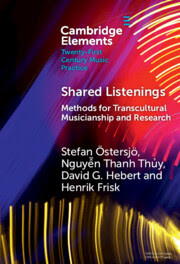
Dr. Thanh Thuy Nguyen’s paper highlighted some major points from our forthcoming book (with Stefan Ostersjo and Henrik Frisk, on Cambridge University Press) about new methods for decolonized intercultural music collaborations.


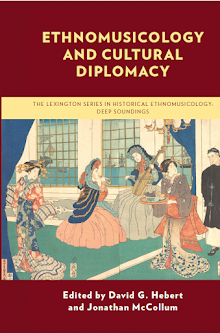
Marianne Løkke Jakobsen’s paper expanded on our recent book chapter in Ethnomusicology and Cultural Diplomacy, about music diplomacy between China and Europe, featuring in-depth discussion of the Panda Suite project.


7/26/22

Malay Nobat: Vol. III of Deep Soundings


Volume III of our Deep Soundings book series has now been published by Lexington Books (of Rowman & Littlefield Press). This volume is an insightful monograph on the Southeast Asian tradition of Nobat court music: The Malay Nobat A History of Power, Acculturation, and Sovereignty, authored by Raja Iskandar Bin Raja Halid.

We continue to seek book proposals for the Deep Soundings series that promise to offer unique knowledge regarding the musical past, and would welcome high quality contributions that address any genre or location worldwide. Below are a few examples of what prominent scholars have to say about Halid’s book …


“This book takes the reader to a fascinating musical soundscape in the royal courts of Malaysia that is unimaginable to most music lovers today. Raja Iskandar Bin Raja Halid skillfully describes the history and significance of nobat and explains why and how it still has symbolic meaning today.”

— Margaret Kartomi, author of Performing the Arts of Indonesia: Malay Identity and Politics in the Music, Dance and Theatre of the Riau Islands


"Raja Iskandar Bin Raja Halid’s detailed and erudite study of the nobat of the Malay world is also a study of a neglected, but vital, facet of Islamicate culture – the trumpets, pipes, and drums that have served as accoutrements of the ruler’s spiritual and temporal power since early times. The author approaches both the local and the colonial historical sources with a keen eye and sharp ear in this consistently engaging, well-researched volume."

— Martin Stokes, King's College, London


7/25/22

ISME History Standing Committee

The History Standing Committee of the International Society for Music Education is one of four Committees charged with directly supporting the organization’s executive leadership. Its mission is to “identify and create opportunities to celebrate and showcase the history of the Society and music education internationally.”


The work of the ISME History Standing Committee includes such activities as producing historical materials, coordinating archival contributions, recommending policies for historical documentation, planning of history sessions for world conferences, and developing closer ties with other relevant organizations. For several years the committee has been led by professor Marie McCarthy.   


It is a pleasure to report that I have now been appointed Chair of the History Standing Committee during an important period in which ISME is planning for its 70th and 75th anniversaries. 


In music, like other subject areas, those in the field of education often underappreciate the value of historical studies, which offer unique insights into how ideas and practices develop and spread, as well as how social and institutional conditions impact all aspects of the conditions in which teaching and learning occur. I am confident that through the work of the History Standing Committee we will be able to draw renewed attention to what can be learned about the present and future through careful examination of the past. In particular, I am interested in supporting revisionist approaches that call for a more comprehensive inclusion of all people, genres, pedagogies, and forms of informal learning that take place in diverse communities--in interaction with schools--through our documentation of the global history of music education.   


Image retrieved from: https://en.wikipedia.org/wiki/Apsara#/media/File:File-Apsara_playing_a_Chinese_flute_-_Yulin_Cave_15.jpg

6/20/22

ISME world conference online


This is an exciting time for music educators, as the meeting of the largest organization in our field—the ISME world conference—is approaching in mid-July, hosted virtually from Queensland, Australia. For this meeting, I will be giving presentations in three sessions, one of which I will chair/organize.


“Seeing Through a Wider Lens: Revisionist History in Music Education,” Chair: Craig Resta. Panelists: Marie McCarthy, David Hebert, Benon Kigozi. 

Abstract

Looking at historical events is one way to better comprehend how prior actions can influence future progress. Often our narratives about the past have been framed through certain lenses that may not reflect the realities of the time, or the perspectives of today. As a result, there are people and histories and happenings that have untold stories needing more attention.  A primary idea of this panel is to discuss definitions of revisionist history, why it matters, and innovative approaches to understanding who we are, how we move ahead, and how to make progress towards social justice as dialogue and practice in the field. 

 Examples might be women in music education, international perspectives, LGBT issues and music teaching, marginalized populations, ethnicity and race, sociocultural influences connected to musical experiences, critical pedagogies and practices, cultural understandings, and diversity and pluralism in numerous settings. Others may be technology aspects, policy, reform, and institutional protocols, nationalism and musicological studies, and so on. Further viewpoints include how historical events play out in our profession, examples from the literature, and potential impacts on music teaching and learning in multiple countries and circumstances. This participatory discussion will tackle these issues representing viewpoints and perspectives from North America, Europe, Middle East, Scandinavia, Africa, and Asia. Scholars on the panel include those from the United States, Ireland, Norway, Israel, and Uganda. While more history needs to be done generally in music education, there can be even more attention to ideas and people and happenings that many of us do not know today. Aside from the historical events themselves, is the important discussion of history, and how we think and do it in practical context. What is our purpose in historical inquiry and reflection, and how can the outcomes make the musical experiences of those around us better?


“Musical Communication with China: An International Dialogue,” by Jiaxing Xie and David Hebert

Abstract: 

How does music enable intercultural communication and dialogue in education? From a traditional Chinese perspective, music is composed of three levels: form, function, and metaphysical dimensions. Musical communication and dialogue are thereby believed to originate from these three levels, which may serve as a framework for understanding interactions with the West. By the year 1600 Mateo Ricci had performed western music in China, but it was only since the 1840s that Western music began to profoundly influence Chinese music culture with varying intensity according to the evolving sociopolitical situation. Across generations, Chinese musicians have actively participated and reflected on the three delineated levels, but after nearly 200 years of intensifying musical “communication” how much do most Western people understand about Chinese music, even during this “information age”? We will examine specific cases of interaction between Chinese and Western musicians that have sought to improve intercultural understanding, and reflect on ways of evaluating the educational and social impact of such endeavors. Our account will take into consideration the arguments of notable Chinese international relations scholars, including Xiaoying Qi and Yaqing Qin, as well as perspectives of musicologists from China and other countries. One important development in this area was the establishment of institutions for learning Chinese musical instruments in Europe, but we note that enthusiasm for Western music in China has generally been stronger than enthusiasm for Chinese music abroad. When it comes to musical collaboration between China and Norway, for instance, we identify specific phases of development (e.g. 2000-2009, 2010-2019, etc.). In our view, robust intercultural exchange in music requires not only performances and symposia, but also in-depth dialogues, including co-authored publications of the kind that we are developing across years of collaboration.


“Ready to Conduct Historical Research?: Dialogue with Mentors.” Chair: David Hebert; Panelists: Marie McCarthy, Jane Southcott, Phillip Hash, Benon Kigozi, Robin Stevens, Craig Resta, and Casey Gerber 

Abstract: 

The purpose of this meeting is to provide an open session for mentoring of early-career scholars and doctoral students. All ISME participants interested in historical research in music education are warmly welcomed to the session for discussion of their project concepts. Distinguished historians and mentors have agreed to participate in this session, including Marie McCarthy, Jane Southcott, Phillip Hash, Benon Kigozi, Robin Stevens, Craig Resta, and Casey Gerber. The session is chaired by David Hebert. The mentors will offer advice regarding previous studies as well as appropriate theoretical and methodological approaches. In addition to an opportunity for mentoring, this meeting also offers a chance to discuss future projects of the ISME History Standing Committee. 


Public domain image from: 

https://en.wikipedia.org/wiki/Didgeridoo#/media/File:Didgeridoo_(Imagicity_1070).jpg 

5/10/22

Music Diplomacy Book Published

Volume II of our Deep Soundings book series has just been published: Ethnomusicology and Cultural Diplomacy. This book includes contributors from many countries across the world who seek to show how music projects are used to generate intercultural understanding, empathy, and reconciliation.

For me, the need for a book on this topic became clear when I was invited for an interview feature in a Geneva-based magazine for diplomats called DIVA International Diplomat (published in 2020, p.18-20). But cultural diplomacy matters far beyond the specialized sphere of ambassadors and professional diplomats, since it encompasses an array of artistic and social activities, sometimes even focused on relations between nations (or ethnicities) within a single state. Cultural diplomacy, we argue, is also relevant for teachers at all levels of schooling who seek to find innovative ways of internationalizing their student’s experiences for a richer quality of education.

During the writing of this book, our contributors faced an array of complex challenges, from severe Covid lockdowns to violent conflicts, including the Taliban’s takeover of Afghanistan, volatile unrest in Hong Kong, and a catastrophic civil war in Tigray, Ethiopia. Our contributing author from Ethiopia disappeared in the chaos after sending us parts of his chapter, and following many months of concern we are still unable to confirm whether he survived. War is the opposite of what most kinds of music participation aim to cultivate. We hope this book will help generate new ideas for how peaceful relations and mutual respect can be fostered through music. 

It is taking a while for the book to be internationally distributed, so we will plan a book launch event for sometime in August or September.  


4/8/22

Asian Ethnomusicology in Europe


We look forward to giving presentations for the 37th European Seminar in Ethnomusicology, hosted by the Institute for Ethnomusicology at the University for Music and Performing Arts Graz (Austria). I will present along with other members of the GAME research group: our Professor II, a postdoctoral researcher, and a PhD candidate. Below are the titles and abstracts for our upcoming presentations, both of which are connected with writings that will be published later this year.


Devising an “Artistic Research” Approach for Decolonized Ethnomusicology

Thanh Thuy Nguyen, David G. Hebert, and Stefan Östersjö


This presentation will feature discussion between co-authors of a fully drafted (but yet to be published) book, Shared Listenings: Methods for Transcultural Musicianship and Research (Cambridge University Press, forthcoming). The book demonstrates new strategies for equitable cross-cultural music creation as well as collaborative ethnomusicological research on such endeavors. Fitting the ESEM theme, this presentation–by authors from three continents–will emphasize how a research collaboration was developed through the work of Vietnamese-Swedish ensemble The Six Tones, with particular attention to its use of video-based “stimulated recall” methods. These methods, the group has explored as a means for intersubjective meaning making across cultural boundaries. Specifically, we will demonstrate what methods were developed through the project, why they potentially offer unique insights, who may benefit from them (for what purposes), and how they may be applied in other musical contexts. The presentation builds on a comprehensive analysis of the approaches to stimulated recall developed by the group since 2009, and is situated in recent scholarship and debates on the need for decolonising approaches to music research.


Keywords: bimusicality, decolonization, artistic research, cross-cultural collaboration


Harmonizing Across a Divide: The Music Confucius Institute

Marianne Løkke Jakobsen and David G. Hebert

In this presentation, we describe the perspectives of managers and Chinese instrument teachers with the world’s first Confucius Institute to have a focus on music, Copenhagen’s Music Confucius Institute (MCI). Previous research has theorized the notion of “soft power” and documented diverse opinions on China’s system of Confucius Institutes, while previous ethnomusicological studies have established that music exchange can reduce international conflict, but a need persists for further studies of Chinese music policy. Our pioneering study examines the views of expert Chinese musicians who taught for the MCI in Europe and a leading music conservatory in China, as well as the complex diplomacy associated with managing such intercultural music institutions. One author worked for nine years founding director of the MCI, and can thereby offer a view from direct experience. The other author visited the MCI multiple times, later serving as Visiting Scholar at the Central Conservatory of Music where he interviewed and observed the work of instrumentalists who had taught in both Beijing and Copenhagen. Fitting the ESEM theme, our presentation emphasizes issues in research collaboration, including that of balancing between Sinophobia and jingoism, cultural diplomacy, self-censorship, and strategies of reflective distancing to “make the familiar strange”, thereby obtaining insights with broad applicability. We will demonstrate how personal relations and diverging stakeholders can make ethnomusicological studies of leadership delicate in international contexts due to the need to maintain healthy collaborations that may be misunderstood due to prejudices from multiple directions.


Keywords: cultural diplomacy, institutionalization, soft power, China, Europe-China relations


Graz image source: https://en.wikipedia.org/wiki/Graz#/media/File:19-06-14-Graz-Murinsel-Schlo%C3%9Fberg-RalfR.jpg

3/17/22

Cultural Diplomacy and Music in the Internationalization of Education


UPDATE (13 April 2022): Due to complications with international travel, and NERA's rule against online participation, we now unexpectedly find we have to withdraw from this conference. We hope to join an NERA conference some other time. 
................................................................................

Our symposium “Cultural Diplomacy and Music in the Internationalization of Education” has been accepted for presentation at the 2022 Nordic Educational Research Association (NERA) conference in Reykjavík, Iceland. This will be in collaboration with both Marja Heimonen and Marianne Løkke Jakobsen. Below is our abstract for the entire session, and individual abstracts will be available at the event. 

Cultural Diplomacy and Music in the Internationalization of Education 

International relations for the Nordic region are arguably as complicated in 2022 as at any time since World War II due to the Covid-19 pandemic, misinformation campaigns on social media, and political instability in Eastern Europe. Consequently, promotion of intercultural understanding and global empathy are profoundly important responsibilities of educators for the objective of reducing prejudices and conflict (Buchanan & Hellstén, 2020; Jæger, 2022). Cultural diplomacy is an effective way of instilling appreciation for the heritage associated with other nations, and music is an especially prominent art form that deeply intersects with cultural values (Hebert & Kertz-Welzel, 2016). Based on our development of a book to be published in 2022, this roundtable presents the educational implications of recent research findings regarding the use of music in cultural diplomacy for the internationalization of education. Our studies demonstrate how the mechanisms of international law and cultural policies influence what is possible in terms of musical exchange in international education projects. 

We begin with a paper, by an author with long-term interests in music law, that applies human rights and “capabilities approach” perspectives to music education, with particular attention to implications for Sámi and other minorities. The next paper concerns issues in management of Nordic responses to cultural diplomacy from elsewhere, in this case a Sino-Danish Confucius Institute based in Copenhagen that was established and co-funded by the Chinese government. Its author faced many complex challenges as director of the international institution. The final paper—by an author who has worked in Finland, Norway, Sweden and Denmark—presents new theoretical developments and general recommendations from music diplomacy work in multiple contexts, with particular attention to challenges for internationalization of Nordic teacher education (Hebert & Hauge, 2019).

REFERENCES 
Buchanan, J. & Hellstén, M. (2020). Ways of getting to know: International mobility and indigenous education. In F. Dervin, Mononey, Y. & Simpson, A. (Eds.), Intercultural Competence in the Work of Teachers. New York: Routledge. DOI: https://doi.org/10.4324/9780429401022 
Hebert, D. G. & Hauge, T. B. (Eds.), (2019). Advancing Music Education in Northern Europe. New York: Routledge. 
Hebert, D. G. & Kertz-Welzel, A. (Eds.), (2016). Patriotism and Nationalism in Music Education. New York: Routledge.  
Jæger, K. (2022). Elusive politics: De-internationalizing higher education in the context of international recognition conventions. Higher Education Policy, 1-19. DOI: https://doi.org/10.1057/s41307-022-00262-4

3/11/22

Shared Listenings Book

Our complete manuscript has been submitted to Cambridge University Press for the book Shared Listenings: Methods for Transcultural Music Performance and Research. The book is co-authored by Stefan Ostersjo, David Hebert, Thanh Thuy Nguyen, and Henrik Frisk, and is an outcome of the Musical Transformations project in Vietnam, which was led by Prof. Stefan Ostersjo.


In addition to his chaired professorship in Sweden, Stefan is now affiliated with the GAME research group as our Professor II for artistic research in music. Thuy is also currently a Swedish Research Council-funded Postdoctoral Researcher affiliated with the GAME research group. Henrik is a full professor of composition at the Royal Swedish Academy of Music in Stockholm.


With the aim of creating “a decolonized methodology - for both music performance and research,” in this book we “demonstrate how a combination of stimulated recall and collaborative autoethnographic strategies can be applied to artistic and scholarly work at the intersection of ethnomusicology and practice-led research.”


12/1/21

Music Activities in Early 2022


UPDATE: The proceedings from this conference, with my keynote speech, can be downloaded for free by clicking here and going to the bottom right of the next website: https://www.ifmpf.hmtm-hannover.de/de/publikationen/forschungsberichte/forschungsbericht-33/


In late January 2022, I look forward to giving a conference opening speech for the third German-Dutch Colloquium on Research in Arts Education in Hannover, Germany. The theme for this government-sponsored event is “Multiculturalism in Music and Drama Education,” and it is hosted by Prof. Andreas Lehmann-Wermser, a prolific researcher who heads the Institute for Music Education Research at the Hannover University of Music, Drama and Media. 


The host institution, which has been in operation for over 120 years, offers comprehensive studies (including in jazz and popular music), and has produced many influential musicians, some of whom originally came from East Asia. The city of Hannover itself has also long played an important role in Germany, from its roots as the home of Gottfried Leibniz to today as the headquarters of Volkswagen. Among the more notable scholars to have come from Hannover (Linden-Limmer borough) is Hannah Arendt, whose work has seen a profound impact across recent generations in philosophy and social theory.


Depending on the status of the pandemic, this event will either be held face-to-face or online only. Click HERE for more information on the colloquium. 


This colloquium is generously supported by the Rat für Kulturelle Bildung (Counsel for Cultural Education) and the Federal Ministry of Education and Research (BMBF). It is hosted by the Hochschule für Musik Theater und Medien Hannover. 

In the late winter and spring, if the Covid pandemic allows for it, I am expected to make trips to Riga, Copenhagen, Prilep, and Kampala for various music research and writing projects. Due to the Omicron variant of Covid-19, it looks increasingly doubtful whether much travel will be possible, so probably in most cases we will have to continue with online cooperation until the pandemic is less of a concern. In March we will focus on further data collection for a book on Viking musical heritage for Bloomsbury press, and by around that time we expect to see two more volumes published in the Deep Soundings series, volume II on music and cultural diplomacy, and volume III on traditional Malaysian court music.


In April, I will give a plenary address in Lithuania as a scientific committee member of the conference Music and Science Labyrinths at Vilnius University-Siauliai Academy. This partly online event celebrates the achievement of musicologist Eduardas Balčytis, who played a central role in the establishment of formal music pedagogy in Lithuania.  


There are also some new developments in East Asia to report: It was exciting to see the work of Prof. Qi Kun of China Conservatory, published in a new edition of the journal Chinese Musicology. Qi is an accomplished researcher who serves as Editor-in-Chief of the journal Chinese Music, and her recent work concludes that many recommendations from our book Theory and Method in Historical Ethnomusicology are particularly relevant to music scholarship in China. When travel becomes possible, I plan to continue developing several projects in various parts of China. 


The Grieg Academy Music Education (GAME) research group has also nearly completed our co-authored chapter on music education in Norway for a book edited by Prof. Masafumi Ogawa to be published in Japan by Minerva Shobo press. In mid-January, I have meetings scheduled to continue developing the book Transcultural Musicianship and Research: Methods for Shared Listening and Performance (forthcoming, Cambridge University Press), which is being co-authored with a team of music researchers and performers from a project in the Mekong Delta of Vietnam.


11/8/21

Oral History Discussions

Dr. Yang Yang at Education University of Hong Kong has just posted a brief interview based on questions that emerged in response to one of my earlier videos – “Oral History Methods for Sustaining Music Heritage in Education” – which was widely shared in China.


Click HERE to access the new Q&A session.


Click HERE to access an explanation and link to the original video (speech) that served as a basis for this Q&A session.


English versions are available on each of the above sites, but it is necessary to scroll to the bottom of each page.


Pictured above is a public domain image, a sketch of the Old Summer Palace in Beijing, where western music was often performed before the palace grounds (including concert hall) were destroyed in 1860 during the Second Opium War.

10/26/21

East African Education and Doctoral Supervision

I look forward to participating soon as a session chair and discussant for the first East African Teacher Education Symposium: Challenges and Opportunities in Teacher Education (November, 2021). This initiative was developed through the Norad-sponsored CABUTE project, and will take place both online and physically at Makerere University, in Kampala, Uganda. Eight presentations at this symposium - around half of what was selected for this event - are concerned with music-related topics, including papers by accomplished scholars such as James Isabirye, Nicholas Ssempijja and Milton Wabyona.

It was also a pleasure to learn yesterday that I have been formally appointed by the Royal Danish Academy of Music as a doctoral supervisor for a dissertation through Aalborg University concerned with online music learning between Denmark and China. It promises to be a very interesting project, and this means that I will soon have served on doctoral committees for universities in 11 countries, each of which has been uniquely stimulating. Later this week I teach for University of Bergen’s annual university-wide course on Doctoral Supervision, and next week I will be in Iceland for the NNME intensive course/conference. 


Although the pandemic has made international initiatives more challenging than before, it is encouraging to see that many forms of collaboration are still possible.


Image of Makerere University retrieved from: https://commons.wikimedia.org/wiki/File:Ssetendekero_Makerere.jpg

10/16/21

Music and Cultural Diplomacy Panel at BFE

We look forward to giving a panel presentation “Ethnomusicology and Cultural Diplomacy” at the British Forum for Ethnomusicology conference Ethnomusicology in 2022 and Beyond in mid-November 2021. The conference format allowed for only 3 papers in a panel session, so this is just a tiny preview of what will appear in the book, but future conferences will give us more opportunities to share what we have developed through this project.


Ethnomusicology and Cultural Diplomacy

This panel is based on a book by the same title that will be in press at the time of the conference. Three contributors will present material from their chapters on music diplomacy projects from Afghanistan, Iran, and Vietnam. Rather than explaining how western nations use music for diplomacy, they take a decolonizing approach to ethnomusicology, by determining how non-western cultural practices impact music diplomacy directed toward Europe and North America. Two presenters are from the countries discussed (Iran and Vietnam), while the other devoted three years to music diplomacy in Afghanistan, a nation now embroiled in a tragic crisis. 


Session Format:

·       Introduction, Prof. David G. Hebert, session chair (Western Norway)


·       Paper 1: ‘A Very Beautiful Image of Afghanistan’: Cultural Diplomacy through Music Performance and Education - Lauren Braithwaite (PhD candidate, Oxford University)


·       Paper 2: Soft War and Multilateral Creative Pathways in Iran - by Nasim Niknafs, PhD (Associate Professor, University of Toronto)


·       Paper 3: Cultural Diplomacy and Transculturation through the History of the Vọng Cổ in Vietnam - by Thanh Thuy Nguyen, PhD (Postdoctoral Researcher, Royal Academy of Music, Stockholm)


·       Q&A Discussion, moderated by Prof. Hebert


We are also making further progress now on the forthcoming book on Viking musical heritage, hence the image above. 


7/3/21

Oral History and Music Education in Africa


It is a pleasure to soon be giving my first presentation for the Pan-African Society for Musical Arts Education (PASMAE, Zambia, July 2021). It is part of a symposium convened by Marie McCarthy called Sounding the Past, Giving Voice to the Future: Oral History and Its Place in Music Education Research. 


My presentation is titled “Oral History Methods for Sustaining Music Heritage in Education” and the other panelists include Benon Kigozi and Milton Wabyona, in addition to Marie McCarthy and myself. 

Here is a link for more information on the PASMAE conference: https://www.pasmae.africa/ 

via GIPHY

6/16/21

Activism through Music

The first monograph of our book series will be published in the next few weeks.


We are happy to announce Ambigay Yudkoff’s book Activism through Music During the Apartheid Era and Beyond: When Voices Meet, which is volume 1 of Deep Soundings: The Lexington Series in Historical Ethnomusicology. Other volumes are coming soon. 


Professor Carol Ann Muller (University of Pennsylvania) writes the following about this unique book:


Ambigay Yudkoff has written a beautiful account of the musical activism of South African born music therapist and multilingual singer Sharon Katz. In the wake of the release of political prisoner Nelson Mandela and others in 1990, Katz created a "Peace Train," a large South African interracial youth choir for purposes of racial and cultural reconciliation, collaboration between strangers, who literally traveled South Africa and the United States in a train. This is not a conventional story about music and politics but far more about the need for social and emotional healing through singing together in the post-apartheid era. It is one of a few books on musical activism as a mode of social reparation and intercultural understanding that has value well beyond 1990s South Africa.

3/31/21

Living Sounds: Democratizing and Reviving Musical Heritage


Recently I am assembling an international team of outstanding researchers to collaborate in a major pan-European project. The overall aim is to develop and test innovative approaches for online virtual experience of music to protect, preserve, restore and safeguard cultural heritage and the arts.

We seek to counteract serious threats to this sector due to the rise of digitalization and the disruptive conditions of the Covid-19 pandemic. The project will focus on tangible and intangible music heritage to develop, test, and popularize new research-based approaches to use music, not only in itself, but also to preserve, sustain and disseminate other forms of cultural heritage. We plan to also use digital collaborative strategies to revolutionize how cultural activities are funded and produced online, and thus create sustainable job opportunities within the cultural and creative industries (CCIs).

Hopefully we will manage to attract major funding for this unique project which promises to offer new approaches for cultural professions that have been negatively impacted by the recent pandemic. More information will be posted here later as project planning develops further.


Here are a few quotations from recent publications that provide some background for this project:

  • “When music is recognized as invaluable cultural heritage, entailing unique artefacts of intellectual property, new developments in this field then become acknowledged as important forms of social innovation” (Rykowski & Hebert, 2018, p.367).
  • Musical heritage in museums requires either “reimagining a form of music from the past or representing music that exists in the present, both of which entail an array of methodological issues” (Hebert & McCollum, 2014, p.71). 
  • “Virtual musicianship clearly prompts us to rethink how relationships between music and place have traditionally been conceived” (Hebert, 2018, p.5). 
  • “locating those songs on social media now serves to connect people and places through their virtual homes online” (Hebert & Williams, 2020).


-Hebert, D. G. & McCollum, J. (2014). Methodologies for historical ethnomusicology in the twenty-first century. In J. McCollum & D. G. Hebert (Eds.), Theory and Method in Historical Ethnomusicology (p.35-83). Lanham, MD: Lexington Books.

-Hebert, D. G. & Williams, S. (2020). Ethnomusicology, music education, and the power and limitations of social media. In J. L. Waldron, S. Horsley, & K. K. Veblen (Eds.), Oxford Handbook of Social Media and Music Learning. Oxford: Oxford University Press.

-Hebert, D. G. (2018). Music in the conditions of glocalization. In D. G. Hebert & M. Rykowski (Eds.), Music Glocalization: Heritage and Innovation in a Digital Age (p.1-19). Newcastle: Cambridge Scholars. 

-Rykowski, M. & Hebert, D. G. (2018). Conclusion: Toward a Theoretical Model of Music Glocalization. In D. G. Hebert & M. Rykowski (Eds.), Music Glocalization: Heritage and Innovation in a Digital Age. Newcastle: Cambridge Scholars Publishing, pp.346-374.


3/1/21

Music Conference in Kiev


One of the world’s major music institutions is the Tchaikovsky National Music Academy of Ukraine, also known as the Kiev Conservatory. This prestigious music school was founded by Tchaikovsky himself and led by Rachmaninov and Glazunov.

I look forward to presenting a paper soon (via videoconference) for an international conference hosted by the World Music History Department of the Kiev Conservatory: Music Culture of China: Forms, Traditions, Practices, which will take place at the end of March. My paper title is “Research on Chinese Traditional Instrument Teachers at Prominent Conservatories in Europe and China.”

Here is a link for the conference program:

https://issuu.com/nataliyamuromets/docs/ua-chinafest-2021


The Kiev Conservatory is home to a pioneering Music Confucius Classroom, for which my paper seems especially relevant. Here are a few links about Confucius Music Classrooms …  


https://usa.chinadaily.com.cn/a/201906/11/WS5cff7baea31017657723095a.html


https://www.eurasiainfo.ch/en/caring-chinese-teacher-cheers-up-ukrainians-amid-covid-19/


https://www.rcs.ac.uk/scotlands-national-conservatoire-selected-host-one-worlds-first-specialist-confucius-classrooms/


Many years ago, I lived in Moscow, working as a Lecturer for Moscow State University while performing free improvisation with members of the Pan-Asian Ensemble affiliated with the other Tchaikovsky conservatory (Moscow Conservatory), and now I serve on the Editorial Board of the Eurasian Music Science Journal. It will be exciting to reconnect with colleagues in the fascinating field of Eurasian musicology via this conference in Kiev.


Below are videos based on excerpts from the Pan-Asian Ensemble's free improvisation sessions recorded in Moscow at the conservatory. This experimental music still has an unusually mysterious sound even several years after it was created.  


https://youtu.be/7E_mtRcQ_28 

https://youtu.be/jfGUg1jc1TE 

Each of the tracks here are interesting for different reasons. On the first, I play muted trumpet in some uncannily improvised gestures and harmonies in sync with two Russian shakuhachi players. In the second, I add lyrical trumpet lines after about one minute into the final track.


Below is something much more traditional that I recorded in recent years, a lovely song by Rachmaninov: 


2/23/21

Music in Urban Culture

In early March 2021, our research team (with a project in Vietnam, led by Stefan Östersjö) has an online presentation for the 18th Urban Culture Forum in Thailand. It is an annual event organized by the Urban Research Plaza, a collaboration between major public universities in Osaka (Japan) and Bangkok (Thailand), and held this year at Chulalongkorn University, a distinguished institution that I visited in Bangkok several years ago. The Urban Research Plaza also publishes the Journal of Urban Culture Research, for which I have offered some peer reviews as an external referee.


http://www.urpbkk.com/urp/Forum.html


Our research team will discuss the changing role of music in urban spaces, including how musical practices are impacted by the Covid-19 pandemic. Below is the abstract of our presentation for this event:


Authors - Stefan Östersjö, Nguyễn Thanh Thủy, David G. Hebert, and Henrik Frisk


Title - Studio Saigon: Telematic performance and recording technologies in light of the Covid-19 pandemic


As the Covid-19 pandemic continues to affect individual musicians, ensembles and concert institutions, streaming technology has become a central vehicle through which musicians and audiences can meet. This paper discusses how networked performance, a format which has engaged artists for decades as an artform in its own right, may contribute to the sustaining of cultural heritage among migrant/minority communities as well as to the development of innovative intercultural artistic practices. Building on the experience of our group, The Six Tones, we wish to develop a more robust understanding of the possibilities, and the limitations, that networked technology affords. The central source of our own work is drawn from Musical Transformations, an ongoing project which studies the intersection between traditional and experimental music in globalized society. 

The project has studied the dynamic history and contemporary performance practices of Vọng Cổ, a Vietnamese song which has experienced a radical set of transformations since the 1920’s. Recording technology has played a central role in this development, as evidenced even in the way its formal structure was shaped to match the duration of the 78rpm records on which this music was recorded on local labels still in the 1960’s (Gibbs et al 2013). We note that interactions both inside and outside recording studios contribute to urban culture. From the perspective of the street in Ho Chi Minh City, both recording studios used in this project blended into their surroundings, amongst residences, tiny convenience shops, hair salons, and restaurants selling pho and banh mi. Both studios also were negatively affected by traffic noise from a steady stream of motorbikes and trucks as well as construction projects. Local businesses were evidently accustomed to encountering foreigners leaving the studios for breaks in their recording sessions. Only a modicum of previous ethnomusicological studies have considered the role of recording studios in urban culture, which promote business in local communities while producing cultural products that have a lasting and expansive impact far beyond their neighborhood. Kay Shelemay observed that “recording technology is not only an integral part of our discipline’s intellectual history. It is an increasingly important part of our future as well” (Shelemay, 1991, p.288). We argue that the rise of telematic performance in the time of the pandemic also points to new avenues for recording technologies, inside and beyond the recording studio.


10/9/20

Eurasian Music Science Journal


Just today I learned that I have been appointed to the Editorial Board of the Eurasian Music Science Journal. This will soon be announced on the journal’s website. EMSJ is a fully refereed journal that publishes two issues per year in Russian and English languages. 

Based in Uzbekistan, the Eurasian Music Science Journal is rapidly becoming recognized as an important resource for studies of traditional music in Central Asia. While I already serve on several other Editorial Boards, this one has a rather different profile, and I am excited to see what we can develop with future publications. 

Here is a link to the journal:

https://eamsj.uz/index.php/eamsjournal/index

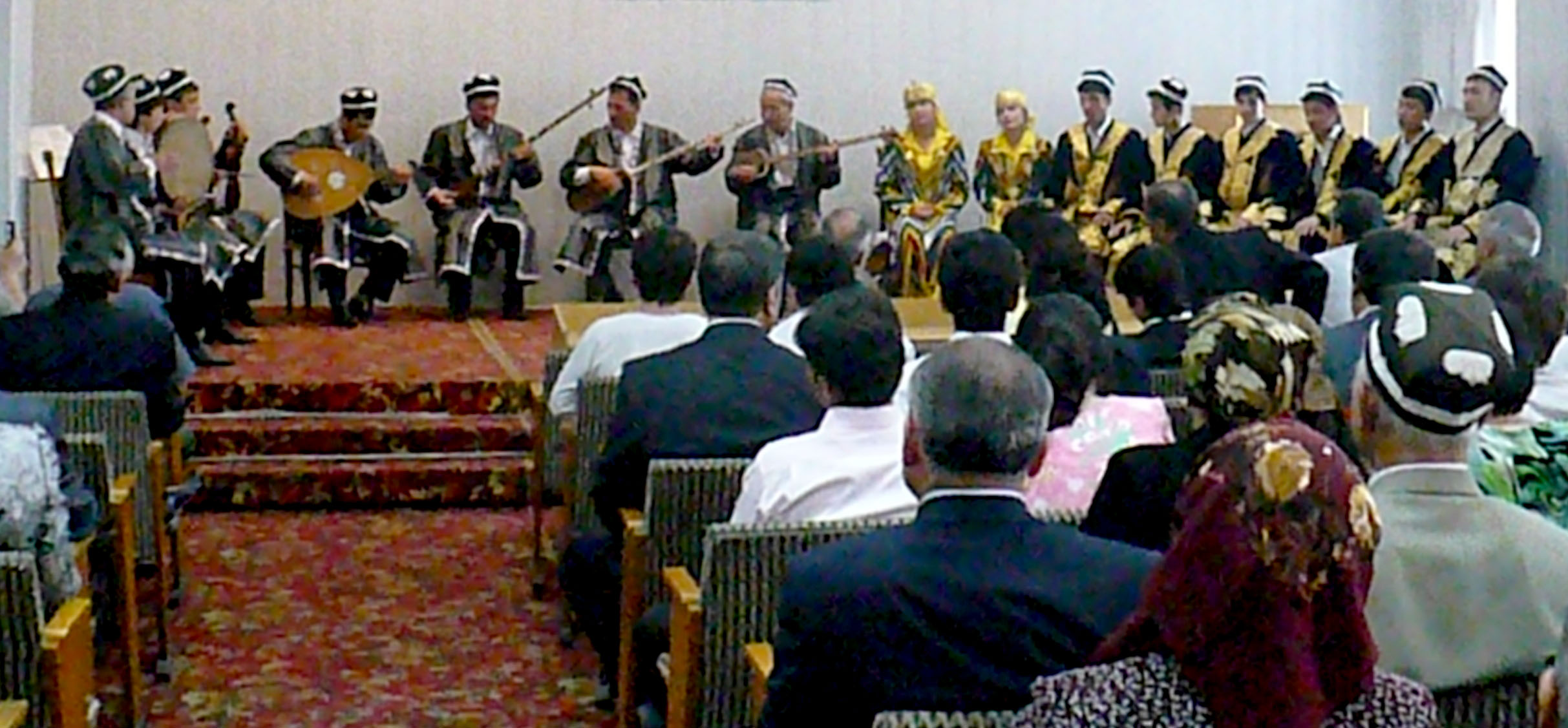
Shown above is a public domain image of a performance of Shashmaqam, the profound musical heritage of Uzbekistan and Tajikistan. Below is a visual representation of the Eurasian landmass.   


10/2/20

Norwegian Folk Music Pedagogy


Next week our teacher education students in Bergen will enjoy an intensive schedule of lessons in Norwegian folk music provided by Ole Bull Academy

The skilled Norwegian folk musicians, dancers and scholars who will teach for this course include Arne Anderdal, Lajla Buer Storli, Hans Christian Dahlgaard, Jo Asgeir Lie, Astri Sudmann, John Ole Morken, Lars Fivelstad Småberg, and Stein Villa. 

We look forward to learning many unique songs and dances associated with local heritage. Hopefully when our students themselves become teachers, they will effectively share these rich traditions with many students. 


9/29/20

Online Conference in Uzbekistan

It was enjoyable to give a presentation for the online conference today that was hosted by the State Conservatory of Uzbekistan, Tashkent. Musicologists joined from several countries, including Uzbekistan, Russia, Kazakhstan, South Korea, India, Norway, the UK, USA, Poland, UAE, and Kuwait. There were also brief presentations by the institution's Rectors and representatives from UNESCO.

Proceedings from this event will soon be published in Russian and English. Two of my frequent co-authors also had presentations, Jonathan McCollum and Mikolaj Rykowski (now Vice Rector at the academy in Poland), and it was very interesting to hear about recent developments in Central Asia. Click HERE to access a draft program (of which some details were later modified).  


 Международный научный семинар-конференция

«Шарк тароналари-2019»: взгляды ученых год спустя

(Перспективы развития традиционной музыки народов Востока)