Showing posts with label music education policy. Show all posts

10/11/23

Music in Action: Grieg Research School


For PhD candidates, post-docs, postgraduate students and senior researchers ... the GRS Autumn Course Music in Action will run from November 28-30, 2023. The event is organized by the Grieg Research School in Interdisciplinary Music Studies and is hosted by The University of Agder. 


Also, I am pleased to mention that as of a few weeks ago I am now serving on the GRS Board, which was part of what brought me to Norway over a decade ago. I am glad this promise has been kept, and I now have an opportunity to contribute to GRS as expected.


Link to event announcement: 

https://www.uib.no/en/rs/grieg/163696/music-action


INVITATION 

Music in Action


The theme of the course is 'Music in Action' and will explore the ways in which music acts in complex social, cultural, educational, and historical contexts. Music in Action invites presentations on how musical practices encounter and engage with society. The meeting points between artistic and scholarly approaches to research in music – such as applied or practice-based research – is of particular interest. An overarching question for the call is How can research in and with music can understand, analyse, and even initiate musical practices that act in complex social, cultural, educational, and historical contexts?


The course will feature presentations and discussions convened by researchers from key research groups/projects based in UiA's Faculty of fine arts, including researchers and topics from:

  1. Arts and social relations
  2. Art and Conflict
  3. Art & Young People
  4. Reconfiguring historical, Musical Crafts Education RHiMuCE
  5. Music, Dance, Drama - cross-artistic practices and educational discourses
  6. CreaTeMe centre of excellence at UiA

You may choose to engage in a dialogue with one or more of these groups and their areas of research in your presentations (please specify in your abstract if you wish to do so).


Specific questions to address include, but are not limited to:

  • How can research in and with music create new approaches to questions of health, social justice, and sustainability?
  • How can musical experiences and practices play a dynamic role in dealing with complex and potentially conflicting social conditions?
  • What role can/does music play in children’s and young people’s lives?
  • How can we educate musicians as socially engaged artists?
  • How can we improve, develop and discover new interdisciplinary methodological approaches to how we study and present music?  
  • How can we revitalize music pedagogy and arts education in the school of the future?

GRS courses are an interdisciplinary space that fosters critical and constructive dialogue. The format of presentations is flexible, and we invite performances, multimedia presentations, posters, panel discussions, and workshops, in addition to the usual oral presentations. Other formats that utilize our fields and ways of doing and disseminating research in music are also welcomed.


CALL FOR PAPERS

Abstracts are welcomed from any Ph.D. Candidates, Post-docs, Masters’ students, supervisors and researchers from any institution. The event is free for all registered participants.

Deadline for abstracts is 12th October. Follow this link to submit an abstract:

https://skjemaker.app.uib.no/view.php?id=15634751


ECTS CREDITS 

Ph.D. candidates can gain 3 or 5 ECTS credit points for active participation during this course and have the option of presenting on the main theme of the course OR on their own research project. These presentations will receive feedback from senior researchers and peers. 


REGISTRATION 

Registrations are now open. Follow this link:

https://forms.microsoft.com/e/mGEwGSTHCW


7/22/22

Board of International Society for Music Education

Affiliated with the International Music Council and UNESCO, the International Society for Music Education (ISME) has more than 2,000 members in over 80 countries. Yesterday I learned that I have been appointed a Board Member of ISME, confirmed by a vote open to all the organization’s members. 


I will be serving with the new ISME president Bo-Wah Leung of the Education University of Hong Kong, as well as several accomplished Board Members. It is an exciting opportunity to collaborate in development of international initiatives to strengthen the field of music education globally. 


Thank you, ISME members, for your support, and I will do my best to contribute positively to the organization’s leadership. 


via GIPHY

7/12/22

International Journal of Music Education Board


It is a pleasure to announce that I have just been appointed to the Editorial Board of the International Journal of Music Education. Published by SAGE, the IJME has a 40-year history. It was first established in 1983 under the editorship of Frank Callaway as an initiative of the UNESCO-affiliated International Society for Music Education, which at that point already had a 30-year history and members in 60 countries worldwide. 


For several years I have offered occasional reviews for this journal, so it is reasonable to now be more formally affiliated as a Board member, and I look forward to more actively contributing to quality assurance of this important publication. Music has been such an important part of human life worldwide since ancient times and we need to continue developing deeper knowledge of how it is taught and learned.


Also, click HERE to access the following recent article, co-authored by Editorial Board members of another journal, Music Education Research:


Thade Buchborn, Pamela Burnard, David G. Hebert & Gwen Moore (2022) Reconfiguring music education for future-making: how?, Music Education Research, 24:3, 275-281, DOI: 10.1080/14613808.2022.2076821

6/20/22

ISME world conference online


This is an exciting time for music educators, as the meeting of the largest organization in our field—the ISME world conference—is approaching in mid-July, hosted virtually from Queensland, Australia. For this meeting, I will be giving presentations in three sessions, one of which I will chair/organize.


“Seeing Through a Wider Lens: Revisionist History in Music Education,” Chair: Craig Resta. Panelists: Marie McCarthy, David Hebert, Benon Kigozi. 

Abstract

Looking at historical events is one way to better comprehend how prior actions can influence future progress. Often our narratives about the past have been framed through certain lenses that may not reflect the realities of the time, or the perspectives of today. As a result, there are people and histories and happenings that have untold stories needing more attention.  A primary idea of this panel is to discuss definitions of revisionist history, why it matters, and innovative approaches to understanding who we are, how we move ahead, and how to make progress towards social justice as dialogue and practice in the field. 

 Examples might be women in music education, international perspectives, LGBT issues and music teaching, marginalized populations, ethnicity and race, sociocultural influences connected to musical experiences, critical pedagogies and practices, cultural understandings, and diversity and pluralism in numerous settings. Others may be technology aspects, policy, reform, and institutional protocols, nationalism and musicological studies, and so on. Further viewpoints include how historical events play out in our profession, examples from the literature, and potential impacts on music teaching and learning in multiple countries and circumstances. This participatory discussion will tackle these issues representing viewpoints and perspectives from North America, Europe, Middle East, Scandinavia, Africa, and Asia. Scholars on the panel include those from the United States, Ireland, Norway, Israel, and Uganda. While more history needs to be done generally in music education, there can be even more attention to ideas and people and happenings that many of us do not know today. Aside from the historical events themselves, is the important discussion of history, and how we think and do it in practical context. What is our purpose in historical inquiry and reflection, and how can the outcomes make the musical experiences of those around us better?


“Musical Communication with China: An International Dialogue,” by Jiaxing Xie and David Hebert

Abstract: 

How does music enable intercultural communication and dialogue in education? From a traditional Chinese perspective, music is composed of three levels: form, function, and metaphysical dimensions. Musical communication and dialogue are thereby believed to originate from these three levels, which may serve as a framework for understanding interactions with the West. By the year 1600 Mateo Ricci had performed western music in China, but it was only since the 1840s that Western music began to profoundly influence Chinese music culture with varying intensity according to the evolving sociopolitical situation. Across generations, Chinese musicians have actively participated and reflected on the three delineated levels, but after nearly 200 years of intensifying musical “communication” how much do most Western people understand about Chinese music, even during this “information age”? We will examine specific cases of interaction between Chinese and Western musicians that have sought to improve intercultural understanding, and reflect on ways of evaluating the educational and social impact of such endeavors. Our account will take into consideration the arguments of notable Chinese international relations scholars, including Xiaoying Qi and Yaqing Qin, as well as perspectives of musicologists from China and other countries. One important development in this area was the establishment of institutions for learning Chinese musical instruments in Europe, but we note that enthusiasm for Western music in China has generally been stronger than enthusiasm for Chinese music abroad. When it comes to musical collaboration between China and Norway, for instance, we identify specific phases of development (e.g. 2000-2009, 2010-2019, etc.). In our view, robust intercultural exchange in music requires not only performances and symposia, but also in-depth dialogues, including co-authored publications of the kind that we are developing across years of collaboration.


“Ready to Conduct Historical Research?: Dialogue with Mentors.” Chair: David Hebert; Panelists: Marie McCarthy, Jane Southcott, Phillip Hash, Benon Kigozi, Robin Stevens, Craig Resta, and Casey Gerber 

Abstract: 

The purpose of this meeting is to provide an open session for mentoring of early-career scholars and doctoral students. All ISME participants interested in historical research in music education are warmly welcomed to the session for discussion of their project concepts. Distinguished historians and mentors have agreed to participate in this session, including Marie McCarthy, Jane Southcott, Phillip Hash, Benon Kigozi, Robin Stevens, Craig Resta, and Casey Gerber. The session is chaired by David Hebert. The mentors will offer advice regarding previous studies as well as appropriate theoretical and methodological approaches. In addition to an opportunity for mentoring, this meeting also offers a chance to discuss future projects of the ISME History Standing Committee. 


Public domain image from: 

https://en.wikipedia.org/wiki/Didgeridoo#/media/File:Didgeridoo_(Imagicity_1070).jpg 

3/10/22

Documentary Film: Geysers and Guitars


Click above (or HERE) to access the 2022 documentary film Geysers and Guitars: A Music Course in Iceland, which was developed by Italian filmmaker Ferrucio Goia for the Nordic Network for Music Education

This video shows the kind of work we have been doing each year with our state-funded intensive Master courses for music teachers across the 18 institutions with Master programs for music teacher education in the eight Nordic and Baltic countries.

The film demonstrates how global competence can be developed through internationalization of teacher education programs, in this case with a music focus.


10/26/21

East African Education and Doctoral Supervision

I look forward to participating soon as a session chair and discussant for the first East African Teacher Education Symposium: Challenges and Opportunities in Teacher Education (November, 2021). This initiative was developed through the Norad-sponsored CABUTE project, and will take place both online and physically at Makerere University, in Kampala, Uganda. Eight presentations at this symposium - around half of what was selected for this event - are concerned with music-related topics, including papers by accomplished scholars such as James Isabirye, Nicholas Ssempijja and Milton Wabyona.

It was also a pleasure to learn yesterday that I have been formally appointed by the Royal Danish Academy of Music as a doctoral supervisor for a dissertation through Aalborg University concerned with online music learning between Denmark and China. It promises to be a very interesting project, and this means that I will soon have served on doctoral committees for universities in 11 countries, each of which has been uniquely stimulating. Later this week I teach for University of Bergen’s annual university-wide course on Doctoral Supervision, and next week I will be in Iceland for the NNME intensive course/conference. 


Although the pandemic has made international initiatives more challenging than before, it is encouraging to see that many forms of collaboration are still possible.


Image of Makerere University retrieved from: https://commons.wikimedia.org/wiki/File:Ssetendekero_Makerere.jpg

7/3/21

Oral History and Music Education in Africa


It is a pleasure to soon be giving my first presentation for the Pan-African Society for Musical Arts Education (PASMAE, Zambia, July 2021). It is part of a symposium convened by Marie McCarthy called Sounding the Past, Giving Voice to the Future: Oral History and Its Place in Music Education Research. 


My presentation is titled “Oral History Methods for Sustaining Music Heritage in Education” and the other panelists include Benon Kigozi and Milton Wabyona, in addition to Marie McCarthy and myself. 

Here is a link for more information on the PASMAE conference: https://www.pasmae.africa/ 

via GIPHY

4/29/21

Digitized Musical Heritage Course


It is a pleasure to announce that Nordplus just today confirmed it is providing new funding for an intensive Master course as part of the Nordic Network for Music Education’s 3-Year project Digital Competence and Digitized Musical Heritage


The NNME has been supporting the professionalization of music teaching across the Nordic and Baltic countries for nearly a quarter-century, and its upcoming course is called “Music Learning with Digital Technologies”, hosted by Prof. Helga Rut Gudmundsdottir and colleagues at University of Iceland in Autumn, 2021.


In 2021, the NNME expanded to include 18 member institutions, comprising each of the major postgraduate music teacher education programs in the 8 countries of Northern Europe: Estonia, Latvia, Lithuania, Finland, Sweden, Denmark, Norway, and Iceland.

Shown above is a public domain map of Iceland, where our next intensive course will be held.


Below are links to some videos recently developed in connection with the NNME: 

-Music programs at Western Norway University of Applied Sciences: https://youtu.be/5l0TmLHIosA

-Introduction to NNME’s COIL-MOOC project: https://youtu.be/o3i9N-nWwzo


3/1/21

Music Conference in Kiev


One of the world’s major music institutions is the Tchaikovsky National Music Academy of Ukraine, also known as the Kiev Conservatory. This prestigious music school was founded by Tchaikovsky himself and led by Rachmaninov and Glazunov.

I look forward to presenting a paper soon (via videoconference) for an international conference hosted by the World Music History Department of the Kiev Conservatory: Music Culture of China: Forms, Traditions, Practices, which will take place at the end of March. My paper title is “Research on Chinese Traditional Instrument Teachers at Prominent Conservatories in Europe and China.”

Here is a link for the conference program:

https://issuu.com/nataliyamuromets/docs/ua-chinafest-2021


The Kiev Conservatory is home to a pioneering Music Confucius Classroom, for which my paper seems especially relevant. Here are a few links about Confucius Music Classrooms …  


https://usa.chinadaily.com.cn/a/201906/11/WS5cff7baea31017657723095a.html


https://www.eurasiainfo.ch/en/caring-chinese-teacher-cheers-up-ukrainians-amid-covid-19/


https://www.rcs.ac.uk/scotlands-national-conservatoire-selected-host-one-worlds-first-specialist-confucius-classrooms/


Many years ago, I lived in Moscow, working as a Lecturer for Moscow State University while performing free improvisation with members of the Pan-Asian Ensemble affiliated with the other Tchaikovsky conservatory (Moscow Conservatory), and now I serve on the Editorial Board of the Eurasian Music Science Journal. It will be exciting to reconnect with colleagues in the fascinating field of Eurasian musicology via this conference in Kiev.


Below are videos based on excerpts from the Pan-Asian Ensemble's free improvisation sessions recorded in Moscow at the conservatory. This experimental music still has an unusually mysterious sound even several years after it was created.  


https://youtu.be/7E_mtRcQ_28 

https://youtu.be/jfGUg1jc1TE 

Each of the tracks here are interesting for different reasons. On the first, I play muted trumpet in some uncannily improvised gestures and harmonies in sync with two Russian shakuhachi players. In the second, I add lyrical trumpet lines after about one minute into the final track.


Below is something much more traditional that I recorded in recent years, a lovely song by Rachmaninov: 


12/10/20

Book Reviewed in Swedish Journal


Click HERE to see a review of our book Advancing Music Education in Northern Europe (Routledge, 2019), which was written by David Johnson, and published in the Swedish Journal of Music Research

Also, click HERE to see an earlier review of the book, by Adam Switala, published on the website of the International Society for Music Education. 

The book was developed through the Nordic Network for Music Education, an organization I manage which is now expanding with additional partner institutions and projects.

Shown above is a photo of my backyard in Bergen on a day with rather unusual weather. 


10/29/20

Review of Advancing Music Education in Northern Europe

Click HERE to see the very first published review of our book Advancing Music Education in Northern Europe (Routledge, 2019), which was just published on the website of the International Society for Music Education. 


Thank you, Adam Switala, for such a careful reading and thoughtful review.


The book was developed through the Nordic Network for Music Education, which has its 2020 intensive seminar next week.

10/2/20

Norwegian Folk Music Pedagogy


Next week our teacher education students in Bergen will enjoy an intensive schedule of lessons in Norwegian folk music provided by Ole Bull Academy

The skilled Norwegian folk musicians, dancers and scholars who will teach for this course include Arne Anderdal, Lajla Buer Storli, Hans Christian Dahlgaard, Jo Asgeir Lie, Astri Sudmann, John Ole Morken, Lars Fivelstad SmÃ¥berg, and Stein Villa. 

We look forward to learning many unique songs and dances associated with local heritage. Hopefully when our students themselves become teachers, they will effectively share these rich traditions with many students. 


8/28/20

Digitized Musical Heritage: Nordic/Baltic Event


The Nordic Network for Music Education (NNME) will be holding its annual symposium and intensive joint Master course during the first week of November 2020. This year, due to the pandemic, it will be an entirely online event, hosted virtually by Camilla Kvaal at Inland Norway University of Applied Sciences.

The theme for this year is Digitized Heritage: Sustaining Local Traditions.


via GIPHY

We have received positive responses from notable experts who will serve as invited speakers for this online NNME event, including prominent researchers based in Australia, China, Kenya, Germany, and elsewhere. This unique event will also feature Nordic and Baltic keynote speakers and projects, and ongoing thesis research developed by the Master student participants.

Some parts of the event will be live-streamed for open access. Participation for full credit (with presentation of ongoing research and commentary) is limited to 21 Master students, but additional students may participate in a virtual poster session with access to the keynote speeches.

Click HERE for the main homepage of the Nordplus-sponsored Nordic Network for Music Education (NNME), and HERE for the 2020 intensive course announcement.

Click HERE for the NNME entry on Wikipedia. The network includes the postgraduate programs for music teacher education across the eight Nordic and Baltic countries, and for more than 20 years it has been coordinated by the music programs at Western Norway University of Applied Sciences. 

David Hebert


via GIPHY

4/10/20

Cultural Heritage Policy Book

A few days ago I was able to complete and send the detailed plans for a new book that is being developed by an excellent group of contributing authors. They seem to be an ideal team for our topic, and I am thankful for their important contributions to an international-comparative volume that is likely to change how music is understood in the context of international relations.

It seemed worthwhile to introduce the team here, as they proceed with further development of their chapters.


About the Contributing Authors:

UPDATE (July, 2021): Five additional contributing authors have been added to this project: Koji Matsunobu, Ambigay Yudkoff, Lauren Braithwaite, Jan Magne Steinhovden and Chaden Yafi. The full manuscript of this contracted book has been submitted and is now under editorial review. 

Koji Matsunobu is Associate Head of the Department of Cultural and Creative Arts at the Education University of Hong Kong. An accomplished player of the Japanese shakuhachi flute, he holds PhD degrees from both Tokyo Gakugei University and University of Illinois, and is widely published on such topics as music education, spirituality, mindfulness, Indigenous knowledge, and creativity. 

Ambigay Yudkoff holds a PhD in Musicology from the University of South Africa. She has served as guest conductor of the Sai Movement’s youth choir of Isipingo in South Africa and the Battenkill Chorale of Vermont in the United States, each boasting notable performances for Nelson Mandela. Her monograph on Sharon Katz is volume 1 of the Deep Soundings series: Activism through Music during the Apartheid Era and Beyond: When Voices Meet

Lauren Braithwaite is a PhD student in music at Oxford University who has lived and worked in Afghanistan across recent years, where she researches music education in the ‘post-Taliban’ era. Her study focuses on Zohra, Afghanistan’s first all-female orchestra. 

Jan Magne Steinhovden is a Lecturer at NLA University College and Ph.D. Candidate with the University of Bergen, Norway. He spent much of his childhood in Ethiopia and holds a Master of world music studies from the University of Sheffield. His dissertation concerns music and identity among Ethiopian and Eritrean refugees in Norway. 

Chaden Yafi is a professionally-trained pianist and music educator with a doctorate in music from Boston University. Born in Syria, she has published on musical aesthetics and held a full-time position as a recitalist with the National Opera House in Damascus before moving to the USA. She now teaches many piano students in the Houston area. 

Marja Heimonen, DMus, Docent in Music Education, is a University Lecturer at the University of the Arts Helsinki. She also has a master-level law degree from University of Helsinki. In addition to her doctoral dissertation on music education and law, she has published chapters in books and anthologies, and articles in several different scholarly journals. She is the Managing Editor of the Finnish Journal of Music Education.

Juqian Li, PhD, is a Professor of International Law with China University of Political Science and Law, Beijing, where he has directed the Public International Law Research Institute. He is also Director of Norway’s Confucius Institute and has been a visiting professor in South Korea and Iceland. He has authored 15 books and 20 articles on international law and international economic law, including in Introduction of Space Law, WTO Dispute Settlement Mechanism, International Law, and International Law Commentary.

Marianne Løkke Jakobsen is Director of International Affairs with the Royal Danish Academy of Music, Copenhagen, where she also has served as founding Director of the Music Confucius Institute. She has led several projects that advance music collaborations between China and Europe.

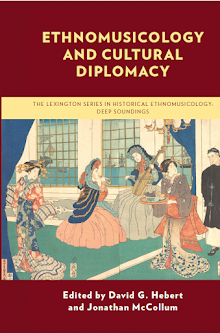
Jonathan McCollum, PhD, is an Associate Professor with Washington College (USA) and founding Chair of the Historical Ethnomusicology special interest group of the Society for Ethnomusicology. He is known for his widely published contributions to the historiography of global music, and music traditions in Armenia and Japan.

Elnora Mamadjanova, PhD, is Associate Professor in the Department of Music History and Criticism with the State Conservatory of Uzbekistan, Tashkent. She has coordinated several international musicology symposia affiliated with international music festivals in Uzbekistan. Her publications include the book Traditional Music of the Uzbeks (Extremum, 2016).

Nguyá»…n Thanh Thá»§y, PhD, is a leading Master performer of the Vietnamese traditional instrument dan tranh who recently completed doctoral studies at the Malmo Academy Music, Lund University, Sweden and is now a Swedish Research Council funded postdoctoral researcher.

Stefan Östersjö, PhD, a professional guitarist and widely-published pioneer of intercultural studies in the field of Artistic Research, is now a full Professor and coordinator of doctoral studies in music at Lulea University of Technology, Sweden.

Nasim Niknafs, PhD, is an Associate Professor of Music Education at the Faculty of Music, University of Toronto. Nasim’s research concerning social justice, activism, and politics of contemporary music education is widely published. Concluding a longitudinal research on the music education of rock musicians in Iran, Nasim has recently begun research on migratory and diasporic practices in music education. Nasim holds degrees from Northwestern University, New York University, Kingston University, London, and University of Art, Tehran.

Karan Choudhary holds a PhD from the National Law University Delhi, India and Université Paris Nanterre, France. Presently, he is a Judge in Delhi, India. He was a recipient of an Erasmus Scholarship from the European Union. His research interests include culture, law, indigenous rights and policy designs, with publications in Interactions between Culture and Law in India and Europe, and Language, Law and Community.

Abraha Weldu holds a PhD in History and Cultural Studies from Mekelle University, Ethiopia. His doctoral dissertation is an intellectual biography of one of the most prominent diplomats and cultural attachés of twentieth-century Ethiopia. For more than seven years, he has taught courses in history and heritage studies at Bule Hora University. He was a participant in the Bergen Summer Research School in Norway.

Rhoda Abiolu is a Postdoctoral Fellow with the Durban University of Technology, and holds a PhD from the University of KwaZulu-Natal. Her research interests are in Media and Cultural studies with emphasis on media and cultural representations, ethnomusicology, participatory culture, and political economy. She was a participant in Bergen Summer Research School.

We have exciting plans for this book, and I am eager to see how the final version turns out as we obtain and respond to recommendations from an external reviewer. 


Click HERE to see reviews of my first six books.

2/12/20

Indigenous Music and Comparative History of Education


[UPDATE, April 5, 2020: This conference is cancelled due to the Covid-19 pandemic.]

I recently learned that two panels which include my work have been accepted for presentation at the 34th World Conference of the International Society for Music Education, in Helsinki, Finland (August, 2020).

I eagerly look forward to collaborating with some excellent colleagues on these presentations ...


  • Indigeneity in the 21st Century Classroom: Reconstruction and Reconciliation in Scandinavia and North America (Presenters: David Johnson, Ylva Hofvander Trulsson, Patrick Schmidt, and David Hebert) 

  • Seeing Through a Wider Lens: Considering Revisionist History in Music Education (Presenters: Craig Resta, Marie McCarthy, Lia Laor, Benon Kigozi, and David Hebert). 

Link for further information: https://www.isme2020.fi/


2/3/20

Music Sustainability Education


Through the Nordic Network for Music Education, we have agreed on a new project for documentary videos and educational website production. This will lead toward development of an international joint Master program in Music Sustainability Education. Click above or HERE to see a sample video with further information. 

We are hopeful that support and funding can be obtained from various sources to ensure high quality outcomes for this innovative project. 

Here is a link to the Nordic Network for Music Education:

Here is a link to the new book from the Nordic Network for Music Education:

Click HERE and HERE for examples of supporting research.

11/20/19

Music, Law, and Society


It was a great pleasure this week to give an invited lecture entitled “Language and Cultural Policy: Rethinking Music’s Significance,” for the International Law Summit in Bergen on The Language and Law. The law professors there, many of whom were from China, showed great interest in the topic and had excellent suggestions.

Law has been of increasing interest to me across recent years, and during the past few summers I have taught Cultural Policy courses for international PhD students at Bergen Summer Research School as well as law students at the China University of Political Science and Law, Beijing.

I am now developing a book with contributors from several countries that addresses how government policies can effectively support the sustainability of music traditions through various public institutions. This will most likely become part of the Deep Soundings book series with Rowman & Littlefield (Lexington), but I also mentioned it in my discussion with Routledge editors who had arranged a recent meeting with me in Bergen. Although the book is still under development, we have likely contributions from China, Vietnam, Sweden, Poland, Guyana, Nigeria, South Africa, Ethiopia, and other countries.

Public institutions, such as schools, universities, concert halls, museums, and galleries - as well as memorials and protected heritage sites - play an important role in ensuring that the arts and cultural heritage can remain viable for future generations. This is not only a local or national concern, but a global one, as recognized by UNESCO and other organizations. However, some kinds of laws and programs certainly function better than others, and there is a need for more robust, critical and comparative studies in this field.   

Below is a photo from my speech at the International Law Summit: 

Click HERE for a law-related article that I developed with Finnish scholar Marja Heimonen in an earlier phase of my career, and HERE for a later article we developed.

Some of the earliest laws in Northern Europe were written in runes on stone surfaces such as this one, which I photographed last week as part of some research on Viking Age and early Medieval times: 

6/26/19

International Cultural Policy Courses


Across the past two weeks, PhD students from several countries joined the course I taught for Bergen Summer Research School entitled Cultural Policy: Arts Heritage and Sustainability. We included some excellent guest lecturers, such as Mary Miller (Director of Bergen National Opera) and Norwegian scholars Tore Sætersdal (anthropologist) and Ole Marius Hylland (policy analyst).

The PhD students came from Germany, Brazil/Sweden, Canada, Ethiopia, Nigeria, Ethiopia, Ghana, and South Africa. We are now developing a book based on these two international cultural policy PhD courses held in 2018 and 2019.

Links for more information:

Next week I teach a course entitled Arts Policy in the Twenty-First Century for law students in China’s leading law faculty, China University of Political Science and Law (CUPL), Beijing.

In the Autumn, a new PhD course that I developed will finally be offered in Bergen at Western Norway University of Applied Sciences. It is entitled Non-Western Educational Philosophy and Policy.

Link for more information:


PLEASE NOTE: PhD students from other universities are welcome to take these exciting intensive courses in Bergen -- in English -- for ECTS European transfer credits. 

Although music, education, and global studies continue to be the major themes in my research and teaching, I am increasingly interested in devising improvements to the ways that governments support arts and cultural heritage through various kinds of institutions.