Showing posts with label music events. Show all posts

10/11/23

Music in Action: Grieg Research School


For PhD candidates, post-docs, postgraduate students and senior researchers ... the GRS Autumn Course Music in Action will run from November 28-30, 2023. The event is organized by the Grieg Research School in Interdisciplinary Music Studies and is hosted by The University of Agder. 


Also, I am pleased to mention that as of a few weeks ago I am now serving on the GRS Board, which was part of what brought me to Norway over a decade ago. I am glad this promise has been kept, and I now have an opportunity to contribute to GRS as expected.


Link to event announcement: 

https://www.uib.no/en/rs/grieg/163696/music-action


INVITATION 

Music in Action


The theme of the course is 'Music in Action' and will explore the ways in which music acts in complex social, cultural, educational, and historical contexts. Music in Action invites presentations on how musical practices encounter and engage with society. The meeting points between artistic and scholarly approaches to research in music – such as applied or practice-based research – is of particular interest. An overarching question for the call is How can research in and with music can understand, analyse, and even initiate musical practices that act in complex social, cultural, educational, and historical contexts?


The course will feature presentations and discussions convened by researchers from key research groups/projects based in UiA's Faculty of fine arts, including researchers and topics from:

  1. Arts and social relations
  2. Art and Conflict
  3. Art & Young People
  4. Reconfiguring historical, Musical Crafts Education RHiMuCE
  5. Music, Dance, Drama - cross-artistic practices and educational discourses
  6. CreaTeMe centre of excellence at UiA

You may choose to engage in a dialogue with one or more of these groups and their areas of research in your presentations (please specify in your abstract if you wish to do so).


Specific questions to address include, but are not limited to:

  • How can research in and with music create new approaches to questions of health, social justice, and sustainability?
  • How can musical experiences and practices play a dynamic role in dealing with complex and potentially conflicting social conditions?
  • What role can/does music play in children’s and young people’s lives?
  • How can we educate musicians as socially engaged artists?
  • How can we improve, develop and discover new interdisciplinary methodological approaches to how we study and present music?  
  • How can we revitalize music pedagogy and arts education in the school of the future?

GRS courses are an interdisciplinary space that fosters critical and constructive dialogue. The format of presentations is flexible, and we invite performances, multimedia presentations, posters, panel discussions, and workshops, in addition to the usual oral presentations. Other formats that utilize our fields and ways of doing and disseminating research in music are also welcomed.


CALL FOR PAPERS

Abstracts are welcomed from any Ph.D. Candidates, Post-docs, Masters’ students, supervisors and researchers from any institution. The event is free for all registered participants.

Deadline for abstracts is 12th October. Follow this link to submit an abstract:

https://skjemaker.app.uib.no/view.php?id=15634751


ECTS CREDITS 

Ph.D. candidates can gain 3 or 5 ECTS credit points for active participation during this course and have the option of presenting on the main theme of the course OR on their own research project. These presentations will receive feedback from senior researchers and peers. 


REGISTRATION 

Registrations are now open. Follow this link:

https://forms.microsoft.com/e/mGEwGSTHCW


10/9/23

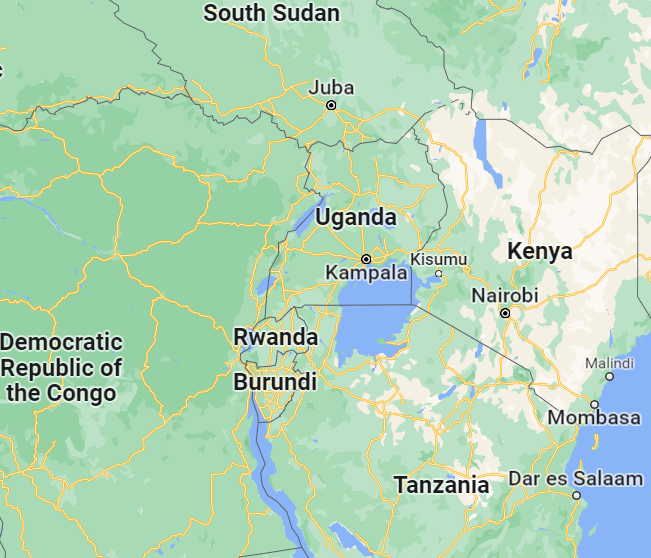
Kyambogo University Delegation in Bergen

We are excited to be hosting a delegation of special guests from Kyambogo University (Kampala, Uganda) for two weeks (16-26 October 2023). The Ugandan guests are coming through support of the CABUTE project. They will have the opportunity to receive research mentoring, use university libraries and offices, observe teaching, and visit rehearsals of several music ensembles in the Bergen area.


Click HERE to see the program for the 2023 CABUTE symposium at Western Norway University of Applied Sciences. 


I greatly enjoyed visiting Kyambogo University last year, which is soon launching a PhD program in Music Education. The university especially plays an important role in the field of teacher education in Uganda. Shown here are the Kyambogo University logo and an image of the new university gate to be erected in the coming months.


Philosopher Kathleen Higgins in Bergen

I am very pleased to announce that we were able to invite philosopher Kathleen Higgins to visit Bergen in a few weeks. She is an extraordinary scholar. Below is the poster for this event and the covers of several books for which Prof. Higgins is an author, co-author, or editor. Her visit to Norway is co-sponsored by the Grieg Academy Music Education research group and the Bergen Network for Women in Philosophy.  

Click HERE to see the announcement of this event at University of Bergen. 


I am happy to report that a photo I took of three women philosophers at this event later became the cover for the University of Bergen philosophy department's brochure ... 

Below are some of the many books for which Kathleen Higgins is an author, co-author or editor ... 


9/17/22

Ethnomusicology Conference Papers


It was a pleasure to give two co-authored presentations this week for the XXXVII European Seminar in Ethnomusicology in Graz, Austria. This was together with a postdoctoral researcher and PhD student affiliated with the Grieg Academy Music Education research group.


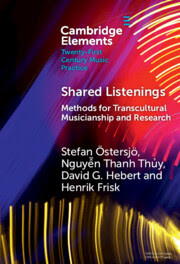
Dr. Thanh Thuy Nguyen’s paper highlighted some major points from our forthcoming book (with Stefan Ostersjo and Henrik Frisk, on Cambridge University Press) about new methods for decolonized intercultural music collaborations.


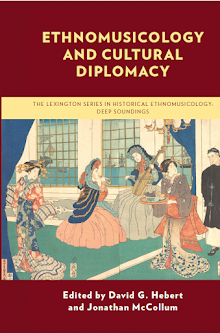
Marianne Løkke Jakobsen’s paper expanded on our recent book chapter in Ethnomusicology and Cultural Diplomacy, about music diplomacy between China and Europe, featuring in-depth discussion of the Panda Suite project.


7/25/22

Second East African Teacher Education Symposium

The second annual East African Teacher Education Symposium will be held at Makerere University in Kampala, Uganda on November 9-11, 2022. This year the EATES theme concerns how the Covid-19 pandemic has impacted education in this region.  

Click HERE for more information on the 2022 EATES.

Click HERE for information about the first EATES, in 2021.


via GIPHY

7/22/22

Board of International Society for Music Education

Affiliated with the International Music Council and UNESCO, the International Society for Music Education (ISME) has more than 2,000 members in over 80 countries. Yesterday I learned that I have been appointed a Board Member of ISME, confirmed by a vote open to all the organization’s members. 


I will be serving with the new ISME president Bo-Wah Leung of the Education University of Hong Kong, as well as several accomplished Board Members. It is an exciting opportunity to collaborate in development of international initiatives to strengthen the field of music education globally. 


Thank you, ISME members, for your support, and I will do my best to contribute positively to the organization’s leadership. 


via GIPHY

6/20/22

ISME world conference online


This is an exciting time for music educators, as the meeting of the largest organization in our field—the ISME world conference—is approaching in mid-July, hosted virtually from Queensland, Australia. For this meeting, I will be giving presentations in three sessions, one of which I will chair/organize.


“Seeing Through a Wider Lens: Revisionist History in Music Education,” Chair: Craig Resta. Panelists: Marie McCarthy, David Hebert, Benon Kigozi. 

Abstract

Looking at historical events is one way to better comprehend how prior actions can influence future progress. Often our narratives about the past have been framed through certain lenses that may not reflect the realities of the time, or the perspectives of today. As a result, there are people and histories and happenings that have untold stories needing more attention.  A primary idea of this panel is to discuss definitions of revisionist history, why it matters, and innovative approaches to understanding who we are, how we move ahead, and how to make progress towards social justice as dialogue and practice in the field. 

 Examples might be women in music education, international perspectives, LGBT issues and music teaching, marginalized populations, ethnicity and race, sociocultural influences connected to musical experiences, critical pedagogies and practices, cultural understandings, and diversity and pluralism in numerous settings. Others may be technology aspects, policy, reform, and institutional protocols, nationalism and musicological studies, and so on. Further viewpoints include how historical events play out in our profession, examples from the literature, and potential impacts on music teaching and learning in multiple countries and circumstances. This participatory discussion will tackle these issues representing viewpoints and perspectives from North America, Europe, Middle East, Scandinavia, Africa, and Asia. Scholars on the panel include those from the United States, Ireland, Norway, Israel, and Uganda. While more history needs to be done generally in music education, there can be even more attention to ideas and people and happenings that many of us do not know today. Aside from the historical events themselves, is the important discussion of history, and how we think and do it in practical context. What is our purpose in historical inquiry and reflection, and how can the outcomes make the musical experiences of those around us better?


“Musical Communication with China: An International Dialogue,” by Jiaxing Xie and David Hebert

Abstract: 

How does music enable intercultural communication and dialogue in education? From a traditional Chinese perspective, music is composed of three levels: form, function, and metaphysical dimensions. Musical communication and dialogue are thereby believed to originate from these three levels, which may serve as a framework for understanding interactions with the West. By the year 1600 Mateo Ricci had performed western music in China, but it was only since the 1840s that Western music began to profoundly influence Chinese music culture with varying intensity according to the evolving sociopolitical situation. Across generations, Chinese musicians have actively participated and reflected on the three delineated levels, but after nearly 200 years of intensifying musical “communication” how much do most Western people understand about Chinese music, even during this “information age”? We will examine specific cases of interaction between Chinese and Western musicians that have sought to improve intercultural understanding, and reflect on ways of evaluating the educational and social impact of such endeavors. Our account will take into consideration the arguments of notable Chinese international relations scholars, including Xiaoying Qi and Yaqing Qin, as well as perspectives of musicologists from China and other countries. One important development in this area was the establishment of institutions for learning Chinese musical instruments in Europe, but we note that enthusiasm for Western music in China has generally been stronger than enthusiasm for Chinese music abroad. When it comes to musical collaboration between China and Norway, for instance, we identify specific phases of development (e.g. 2000-2009, 2010-2019, etc.). In our view, robust intercultural exchange in music requires not only performances and symposia, but also in-depth dialogues, including co-authored publications of the kind that we are developing across years of collaboration.


“Ready to Conduct Historical Research?: Dialogue with Mentors.” Chair: David Hebert; Panelists: Marie McCarthy, Jane Southcott, Phillip Hash, Benon Kigozi, Robin Stevens, Craig Resta, and Casey Gerber 

Abstract: 

The purpose of this meeting is to provide an open session for mentoring of early-career scholars and doctoral students. All ISME participants interested in historical research in music education are warmly welcomed to the session for discussion of their project concepts. Distinguished historians and mentors have agreed to participate in this session, including Marie McCarthy, Jane Southcott, Phillip Hash, Benon Kigozi, Robin Stevens, Craig Resta, and Casey Gerber. The session is chaired by David Hebert. The mentors will offer advice regarding previous studies as well as appropriate theoretical and methodological approaches. In addition to an opportunity for mentoring, this meeting also offers a chance to discuss future projects of the ISME History Standing Committee. 


Public domain image from: 

https://en.wikipedia.org/wiki/Didgeridoo#/media/File:Didgeridoo_(Imagicity_1070).jpg 

6/10/22

Inequalities in Higher Education and Arts

We are now in the middle of a unique international PhD course at Bergen Summer Research School called Global Inequalities in Higher Education and the Arts. Below is my introductory video for the course, which is co-taught with geographer Erlend Eidsvik.

We have outstanding guest lecturers appearing in this course, including Emily Achieng’ Akuno, Tara Pandeya, Alexis Kallio, Lesley Le Grange, Suriamurthee Maistry, and Nasim Niknafs.


PhD Candidates have joined the course from universities in many different countries—including South Africa, Nigeria, Cameroon, Australia, India, Canada, Norway, Denmark, Sweden, and UK—including students who originally come from such places as China, Indonesia, Russia, Georgia, and Spain. 


Below is a link for Emily Akuno's keynote speech: 

https://youtu.be/K3eh4NusheY  


I look forward to seeing the long-term outcomes of this course, and the PhD summer school as a whole, including the likelihood of some joint publications.

5/10/22

Conference in Estonia Funded

UPDATE (9 September 2022): Click here for an important update on this course, which will now be offered in a different location:  https://sociomusicology.blogspot.com/2022/09/nordic-network-2022-course-in-bergen.html

It is a pleasure to announce that Nordplus (Nordic governments) has just confirmed it will fund the upcoming Nordic Network for Music Education (NNME) conference and Master course in Estonia (24-28 October, 2022). The course is titled Challenges of Digital Tools in Music Education (an extension of the NNME project Digital Competence and Digitized Musical Heritage) and will be hosted by The Viljandi Culture Academy, University of Tartu, Estonia.

Master students from 19 partner institutions across all eight Nordic and Baltic countries can participate in the course’s online activities, and selected students will receive a travel grant covering all expenses to participate in person at the course site in beautiful Viljandi, Estonia.

An inspiring documentary film was made about last year’s NNME course in Iceland, and a recent book shows what NNME has achieved across its 25 years of professionalizing music education in the NB8 countries. Further information will be available soon on the website of the Nordic Network for Music Education.


Image source: https://en.wikipedia.org/wiki/Viljandi#/media/File:Viljandi_panoramic.jpg


4/8/22

Asian Ethnomusicology in Europe


We look forward to giving presentations for the 37th European Seminar in Ethnomusicology, hosted by the Institute for Ethnomusicology at the University for Music and Performing Arts Graz (Austria). I will present along with other members of the GAME research group: our Professor II, a postdoctoral researcher, and a PhD candidate. Below are the titles and abstracts for our upcoming presentations, both of which are connected with writings that will be published later this year.


Devising an “Artistic Research” Approach for Decolonized Ethnomusicology

Thanh Thuy Nguyen, David G. Hebert, and Stefan Östersjö


This presentation will feature discussion between co-authors of a fully drafted (but yet to be published) book, Shared Listenings: Methods for Transcultural Musicianship and Research (Cambridge University Press, forthcoming). The book demonstrates new strategies for equitable cross-cultural music creation as well as collaborative ethnomusicological research on such endeavors. Fitting the ESEM theme, this presentation–by authors from three continents–will emphasize how a research collaboration was developed through the work of Vietnamese-Swedish ensemble The Six Tones, with particular attention to its use of video-based “stimulated recall” methods. These methods, the group has explored as a means for intersubjective meaning making across cultural boundaries. Specifically, we will demonstrate what methods were developed through the project, why they potentially offer unique insights, who may benefit from them (for what purposes), and how they may be applied in other musical contexts. The presentation builds on a comprehensive analysis of the approaches to stimulated recall developed by the group since 2009, and is situated in recent scholarship and debates on the need for decolonising approaches to music research.


Keywords: bimusicality, decolonization, artistic research, cross-cultural collaboration


Harmonizing Across a Divide: The Music Confucius Institute

Marianne Løkke Jakobsen and David G. Hebert

In this presentation, we describe the perspectives of managers and Chinese instrument teachers with the world’s first Confucius Institute to have a focus on music, Copenhagen’s Music Confucius Institute (MCI). Previous research has theorized the notion of “soft power” and documented diverse opinions on China’s system of Confucius Institutes, while previous ethnomusicological studies have established that music exchange can reduce international conflict, but a need persists for further studies of Chinese music policy. Our pioneering study examines the views of expert Chinese musicians who taught for the MCI in Europe and a leading music conservatory in China, as well as the complex diplomacy associated with managing such intercultural music institutions. One author worked for nine years founding director of the MCI, and can thereby offer a view from direct experience. The other author visited the MCI multiple times, later serving as Visiting Scholar at the Central Conservatory of Music where he interviewed and observed the work of instrumentalists who had taught in both Beijing and Copenhagen. Fitting the ESEM theme, our presentation emphasizes issues in research collaboration, including that of balancing between Sinophobia and jingoism, cultural diplomacy, self-censorship, and strategies of reflective distancing to “make the familiar strange”, thereby obtaining insights with broad applicability. We will demonstrate how personal relations and diverging stakeholders can make ethnomusicological studies of leadership delicate in international contexts due to the need to maintain healthy collaborations that may be misunderstood due to prejudices from multiple directions.


Keywords: cultural diplomacy, institutionalization, soft power, China, Europe-China relations


Graz image source: https://en.wikipedia.org/wiki/Graz#/media/File:19-06-14-Graz-Murinsel-Schlo%C3%9Fberg-RalfR.jpg

3/17/22

Cultural Diplomacy and Music in the Internationalization of Education


UPDATE (13 April 2022): Due to complications with international travel, and NERA's rule against online participation, we now unexpectedly find we have to withdraw from this conference. We hope to join an NERA conference some other time. 
................................................................................

Our symposium “Cultural Diplomacy and Music in the Internationalization of Education” has been accepted for presentation at the 2022 Nordic Educational Research Association (NERA) conference in Reykjavík, Iceland. This will be in collaboration with both Marja Heimonen and Marianne Løkke Jakobsen. Below is our abstract for the entire session, and individual abstracts will be available at the event. 

Cultural Diplomacy and Music in the Internationalization of Education 

International relations for the Nordic region are arguably as complicated in 2022 as at any time since World War II due to the Covid-19 pandemic, misinformation campaigns on social media, and political instability in Eastern Europe. Consequently, promotion of intercultural understanding and global empathy are profoundly important responsibilities of educators for the objective of reducing prejudices and conflict (Buchanan & Hellstén, 2020; Jæger, 2022). Cultural diplomacy is an effective way of instilling appreciation for the heritage associated with other nations, and music is an especially prominent art form that deeply intersects with cultural values (Hebert & Kertz-Welzel, 2016). Based on our development of a book to be published in 2022, this roundtable presents the educational implications of recent research findings regarding the use of music in cultural diplomacy for the internationalization of education. Our studies demonstrate how the mechanisms of international law and cultural policies influence what is possible in terms of musical exchange in international education projects. 

We begin with a paper, by an author with long-term interests in music law, that applies human rights and “capabilities approach” perspectives to music education, with particular attention to implications for Sámi and other minorities. The next paper concerns issues in management of Nordic responses to cultural diplomacy from elsewhere, in this case a Sino-Danish Confucius Institute based in Copenhagen that was established and co-funded by the Chinese government. Its author faced many complex challenges as director of the international institution. The final paper—by an author who has worked in Finland, Norway, Sweden and Denmark—presents new theoretical developments and general recommendations from music diplomacy work in multiple contexts, with particular attention to challenges for internationalization of Nordic teacher education (Hebert & Hauge, 2019).

REFERENCES 
Buchanan, J. & Hellstén, M. (2020). Ways of getting to know: International mobility and indigenous education. In F. Dervin, Mononey, Y. & Simpson, A. (Eds.), Intercultural Competence in the Work of Teachers. New York: Routledge. DOI: https://doi.org/10.4324/9780429401022 
Hebert, D. G. & Hauge, T. B. (Eds.), (2019). Advancing Music Education in Northern Europe. New York: Routledge. 
Hebert, D. G. & Kertz-Welzel, A. (Eds.), (2016). Patriotism and Nationalism in Music Education. New York: Routledge.  
Jæger, K. (2022). Elusive politics: De-internationalizing higher education in the context of international recognition conventions. Higher Education Policy, 1-19. DOI: https://doi.org/10.1057/s41307-022-00262-4

3/9/22

Plans for Summer 2022

In summer 2022, I look forward to serving as keynote speaker for China’s national music education conference, to be held in Chengdu at the Sichuan Conservatory of MusicMy presentation will be on new developments in the field of international research.


It is also a pleasure to have been invited to serve as the international professor on the Doctoral Defense Board for two PhD students in Lithuania at Vytautas Magnus University:

-Youdi Sun. Adjusting to Cultural Differences in Teaching and Learning: The Case Study of Chinese Postgraduate Students in Lithuania.

-Yuqing Yang. Boundary Crossing: The Sociocultural Integration Experience of Chinese International Students in Lithuania.


It is exciting to see what this new generation of researchers is producing in the growing field of international education. Upon evaluating these new PhD degrees from Lithuania in June, I will have served on doctoral committees for universities in 12 countries in the fields of international education, musicology, and music education. It is certainly fascinating to experience diverse approaches to doctoral studies in different locations and academic fields, and to take part in developing new doctoral programs. I have also greatly enjoyed doing some teaching for the university-wide professional development course on Doctoral Supervision at University of Bergen across recent years, and have been developing some writings on issues in doctoral supervision.


This summer we eagerly look forward to offering the new PhD course Global Inequalities in Higher Education and the Arts at Bergen Summer Research School, 2022. It is inspiring to be co-leading this course with geography professor Erlend Eidsvik, and we have planned for some excellent guest lecturers, including keynote speaker Emily Achieng’ Akuno, as well as distinguished scholars Lesley Le Grange and Suriamurthee Maistry, a special dance presentation by Tara Pandeya, and much more. There were many strong applicants, and we are pleased to see that this course will include around 20 PhD students from several different countries, and we look forward to some lively discussions.


Chengdu image attribution: 书剑飘零

11/8/21

Oral History Discussions

Dr. Yang Yang at Education University of Hong Kong has just posted a brief interview based on questions that emerged in response to one of my earlier videos – “Oral History Methods for Sustaining Music Heritage in Education” – which was widely shared in China.


Click HERE to access the new Q&A session.


Click HERE to access an explanation and link to the original video (speech) that served as a basis for this Q&A session.


English versions are available on each of the above sites, but it is necessary to scroll to the bottom of each page.


Pictured above is a public domain image, a sketch of the Old Summer Palace in Beijing, where western music was often performed before the palace grounds (including concert hall) were destroyed in 1860 during the Second Opium War.

10/26/21

East African Education and Doctoral Supervision

I look forward to participating soon as a session chair and discussant for the first East African Teacher Education Symposium: Challenges and Opportunities in Teacher Education (November, 2021). This initiative was developed through the Norad-sponsored CABUTE project, and will take place both online and physically at Makerere University, in Kampala, Uganda. Eight presentations at this symposium - around half of what was selected for this event - are concerned with music-related topics, including papers by accomplished scholars such as James Isabirye, Nicholas Ssempijja and Milton Wabyona.

It was also a pleasure to learn yesterday that I have been formally appointed by the Royal Danish Academy of Music as a doctoral supervisor for a dissertation through Aalborg University concerned with online music learning between Denmark and China. It promises to be a very interesting project, and this means that I will soon have served on doctoral committees for universities in 11 countries, each of which has been uniquely stimulating. Later this week I teach for University of Bergen’s annual university-wide course on Doctoral Supervision, and next week I will be in Iceland for the NNME intensive course/conference. 


Although the pandemic has made international initiatives more challenging than before, it is encouraging to see that many forms of collaboration are still possible.


Image of Makerere University retrieved from: https://commons.wikimedia.org/wiki/File:Ssetendekero_Makerere.jpg

10/16/21

Global Higher Education & Arts Summer PhD Course

It is a pleasure to announce that we have co-developed a new PhD course with cultural geographer Erlend Eidsvik, Global Inequalities in Higher Education and the Arts, which will be part of Bergen Summer Research School in 2022. Bergen Summer Research School attracts doctoral students from across the world for interdisciplinary courses concerning global challenges.


More information will be posted here soon.


Above is an image of Bergen harbor, a photo I took a few weeks ago when our postdoctoral researcher was visiting from Sweden. 

Music and Cultural Diplomacy Panel at BFE

We look forward to giving a panel presentation “Ethnomusicology and Cultural Diplomacy” at the British Forum for Ethnomusicology conference Ethnomusicology in 2022 and Beyond in mid-November 2021. The conference format allowed for only 3 papers in a panel session, so this is just a tiny preview of what will appear in the book, but future conferences will give us more opportunities to share what we have developed through this project.


Ethnomusicology and Cultural Diplomacy

This panel is based on a book by the same title that will be in press at the time of the conference. Three contributors will present material from their chapters on music diplomacy projects from Afghanistan, Iran, and Vietnam. Rather than explaining how western nations use music for diplomacy, they take a decolonizing approach to ethnomusicology, by determining how non-western cultural practices impact music diplomacy directed toward Europe and North America. Two presenters are from the countries discussed (Iran and Vietnam), while the other devoted three years to music diplomacy in Afghanistan, a nation now embroiled in a tragic crisis. 


Session Format:

·       Introduction, Prof. David G. Hebert, session chair (Western Norway)


·       Paper 1: ‘A Very Beautiful Image of Afghanistan’: Cultural Diplomacy through Music Performance and Education - Lauren Braithwaite (PhD candidate, Oxford University)


·       Paper 2: Soft War and Multilateral Creative Pathways in Iran - by Nasim Niknafs, PhD (Associate Professor, University of Toronto)


·       Paper 3: Cultural Diplomacy and Transculturation through the History of the Vọng Cổ in Vietnam - by Thanh Thuy Nguyen, PhD (Postdoctoral Researcher, Royal Academy of Music, Stockholm)


·       Q&A Discussion, moderated by Prof. Hebert


We are also making further progress now on the forthcoming book on Viking musical heritage, hence the image above.