8/13/20

Keynote in Thailand


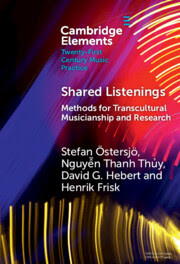
I look forward to giving a Keynote presentation soon for a conference in Thailand in collaboration with creative colleagues in the avant garde ensemble The Six Tones. Our presentation is titled “Musical Transformations: Networked Performance in Intercultural Music Creation,” a keynote developed for Is the Virtual Real?: Musical Communities in the 21st Century, the annual Princess Galyani Vadhana Institute of Music (PGVIM) International Symposium.

UPDATE (Sept. 27, 2020):

Here is a link to our entire keynote presentation (complete with performances and interviews):


Here is a link for anyone who wants to skip to the Conclusion from our keynote presentation: 

https://youtu.be/UsN-RUz5mwo?t=2799 

 
For several years, the PGVIM events have attracted music specialists from around the world to Thailand. Due to the pandemic in 2020, our presentation is via videoconference.

Click HERE for the symposium schedule of events, and HERE for details on our presentation.

Above is a photograph of members of The Six Tones, and below is a photo of me playing Thai cymbals at a Maori marae in New Zealand (from 15 years ago during the Thai-Maori Musical Exchange Project with Dr. Pornprapit Phoasavadi, who had been my teacher of Thai jakhe for several years).

Paper presentation (with guitarist Stefan Östersjö, Vietnamese dan tranh master Than Thuy Nguyen, and composer Henrik Frisk), “Musical Transformations: Networked Performance in Intercultural Music Creation”; Panel discussion with composers Joseph Hyde (Bath Spa), Scott Wilson (Birmingham), and Ivan Zavada (Sydney), Is the Virtual Real?: Musical Communities in the 21st Century, Annual PGVIM International Symposium, Princess Galyani Vadhana Institute of Music, Bangkok, Thailand (August 25, 2020). [presented via videoconference] 

8/12/20

Oxford Handbook of Social Media and Music Learning


It is a pleasure to announce the publication of the Oxford Handbook of Social Media and Music Learning, a unique new research resource that promises to attract much interdisciplinary interest. It is edited by three scholars based in Ontario, Canada: Janice Waldron, Stephanie Horsley and Kari Veblen. 

My chapter in this handbook is co-authored with Sean Williams, and titled “Ethnomusicology, Music Education, and the Power and Limitations of Social Media”. Sean and I describe how the fields of ethnomusicology and music education have made creative use of various forms of social media, including blogs such as this one. Moreover, we demonstrate how the field of music as a whole has been profoundly transformed through recent technological developments in ways that are both positive and negative for artists, researchers, educators, and the general public.


via GIPHY

8/4/20

International PhD Course in Summer 2020

Sunnhordland newspaper recently published a description of innovative approaches in a new course that I developed and taught during the summer (July 14, 2020 edition, p.5). I would like to thank editor Hilde Vormedal Nybø for approving its publication, and here is a link to Sunnhordland, which I encourage Norwegian readers to support: https://www.sunnhordland.no/

The article describes an example of how the higher education sector in Norway has devised creative ways of strengthening international education despite the challenges of the Covid19 pandemic. In May and June of this year, Høgskolen på Vestlandet (HVL) offered the new course PhD 911: Non-Western Educational Philosophy and Policy within its PhD program in Bildung and Didactical Practices. Fitting its international theme, the course was taught in English, and due to the Coronavirus, all course activities were facilitated through online learning. 

Click HERE for further information about this course, which we look forward to offering again in 2022. Also, click HERE for information on the upcoming intensive summer PhD course Internationalizing Higher Education, to be offered through Bergen Summer Research School.  

7/9/20

Journal of Popular Music Education: Internet Special Issue


The Journal of Popular Music Education is now publishing an Internet Special Issue edited by Christopher Cayari (Purdue University) which is focused on Internet-based music learning.

This has become an important topic especially under the Covid19 pandemic conditions. 

Click HERE to access the journal.

Among others, the special issue includes the following article:

Brudvik, S. & Hebert, D. G. (2020). What’s stopping you?: Impediments to incorporating popular music technologies in schools. Journal of Popular Music Education, 4(2), pp.135-152.  

Below is a public domain image (from LSDB's Anatomography project) of the hippocampus, which plays an important role in music appreciation. 

Hippocampus

7/6/20

Teaching World Music in Higher Education


Have you considered teaching a World Music course for a college or university? Is your administration hoping to see World Music courses offered, or do you know someone who has mentioned the possibility of teaching this subject? For some lecturers, this vast field can be an intimidating assignment for which it is hard to know where to begin. Even for ethnomusicologists who have taught World Music for years, it can be difficult to envision fresh and creative approaches to the subject beyond standard textbooks. This new book offers helpful stimulation for anyone interested in teaching a successful World Music course to students in higher education. 


Link for details: 
https://www.amazon.com/gp/product/0367231735/

7/5/20

A Quarter-Million Visitors


It has now been over 13 years since I started posting various activities and announcements on this website, which across time has turned into a kind of digital portfolio. It is hard to believe, but according to statistics from the host Blogger, by mid-Autumn I am projected to have had a total of over 250,000 visitors to Sociomusicology. Those numbers are much larger than I would have ever expected, but some of the traffic might be "bots" rather than real live humans.

The very first post on Sociomusicology was about visiting Kyoto, Japan, in 2007 to complete research for my first book, while working as a young Assistant Professor at Boston University. As I would later write, just a few months afterward, it was a pleasure to have such activities as playing trumpet in Boston for Honkfest with Charlie Keil and Reebee Garofalo, and with bluesman Lou Pride in Victor Coelho’s great band. I was also excited about the work of my doctoral students, as well as the landmark Tanglewood-II symposium, but by the end of the year I left for a new job as a full professor in Finland, and eventually ended up in Norway.

Since 2007, there have been so many developments and activities that I could never have imagined. Those who have done any online writing in a blog, or related medium, will know that it can be difficult to decide what to write (and what to leave out), and inevitably issues arise across years in one’s older posts, such as broken links, formatting changes, and images that are no longer online. Meanwhile, the technology keeps evolving, especially across more than a decade. With time, I have gradually started to include more videos and photos, but never felt the need to have much interactivity built into the site. I figured that if people were curious about something they read, they could always just send me an email, and indeed, there have been many messages from strangers. I regret that sometimes I have been so busy that it has taken a while to reply.

Today most online activity is centered on proprietary social media that emphasize instant interaction and enable “big data” analytics for targeted advertising and surveillance: Facebook, Twitter, Instagram, TikTok, etc. Nevertheless, I think it still remains useful to maintain a site with one’s own content, something to link to with relative autonomy, so Sociomusicology will probably keep going for a while longer.

Displayed above are various systems that humans use to represent numbers, as well as a bit of time-lapse photography taken a few days ago from beside my home as mist was drifting across the lake.

6/17/20

Ethnomusicology and Cultural Diplomacy


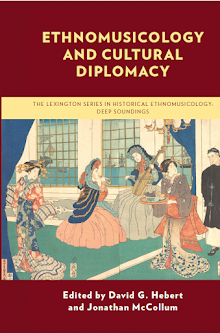
For many generations, the cross-cultural study of music has been an important way of both fostering intercultural understanding and strengthening international relations. What counts as heritage has been rapidly changing as a consequence of globalization and commodification, and today western art music and hip-hop may be as much a part of cultural diplomacy as traditional folk music and Indigenous traditions. 

The book Ethnomusicology and Cultural Diplomacy (forthcoming, April 2022, Lexington Books/Rowman & Littlefield) aims to examine this topic to an unprecedented level of detail, from the perspectives of cultural diplomacy, international law, and (ethno)musicology. This unique book promises new insights for educators, researchers and policy-makers.

Click HERE to learn about the book’s contributing authors.

Click HERE for an article related to this topic from The Norwegian American.


This book is a new volume under development that is forthcoming in the series Deep Soundings: The Lexington Series in Historical Ethnomusicology.