
I look forward to participating in the 71st Annual Meeting of the Society for Ethnomusicology (SEM), which will be held on November 5 - 8, 2026, in Bloomington, Indiana (USA), on the Indiana University campus.
At this
conference, I will lead one meeting as Chair of the Historical
Ethnomusicology Section, and will also be presenting a paper, “A Philosophy
of World Music Instruction for the Age of AI”. I also intend to visit the university's world-renowned Archives of Traditional Music to discuss digitization and research procedures related to a proposal to develop a major interdisciplinary MUSIC research center in Bergen, Norway.
The Historical
Ethnomusicology Section meeting will be on Thursday, 05 November 2026, 7:00pm -
9:00pm, in the Walnut room, Main Floor, 60.
The
abstract of my paper presentation is below.
A
Philosophy of World Music Instruction for the Age of AI
David
Hebert
Western
Norway University of Applied Sciences; Education University of Hong Kong
In most
ethnomusicology graduate programs, current debates in philosophy of education
tend to receive little to no attention. The purpose of this paper is to
demonstrate the application of a new philosophy in the teaching of world music,
a common responsibility of ethnomusicologists in higher education. While
previous books (e.g. World Music Pedagogy, VII: Teaching World Music in Higher
Education) offer helpful methods for collegiate world music instruction,
the purpose of a philosophy text is to provide foundations that empower
us to reconceptualize the meaning and ultimate purpose of instruction in this
field, while illuminating new resources for sustained inspiration, thereby
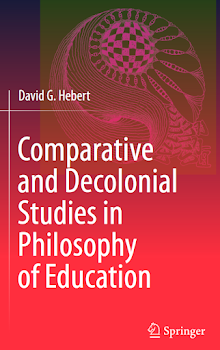
reducing professional “burnout”. The presenter’s twelfth book, co-authored with
a Chinese ethnomusicologist (Routledge, 2026), is concerned with how music
educators can respond to the array of novel challenges coming from generative
AI, and serves as background for this paper. Our book applies a systems science
approach to global philosophy of history by arguing how and why human
narratives evolved in particular ways across time, which ultimately engenders a
new perspective on musical meaning in relation to both personal identity and
AI. This matters for ethnomusicologists teaching world music, particularly as
the popularization of generative AI tools challenges us to reconsider what
quality education entails and what we could hope world music students might
learn to do and understand through our teaching. AI prompts us to rethink not
only classroom activities and approaches to assessment, but also notions of
creative originality, ownership, and music heritage, demanding a new
educational philosophy.
Session
Details:
12I: Mediating World Music:
Authority, Authenticity, and Musical Tradition in a Global Age
Time: 08/Nov/2026: 10:45am-12:15pm · Location: Dogwood


 https://orcid.org/0009-0002-1446-3893











No comments:
Post a Comment