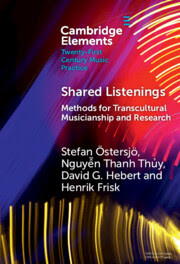
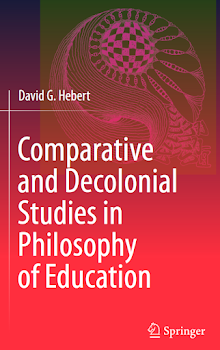
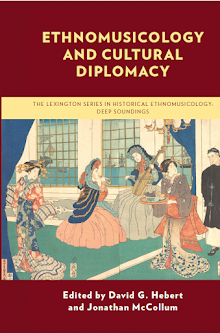
In a recent issue of the
Finnish Journal of Music Education, Rauni Rasanen writes of how “Music with its words, melodies and rhythm has a very holistic effect on people. Still, if these methods can be used to build prejudices they are equally efficient when deconstructing them” (2010. p.22). Professor Rasanen reminds readers that in the contemporary world “international connections are not only natural, but also necessary” and that a reflective and compassionate awareness of “global responsibility” belongs in teacher education programs, including those in the field of music.
Historian Goldwin Smith is credited with first introducing the phrase “Above all nations is humanity,” which has since become a popular motto used in various ways by such institutions as Cornell University, University of Hawaii, University of Illinois, and University of Southern Mississippi. Few, it seems, would claim to be opposed to this idea. Nevertheless, music curricula rarely reflect a commitment to the spirit of this motto in terms of either careful representation of global heritage on the one hand, or proper restraint in terms of the promotion of nationalistic ideology on the other.
I am pleased to report that we have now obtained a contract to publish a book in 2012 entitled Patriotism and Nationalism in Music Education, which will directly examine the phenomenon of national identity construction in music education from a global perspective, with particular attention to how patriotic music has been used in various nations in the past, and how it might most appropriately fit within a curriculum that seeks to represent contemporary values and concerns among multicultural nations. Contributors include several of the most widely published young scholars in the field of music education. While there are many purely musical rationales (e.g. development of compositional and performance ability, enhanced aural skills and general musical knowledge, etc.) for including an array of genres such as patriotic or non-western music in any curriculum, this book will discuss the implications of how the power of music is also frequently used for ideological purposes that may lend support to those who advocate either war or peace.
Click
HERE for a related book announcement.
Below is the opening material for the book I have developed with Alexandra Kertz-Welzel:
Hebert, D. G. & Kertz-Welzel, A. (Eds.) (in press/forthcoming, 2012). Patriotism and Nationalism in Music Education. [Contributors: Simon Keller, Jane Southcott, Kari Veblen, Ambigay Yudkoff, Carlos Abril, CheeHoo Lum, Eugene Dairianathan, Amy Beegle, Wai-Chung Ho, Marja Heimonen, David G. Hebert, Alexandra Kertz-Welzel].
Patriotism and Nationalism
in Music Education
Edited by
David G. Hebert and
Alexandra Kertz-Welzel
Abstract
Music has long served as an emblem of national identity in educational systems throughout the world. Patriotic songs are commonly considered healthy and essential ingredients of school curriculum, nurturing the respect, loyalty and “good citizenship” of students. But to what extent have music educators critically examined the potential benefits and costs of nationalism? Globalization in the contemporary world has revolutionized the nature of international relationships, such that patriotism may merit rethinking as an objective for music education. The fields of “peace studies” and “education for international understanding” may better reflect current values shared by the profession, values that often conflict with the nationalistic impulse. This is the first book to introduce an international dialogue on this important theme.
Contents
Introduction
David G. Hebert and Alexandra Kertz-Welzel
Preface: On Patriotism and Education
Simon Keller
1 Patriotism and Music Education: An International Overview
David G. Hebert
2 Lesson Learned? In Search for Patriotism and Nationalism in the German Music Education Curriculum
Alexandra Kertz-Welzel
3 Nationalism and School Music in Australia
Jane Southcott
4 National Identity in the Taiwanese System of Music Education
Wai-Chung Ho
5 A National Anthem: Patriotic Symbol or Democratic Action?
Carlos R. Abril
6 Nationalism and Patriotism: The Experience of an Indian
Diaspora in South Africa
Ambigay Raidoo Yudkoff
7 Soundscapes of a Nation(alism): Perspectives from Singapore
Chee-Hoo Lum and Eugene Dairianathan
8 Conflicting Perspectives on Patriotism within Music Education in the United States During Wartime
Amy C. Beegle
9 "We Stand on Guard for Thee": National Identity in Canadian Music Education
Kari K. Veblen
10 Nationalism and Music Education: A Finnish Perspective
Marja Heimonen and David G. Hebert
11 Conclusions and Recommendations
David G. Hebert and Alexandra Kertz-Welzel
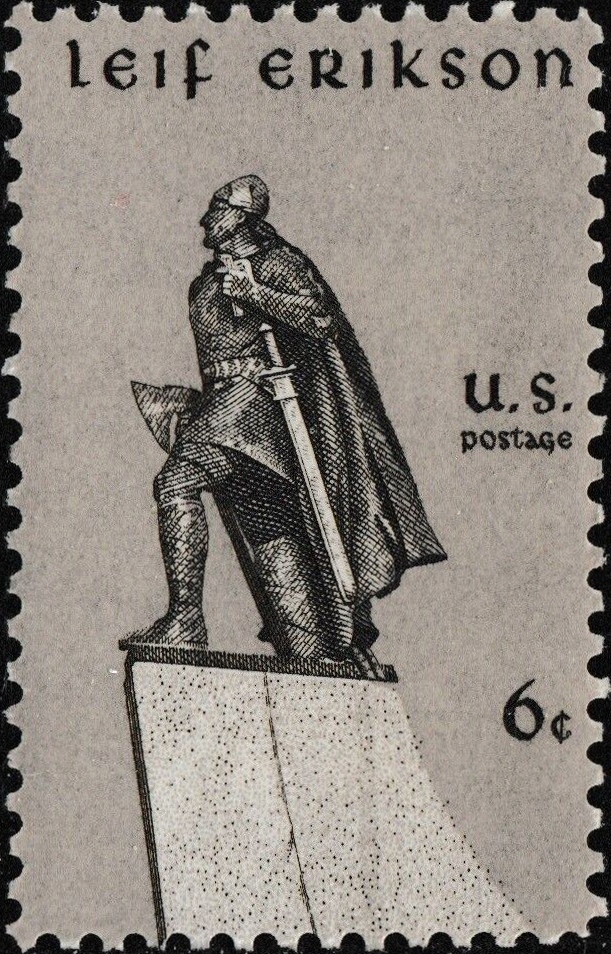







 https://orcid.org/0009-0002-1446-3893