5/31/21

Asian Educational Philosophies


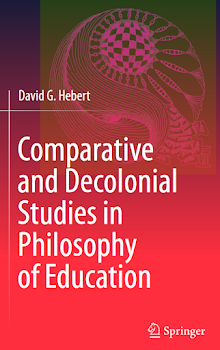
Our special issue on Asian Educational Philosophies has now been published in the Nordic Journal of Comparative and International Education (2021, vol.5, no.2): https://journals.oslomet.no/index.php/nordiccie/issue/view/425

This publication was developed in collaboration with doctoral students from several countries who were enrolled in 2020 in the new course PhD911: Non-Western Educational Philosophy and Policy. We are also developing a book which will include additional chapters and extended discussion.

It is inspiring to see what these young scholars have accomplished, and their work promises to have enduring value.

The course will be offered again soon, in Autumn, 2021 (October 11-22). It is taught entirely online, in intensive format, and available to PhD students anywhere in the world for transferable European higher education credits (5 ECTS).  

5/19/21

Popular Title to be Released as Paperback


I am happy to report that we just today received good news from the press regarding our 2018 book Music Glocalization: Heritage and Innovation in a Digital Age. Here are excerpts from their letter:


Dear David Hebert and Mikolaj Rykowski,

I’m pleased to say that we are planning to release a paperback version of your book Music Glocalization: Heritage and Innovation in a Digital Age (ISBN: 9781527503939). 

(...)  

Sales of the hardback and academic eBook versions of Music Glocalization: Heritage and Innovation in a Digital Age have been quite encouraging, and we believe we now have a good opportunity to issue a soft cover edition. This is something we do on occasion, for only about 1 in 10 of our published titles – those we feel might have a wider appeal. We would like to try a paperback version of your book at a lower price of £35.99.


This book has indeed sold well and received positive reviews. We are thankful that Cambridge Scholars has identified the book (which is available now in over 600 libraries plus private collections) as selling within roughly the top 10% of their titles, and the press will soon release an affordable 2021 paperback version.  

Below are quotations from sample reviews:  

"One of the major strengths of Music Glocalization is that it clarifies and explains the varied literature circulating around the key word--music glocalization--to broaden our understanding and analysis of a wide variety of music issues. To summarize, this is an indispensable book, and I highly recommend Music Globalization for researchers, students, and libraries with a strong interest in the processes of globalization and localization, musicology, ethnomusicology, cultural studies, cultural sociology, sociology, and communication. It will also be of great interest to those in the field of international, transnational, and cosmopolitan studies." - Professor Wai-Chung Ho, Hong-Kong Baptist University (Cambridge Scholars blog).  

"In its conception and execution, this volume is a noteworthy effort to insert the problematic of glocalization into the disciplines of musicology and ethnomusicology ... The editors' synthesis of the volume's research is highly original and represents a good point of departure for thinking further about the uses of glocalization in musicology." (Victor Roudometof, Ethnomusicology Review, 2019).  

"the first collection on music topics to explicitly deal with the concept of glocalization . . . new and often original examples of the how the transnational circulation of ideas, music, and musicians have contributed--in the 'digital age' as well as in the past--to the relentless, messy process of negotiation and definition of collective and individual identities." - Notes (Music Library Association, 2020).

Here is a link for more information about the book:

https://www.cambridgescholars.com/product/978-1-5275-0393-9

Here is a link for the press:

https://www.cambridgescholars.com/


5/16/21

Lecturers for Internationalizing Higher Education

via GIPHY [Globe GIF, open-access, retrieved from: http://gph.is/2cydVrn]

An exciting schedule of lectures has been assembled for our upcoming PhD course Internationalizing Higher Education, part of Bergen Summer Research School (7-17 June 2021).  


Note: This is only the list of guest lecturers, and the other teaching is offered by the main course leaders in Bergen: David G. Hebert, Robert Gray, and Steinar Sætre. The times indicated here are for Paris time zone. 


June 9

16:30-18:30       “COIL Approach to Higher Education Internationalization” Dr. Stefanie Doscher (Director, Collaborative Online International Learning, Florida International University) 


June 11

11:00-12:00       “Defending Scholars at Risk: Responses, Roles and Responsibilities of the International Academic Community” by Dr. Tom Parkinson (Senior Lecturer and Programme Director in Higher Education, University of Kent)


June 14

11:00-12:00       “Internationalization from the Perspective of a European University Rector” by Professor Mircea Dumitru (Director of Institute of Philosophy, Romanian Academy; former Rector, University of Bucharest)

15:30-16:30       KEYNOTE for all of BSRS “Developing Yale's Global Strategy and Scientific Priorities” by Professor Pericles Lewis (Vice President for Global Strategy, Yale University)


June 15              

11:00-12:00       “The Emergence and Institutionalization of New Academic Fields in International Higher Education” by Dr. Tom Parkinson (Senior Lecturer and Programme Director in Higher Education, University of Kent).


Here is a link for more information about this unique course: https://www.uib.no/en/rs/bsrs/138795/internationalising-higher-education

4/29/21

Digitized Musical Heritage Course


It is a pleasure to announce that Nordplus just today confirmed it is providing new funding for an intensive Master course as part of the Nordic Network for Music Education’s 3-Year project Digital Competence and Digitized Musical Heritage. 


The NNME has been supporting the professionalization of music teaching across the Nordic and Baltic countries for nearly a quarter-century, and its upcoming course is called “Music Learning with Digital Technologies”, hosted by Prof. Helga Rut Gudmundsdottir and colleagues at University of Iceland in Autumn, 2021.


In 2021, the NNME expanded to include 18 member institutions, comprising each of the major postgraduate music teacher education programs in the 8 countries of Northern Europe: Estonia, Latvia, Lithuania, Finland, Sweden, Denmark, Norway, and Iceland.

Shown above is a public domain map of Iceland, where our next intensive course will be held.


Below are links to some videos recently developed in connection with the NNME: 

-Music programs at Western Norway University of Applied Sciences: https://youtu.be/5l0TmLHIosA

-Introduction to NNME’s COIL-MOOC project: https://youtu.be/o3i9N-nWwzo


3/31/21

Living Sounds: Democratizing and Reviving Musical Heritage


Recently I am assembling an international team of outstanding researchers to collaborate in a major pan-European project. The overall aim is to develop and test innovative approaches for online virtual experience of music to protect, preserve, restore and safeguard cultural heritage and the arts.

We seek to counteract serious threats to this sector due to the rise of digitalization and the disruptive conditions of the Covid-19 pandemic. The project will focus on tangible and intangible music heritage to develop, test, and popularize new research-based approaches to use music, not only in itself, but also to preserve, sustain and disseminate other forms of cultural heritage. We plan to also use digital collaborative strategies to revolutionize how cultural activities are funded and produced online, and thus create sustainable job opportunities within the cultural and creative industries (CCIs).

Hopefully we will manage to attract major funding for this unique project which promises to offer new approaches for cultural professions that have been negatively impacted by the recent pandemic. More information will be posted here later as project planning develops further.


Here are a few quotations from recent publications that provide some background for this project:

  • “When music is recognized as invaluable cultural heritage, entailing unique artefacts of intellectual property, new developments in this field then become acknowledged as important forms of social innovation” (Rykowski & Hebert, 2018, p.367).
  • Musical heritage in museums requires either “reimagining a form of music from the past or representing music that exists in the present, both of which entail an array of methodological issues” (Hebert & McCollum, 2014, p.71). 
  • “Virtual musicianship clearly prompts us to rethink how relationships between music and place have traditionally been conceived” (Hebert, 2018, p.5). 
  • “locating those songs on social media now serves to connect people and places through their virtual homes online” (Hebert & Williams, 2020).


-Hebert, D. G. & McCollum, J. (2014). Methodologies for historical ethnomusicology in the twenty-first century. In J. McCollum & D. G. Hebert (Eds.), Theory and Method in Historical Ethnomusicology (p.35-83). Lanham, MD: Lexington Books.

-Hebert, D. G. & Williams, S. (2020). Ethnomusicology, music education, and the power and limitations of social media. In J. L. Waldron, S. Horsley, & K. K. Veblen (Eds.), Oxford Handbook of Social Media and Music Learning. Oxford: Oxford University Press.

-Hebert, D. G. (2018). Music in the conditions of glocalization. In D. G. Hebert & M. Rykowski (Eds.), Music Glocalization: Heritage and Innovation in a Digital Age (p.1-19). Newcastle: Cambridge Scholars. 

-Rykowski, M. & Hebert, D. G. (2018). Conclusion: Toward a Theoretical Model of Music Glocalization. In D. G. Hebert & M. Rykowski (Eds.), Music Glocalization: Heritage and Innovation in a Digital Age. Newcastle: Cambridge Scholars Publishing, pp.346-374.


3/1/21

Music Conference in Kiev


One of the world’s major music institutions is the Tchaikovsky National Music Academy of Ukraine, also known as the Kiev Conservatory. This prestigious music school was founded by Tchaikovsky himself and led by Rachmaninov and Glazunov.

I look forward to presenting a paper soon (via videoconference) for an international conference hosted by the World Music History Department of the Kiev Conservatory: Music Culture of China: Forms, Traditions, Practices, which will take place at the end of March. My paper title is “Research on Chinese Traditional Instrument Teachers at Prominent Conservatories in Europe and China.”

Here is a link for the conference program:

https://issuu.com/nataliyamuromets/docs/ua-chinafest-2021


The Kiev Conservatory is home to a pioneering Music Confucius Classroom, for which my paper seems especially relevant. Here are a few links about Confucius Music Classrooms …  


https://usa.chinadaily.com.cn/a/201906/11/WS5cff7baea31017657723095a.html


https://www.eurasiainfo.ch/en/caring-chinese-teacher-cheers-up-ukrainians-amid-covid-19/


https://www.rcs.ac.uk/scotlands-national-conservatoire-selected-host-one-worlds-first-specialist-confucius-classrooms/


Many years ago, I lived in Moscow, working as a Lecturer for Moscow State University while performing free improvisation with members of the Pan-Asian Ensemble affiliated with the other Tchaikovsky conservatory (Moscow Conservatory), and now I serve on the Editorial Board of the Eurasian Music Science Journal. It will be exciting to reconnect with colleagues in the fascinating field of Eurasian musicology via this conference in Kiev.


Below are videos based on excerpts from the Pan-Asian Ensemble's free improvisation sessions recorded in Moscow at the conservatory. This experimental music still has an unusually mysterious sound even several years after it was created.  


https://youtu.be/7E_mtRcQ_28 

https://youtu.be/jfGUg1jc1TE 

Each of the tracks here are interesting for different reasons. On the first, I play muted trumpet in some uncannily improvised gestures and harmonies in sync with two Russian shakuhachi players. In the second, I add lyrical trumpet lines after about one minute into the final track.


Below is something much more traditional that I recorded in recent years, a lovely song by Rachmaninov: 


2/23/21

Music in Urban Culture

In early March 2021, our research team (with a project in Vietnam, led by Stefan Östersjö) has an online presentation for the 18th Urban Culture Forum in Thailand. It is an annual event organized by the Urban Research Plaza, a collaboration between major public universities in Osaka (Japan) and Bangkok (Thailand), and held this year at Chulalongkorn University, a distinguished institution that I visited in Bangkok several years ago. The Urban Research Plaza also publishes the Journal of Urban Culture Research, for which I have offered some peer reviews as an external referee.


http://www.urpbkk.com/urp/Forum.html


Our research team will discuss the changing role of music in urban spaces, including how musical practices are impacted by the Covid-19 pandemic. Below is the abstract of our presentation for this event:


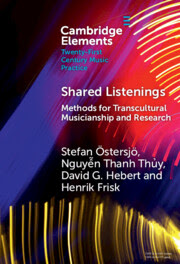
Authors - Stefan Östersjö, Nguyễn Thanh Thủy, David G. Hebert, and Henrik Frisk


Title - Studio Saigon: Telematic performance and recording technologies in light of the Covid-19 pandemic


As the Covid-19 pandemic continues to affect individual musicians, ensembles and concert institutions, streaming technology has become a central vehicle through which musicians and audiences can meet. This paper discusses how networked performance, a format which has engaged artists for decades as an artform in its own right, may contribute to the sustaining of cultural heritage among migrant/minority communities as well as to the development of innovative intercultural artistic practices. Building on the experience of our group, The Six Tones, we wish to develop a more robust understanding of the possibilities, and the limitations, that networked technology affords. The central source of our own work is drawn from Musical Transformations, an ongoing project which studies the intersection between traditional and experimental music in globalized society. 

The project has studied the dynamic history and contemporary performance practices of Vọng Cổ, a Vietnamese song which has experienced a radical set of transformations since the 1920’s. Recording technology has played a central role in this development, as evidenced even in the way its formal structure was shaped to match the duration of the 78rpm records on which this music was recorded on local labels still in the 1960’s (Gibbs et al 2013). We note that interactions both inside and outside recording studios contribute to urban culture. From the perspective of the street in Ho Chi Minh City, both recording studios used in this project blended into their surroundings, amongst residences, tiny convenience shops, hair salons, and restaurants selling pho and banh mi. Both studios also were negatively affected by traffic noise from a steady stream of motorbikes and trucks as well as construction projects. Local businesses were evidently accustomed to encountering foreigners leaving the studios for breaks in their recording sessions. Only a modicum of previous ethnomusicological studies have considered the role of recording studios in urban culture, which promote business in local communities while producing cultural products that have a lasting and expansive impact far beyond their neighborhood. Kay Shelemay observed that “recording technology is not only an integral part of our discipline’s intellectual history. It is an increasingly important part of our future as well” (Shelemay, 1991, p.288). We argue that the rise of telematic performance in the time of the pandemic also points to new avenues for recording technologies, inside and beyond the recording studio.