8/1/22

Arts in Cultural Diplomacy at World Congress of Sociology


Call for Papers.


The Research Committee for Sociology of Arts, part of the International Sociological Association, will be hosting a session titled Arts in Cultural Diplomacy at the XX ISA World Congress of Sociology, Melbourne, Australia (June 25-July 1, 2023).  

Founded in 1949 under the auspices of UNESCO, the ISA is the leading scholarly organization for the field of sociology, with around 4,500 members in 167 countries worldwide  


Click here for details on the Arts in Cultural Diplomacy session:

https://isaconf.confex.com/isaconf/wc2023/webprogrampreliminary/Session18223.html


Here is the abstract for this session:


Arts in Cultural Diplomacy

Researchers are increasingly examining how music and other arts are used in cultural diplomacy initiatives. In such contexts, the arts function as a form of "soft power" that deflects attention to universally appreciated aspects of a local or national culture even under circumstances that are complicated for international or bilateral relations. Cultural diplomacy through arts thereby serves as a bridge that enables reduction of hostilities through affirmation of mutual appreciation and shared humanity. Sociological theory is only beginning to develop adequate explanations of the mechanisms of arts in cultural diplomacy, particularly when it comes to diplomacy of non-western nations toward the west in a postcolonial era. New studies in this field may seek to provide robust quantitative or qualitative descriptions as well as refinement of theoretical models to enhance explanation of phenomena and processes associated with arts diplomacy.


We welcome scholarly papers that are relevant to the topic.


SUBMISSION DEADLINE: September 30, 2022

7/26/22

Malay Nobat: Vol. III of Deep Soundings


Volume III of our Deep Soundings book series has now been published by Lexington Books (of Rowman & Littlefield Press). This volume is an insightful monograph on the Southeast Asian tradition of Nobat court music: The Malay Nobat A History of Power, Acculturation, and Sovereignty, authored by Raja Iskandar Bin Raja Halid.

We continue to seek book proposals for the Deep Soundings series that promise to offer unique knowledge regarding the musical past, and would welcome high quality contributions that address any genre or location worldwide. Below are a few examples of what prominent scholars have to say about Halid’s book …


“This book takes the reader to a fascinating musical soundscape in the royal courts of Malaysia that is unimaginable to most music lovers today. Raja Iskandar Bin Raja Halid skillfully describes the history and significance of nobat and explains why and how it still has symbolic meaning today.”

— Margaret Kartomi, author of Performing the Arts of Indonesia: Malay Identity and Politics in the Music, Dance and Theatre of the Riau Islands


"Raja Iskandar Bin Raja Halid’s detailed and erudite study of the nobat of the Malay world is also a study of a neglected, but vital, facet of Islamicate culture – the trumpets, pipes, and drums that have served as accoutrements of the ruler’s spiritual and temporal power since early times. The author approaches both the local and the colonial historical sources with a keen eye and sharp ear in this consistently engaging, well-researched volume."

— Martin Stokes, King's College, London


7/25/22

Second East African Teacher Education Symposium

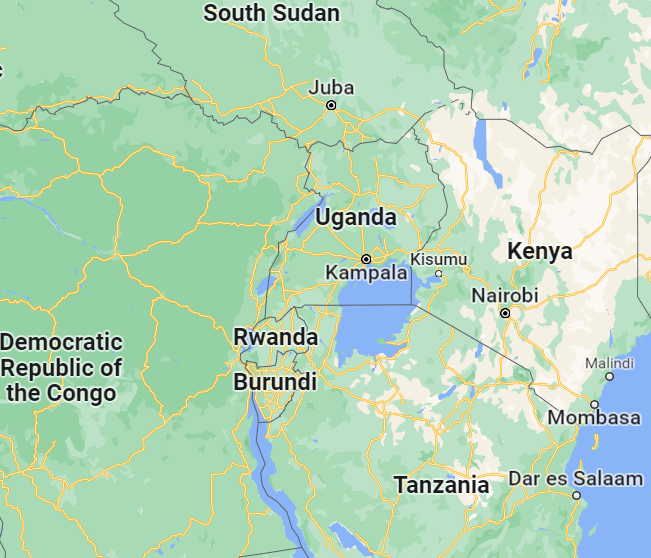
The second annual East African Teacher Education Symposium will be held at Makerere University in Kampala, Uganda on November 9-11, 2022. This year the EATES theme concerns how the Covid-19 pandemic has impacted education in this region.  

Click HERE for more information on the 2022 EATES.

Click HERE for information about the first EATES, in 2021.


via GIPHY

ISME History Standing Committee

The History Standing Committee of the International Society for Music Education is one of four Committees charged with directly supporting the organization’s executive leadership. Its mission is to “identify and create opportunities to celebrate and showcase the history of the Society and music education internationally.”


The work of the ISME History Standing Committee includes such activities as producing historical materials, coordinating archival contributions, recommending policies for historical documentation, planning of history sessions for world conferences, and developing closer ties with other relevant organizations. For several years the committee has been led by professor Marie McCarthy.   


It is a pleasure to report that I have now been appointed Chair of the History Standing Committee during an important period in which ISME is planning for its 70th and 75th anniversaries. 


In music, like other subject areas, those in the field of education often underappreciate the value of historical studies, which offer unique insights into how ideas and practices develop and spread, as well as how social and institutional conditions impact all aspects of the conditions in which teaching and learning occur. I am confident that through the work of the History Standing Committee we will be able to draw renewed attention to what can be learned about the present and future through careful examination of the past. In particular, I am interested in supporting revisionist approaches that call for a more comprehensive inclusion of all people, genres, pedagogies, and forms of informal learning that take place in diverse communities--in interaction with schools--through our documentation of the global history of music education.   


Image retrieved from: https://en.wikipedia.org/wiki/Apsara#/media/File:File-Apsara_playing_a_Chinese_flute_-_Yulin_Cave_15.jpg

7/22/22

Board of International Society for Music Education

Affiliated with the International Music Council and UNESCO, the International Society for Music Education (ISME) has more than 2,000 members in over 80 countries. Yesterday I learned that I have been appointed a Board Member of ISME, confirmed by a vote open to all the organization’s members. 


I will be serving with the new ISME president Bo-Wah Leung of the Education University of Hong Kong, as well as several accomplished Board Members. It is an exciting opportunity to collaborate in development of international initiatives to strengthen the field of music education globally. 


Thank you, ISME members, for your support, and I will do my best to contribute positively to the organization’s leadership. 


via GIPHY

7/21/22

Comparative and Decolonial Studies in Philosophy of Education


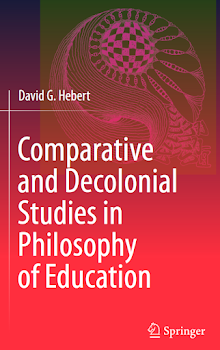
It is a pleasure to announce that the complete manuscript of our latest book has been sent to Springer press: Comparative and Decolonial Studies in Philosophy of Education (for publication in 2023). This book was primarily the outcome of a PhD course I have offered since 2020 on Non-Western Educational Philosophy and Policy. It was a great experience to work closely with several fine scholars in development of this unique volume, which will be my tenth book as author or editor, finished as I am nearly reaching age 50. About half of the contributors to this book specialize in music, but we wanted to write something for educators of all kinds, which required considerable time and effort. 


Koji Matsunobu wrote a fascinating Foreword for the book, and we are also very pleased to include a brilliant Afterword by African philosopher Yusef Waghid. It normally takes time for a press to process manuscripts but hopefully this will be published by early winter. Below is the Table of Contents.


Table of Contents


Foreword

                        Koji Matsunobu


Chapter 1       

Why comparative and decolonial studies in philosophy of education?  

David G. Hebert


Chapter 2        Cai Yuanpei’s vision of aesthetic education and his legacy in China

Ning Luo and Tao Guan


Chapter 3        Comparison of self-reflection in Humboldtian Bildung and the Kyoto School: Rethinking assumptions on reflection in OECD 2030

                        Miwa Chiba


Chapter 4        A philosophical perspective on the purpose of education in Indonesia

Dorothy Ferary


Chapter 5        Sikolohiyang Pilipino: Implications for formal and informal learning institutions and settings in the Philippines

Czarecah Tuppil Oropilla, Charla Rochella Santiago-Saamong and Jean Guadana


Chapter 6        Beyond education: A comparison of Tagore and Hu Shih’s educational philosophies

Lexuan Zhang and David G. Hebert


Chapter 7        Lessons from Ubuntu for moral education

Pip Bennett


Chapter 8        Omoluabi and Asabiyyah philosophies: Afro-Arabian perspectives on inclusive education policy in Nigeria

Abass Bolaji Isiaka


Chapter 9        The “happy island” of Polish music education: Self-Orientalization of educational philosophies in post-Soviet Europe

                        Adam Switala and Piotr Majewski  


Chapter 10      Advancing and applying comparative and decolonial studies in philosophy of education 


                        Pip Bennett, Dorothy Ferary, and David G. Hebert


Afterword: Philosophical remarks on decolonizing philosophy of education  

Yusef Waghid


7/17/22

MusiPæd Project


It is exciting to be part of a new initiative to strengthen higher music education in the Nordic countries. MusiPæd is a collaboration between the Royal Danish Academy of Music (Copenhagen) and the Voksenåsen Music Academies (Oslo) which seeks to develop innovative approaches in the field of talent education for advanced training of professional musicians. 

During the summer 2022 course, I will be working with Peter Herresthol and Marianne Løkke Jakobsen to document the pedagogical approaches used by renowned teachers and develop recommendations for new postgraduate programs.

Here is a link for more information:

https://www.dkdm.dk/en/news/new-nordic-cooperation-music-pedagogy-begin-august