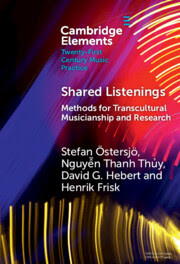
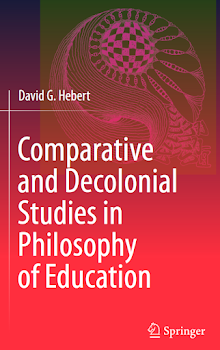
It is a pleasure to
announce that I have just been appointed to the Editorial Board of the International Journal of Music
Education. Published by SAGE, the IJME has a 40-year history. It was first
established in 1983 under the editorship of Frank Callaway as an initiative of
the UNESCO-affiliated International Society for Music Education, which at that
point already had a 30-year history and members in 60 countries worldwide.
For
several years I have offered occasional reviews for this journal, so it is
reasonable to now be more formally affiliated as a Board member, and I look
forward to more actively contributing to quality assurance of this important publication. Music
has been such an important part of human life worldwide since ancient times and
we need to continue developing deeper knowledge of how it is taught and learned.
Also, click HERE
to access the following recent article, co-authored by Editorial Board members of another journal, Music Education Research:
Thade Buchborn, Pamela Burnard, David G. Hebert & Gwen Moore (2022) Reconfiguring music education for future-making: how?, Music Education Research, 24:3, 275-281, DOI: 10.1080/14613808.2022.2076821
Today the news is rapidly
spreading that jazz pianist Johnny Todd
has passed away. He is especially known in Japan as a skilled performer and
arranger based in Tokyo, but first established himself as a player in jazz
clubs in Sydney, Australia as well as Honolulu, where he worked for years in a
full-time professional role as bandleader for legendary Hawaiian popular music
artist Don Ho.
About 20 years ago I had the incredible
opportunity to frequently perform with Johnny Todd in the Tokyo area as the professional duo Jazz de Iitomo. The name of the group came from a Japanese pun meaning:
(1) we are good friends through jazz, and (2) “I think” a jazzy way is good. Jazz
de Iitomo enjoyed a lot of gigs around Tokyo: at jazz clubs,
private dinners, festivals, corporate events, and school concerts. It was
thrilling to collaborate with Johnny, whose piano-playing never ceased to
impress audiences. I did what I could to keep up as a trumpeter and vocalist,
but sometimes forgot the words or the form, and often found myself in the role of encouraging the audience to listen carefully
to Johnny’s brilliant improvisations and arrangements.
I recall a few occasions
in which we were very briefly joined by Johnny's daughter Mika, who at the time was
singing in one of the most famous commercial pop music groups in Japan, Minimoni. Although Minimoni had
become incredibly popular at that time, it seemed that Mika (a great singer) was already tiring
of the demanding lifestyle of stardom, and sometimes wished she had more chances
to sing quality music and just enjoy being a normal teenager. Johnny was very
supportive of her career, and had become fluent in Japanese and fully
integrated into the local jazz scene. Johnny had a long and impressive career and I
joined him for probably only about 1% of it, but that experience was formative and mattered a lot to me.
Johnny was a great man and inspiring musician: a soft-spoken
and kind person who loved music and deeply respected Japanese culture. He was
always learning new things and willing to consider new perspectives and I am
deeply thankful to have known him. It was hard to keep in touch after I left
Japan, partly because over about 20 years I lived in so many places after that:
Moscow, Auckland, Boston, Helsinki, Bergen, but whenever I returned to Japan I
made a point of meeting with Johnny. I had hoped to see him again as Covid-19
becomes less of a hinderance to travel, but he is already gone.
Johnny made some sound
recordings, a few of which are linked above, but I am not convinced any of them fully
captured the magic that happened in live settings, especially at the end of a long night in Ginza on the very deepest of ballads or wildest of high-tempo post-bop
tunes. I played with him on one album with singer Midori Takamura, so here is a
link to Body and Soul from that album as well his original song Study in Green,
which is dedicated to our dear friend Midori (whose name means “green” in
Japanese).
Congratulations to
Chinese music educator Dr. Youdi Sun on completing her PhD defense at Vytautas
Magnus University in Lithuania.
It was a pleasure to
serve on the examining committee yesterday.
Dr. Sun’s
dissertation, directed by Prof. Jolanta Lasauskiene, is titled Adjusting
to Cultural Differences in Teaching and Learning: The Case Study of Chinese
Postgraduate Students in Lithuania.
Dr. Sun submitted a thorough
and rigorous study that demonstrates great potential for becoming a highly accomplished
researcher. I am hopeful she will manage to attain a postdoctoral position.
Recent media articles on
Chinese students in western higher education:
This is an exciting
time for music educators, as the meeting of the largest organization in our
field—the ISME world conference—is
approaching in mid-July, hosted virtually from Queensland, Australia. For this meeting, I will be giving presentations in
three sessions, one of which I will chair/organize.
“Seeing Through a Wider Lens: Revisionist History in Music Education,” Chair: Craig Resta. Panelists: Marie McCarthy, David Hebert, Benon
Kigozi.
Abstract
Looking at historical events is one
way to better comprehend how prior actions can influence future progress. Often
our narratives about the past have been framed through certain lenses that may
not reflect the realities of the time, or the perspectives of today. As a
result, there are people and histories and happenings that have untold stories
needing more attention. A primary idea of this panel is to discuss
definitions of revisionist history, why it matters, and innovative approaches
to understanding who we are, how we move ahead, and how to make progress
towards social justice as dialogue and practice in the field.
Examples might be women in music
education, international perspectives, LGBT issues and music teaching,
marginalized populations, ethnicity and race, sociocultural influences
connected to musical experiences, critical pedagogies and practices, cultural
understandings, and diversity and pluralism in numerous settings. Others may be
technology aspects, policy, reform, and institutional protocols, nationalism
and musicological studies, and so on. Further viewpoints include how historical
events play out in our profession, examples from the literature, and potential
impacts on music teaching and learning in multiple countries and circumstances.This participatory discussion
will tackle these issues representing viewpoints and perspectives from North
America, Europe, Middle East, Scandinavia, Africa, and Asia. Scholars on the
panel include those from the United States, Ireland, Norway, Israel, and
Uganda. While more history needs to be done generally in music education, there
can be even more attention to ideas and people and happenings that many of us
do not know today. Aside from the historical events themselves, is the
important discussion of history, and how we think and do it in practical
context. What is our purpose in historical inquiry and reflection, and how can
the outcomes make the musical experiences of those around us better?
“Musical Communication with China: An International Dialogue,”
by Jiaxing Xie and David Hebert
Abstract:
How does music
enable intercultural communication and dialogue in education? From a
traditional Chinese perspective, music is composed of three levels: form,
function, and metaphysical dimensions. Musical communication and dialogue are
thereby believed to originate from these three levels, which may serve as a
framework for understanding interactions with the West. By the year 1600 Mateo
Ricci had performed western music in China, but it was only since the 1840s
that Western music began to profoundly influence Chinese music culture with
varying intensity according to the evolving sociopolitical situation. Across
generations, Chinese musicians have actively participated and reflected on the
three delineated levels, but after nearly 200 years of intensifying musical
“communication” how much do most Western people understand about Chinese music,
even during this “information age”? We will examine specific cases of
interaction between Chinese and Western musicians that have sought to improve
intercultural understanding, and reflect on ways of evaluating the educational
and social impact of such endeavors. Our account will take into consideration
the arguments of notable Chinese international relations scholars, including
Xiaoying Qi and Yaqing Qin, as well as perspectives of musicologists from China
and other countries. One important development in this area was the
establishment of institutions for learning Chinese musical instruments in
Europe, but we note that enthusiasm for Western music in China has generally
been stronger than enthusiasm for Chinese music abroad. When it comes to
musical collaboration between China and Norway, for instance, we identify
specific phases of development (e.g. 2000-2009, 2010-2019, etc.). In our view,
robust intercultural exchange in music requires not only performances and
symposia, but also in-depth dialogues, including co-authored publications of
the kind that we are developing across years of collaboration.
“Ready to Conduct Historical Research?:
Dialogue with Mentors.” Chair: David Hebert;
Panelists: Marie McCarthy, Jane Southcott, Phillip Hash, Benon Kigozi, Robin
Stevens, Craig Resta, and Casey Gerber
Abstract:
The purpose of this meeting is to provide an open session for mentoring
of early-career scholars and doctoral students. All ISME participants
interested in historical research in music education are warmly welcomed to the
session for discussion of their project concepts. Distinguished historians and
mentors have agreed to participate in this session, including Marie McCarthy,
Jane Southcott, Phillip Hash, Benon Kigozi, Robin Stevens, Craig Resta, and
Casey Gerber. The session is chaired by David Hebert. The mentors will offer
advice regarding previous studies as well as appropriate theoretical and
methodological approaches. In addition to an opportunity for mentoring, this
meeting also offers a chance to discuss future projects of the ISME History
Standing Committee.
Congratulations to Chinese
music educator Dr. Yuqing Yang on completing her PhD defense at Vytautas Magnus
University in Lithuania.
It was a pleasure to
serve on the examining committee today.
Dr. Yang’s
dissertation, directed by Prof. Jolanta Lasauskiene, is titled Boundary Crossing:
The Socio-cultural Integration Experience of Chinese International Students in
Lithuania.
PhD Candidates have
joined the course from universities in many different countries—including South
Africa, Nigeria, Cameroon, Australia, India, Canada, Norway, Denmark, Sweden, and
UK—including students who originally come from such places as China, Indonesia,
Russia, Georgia, and Spain.
I look forward to seeing the long-term outcomes of
this course, and the PhD summer school as a whole, including the likelihood of some joint publications.
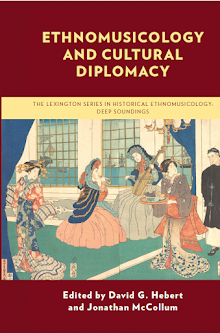
Volume II of our Deep
Soundings book series has just been published: Ethnomusicology
and Cultural Diplomacy. This book includes contributors from many countries
across the world who seek to show how music projects are used to generate
intercultural understanding, empathy, and reconciliation.
For me, the need for a book on this topic became clear when I was invited for an interview feature in a Geneva-based magazine for diplomats
called DIVA International Diplomat (published
in 2020, p.18-20). But cultural diplomacy matters far beyond the specialized sphere
of ambassadors and professional diplomats, since it encompasses an array of artistic
and social activities, sometimes even focused on relations between nations (or
ethnicities) within a single state. Cultural diplomacy, we argue, is also relevant
for teachers at all levels of schooling who seek to find innovative ways of
internationalizing their student’s experiences for a richer quality of
education.
During the writing of this book, our contributors faced an array of complex challenges, from severe Covid lockdowns to violent
conflicts, including the Taliban’s takeover of Afghanistan, volatile unrest in
Hong Kong, and a catastrophic civil war in Tigray, Ethiopia. Our contributing
author from Ethiopia disappeared in the chaos after sending us parts of his chapter, and following many months of concern we are still unable to confirm whether he survived. War is the
opposite of what most kinds of music participation aim to cultivate. We hope this
book will help generate new ideas for how peaceful relations and mutual respect
can be fostered through music.
It is taking a while for the book to be internationally distributed, so we will plan a book launch event for sometime in August or September.
For nearly 20 years (since 2007), this website has offered musings on contemporary society and its music by David G. Hebert, PhD. He is a sociomusicologist specializing in global music education who has held academic positions with universities on five continents. Dr. Hebert is now a tenured full Professor with Western Norway University of Applied Sciences, Bergen. There he leads the Grieg Academy Music Education (GAME) research group and manages the multinational government-funded Nordic Network for Music Education, which organizes annual intensive Master courses and exchange of teachers and students across eight countries. He is also an Affiliated Professor with both University of the Faroe Islands and Kyambogo University (Uganda), and an Honorary Professor in China with the Education University of Hong Kong.
Professor Hebert's research applies an international-comparative perspective to issues of pluralism, identity, and cultural relevance in music education, as well as processes by which new music traditions emerge and change - both sonically and socially - as they are adopted into institutions. Born in the 1970s, he is among the most widely-published and globally-active music scholars of his generation (h-index:23), with professional activities in an average of 8 countries per year across the past decade (2008-2020).
Keynote Speaker - Across recent years, Professor Hebert has had keynote speeches in Poland, Germany, Uzbekistan, China, Sweden, Norway, Estonia, Lithuania, Tanzania, and Thailand, and chaired two sessions at ISA-Japan.


.jpg)



 https://orcid.org/0009-0002-1446-3893