3/17/22

Cultural Diplomacy and Music in the Internationalization of Education


UPDATE (13 April 2022): Due to complications with international travel, and NERA's rule against online participation, we now unexpectedly find we have to withdraw from this conference. We hope to join an NERA conference some other time. 
................................................................................

Our symposium “Cultural Diplomacy and Music in the Internationalization of Education” has been accepted for presentation at the 2022 Nordic Educational Research Association (NERA) conference in Reykjavík, Iceland. This will be in collaboration with both Marja Heimonen and Marianne Løkke Jakobsen. Below is our abstract for the entire session, and individual abstracts will be available at the event. 

Cultural Diplomacy and Music in the Internationalization of Education 

International relations for the Nordic region are arguably as complicated in 2022 as at any time since World War II due to the Covid-19 pandemic, misinformation campaigns on social media, and political instability in Eastern Europe. Consequently, promotion of intercultural understanding and global empathy are profoundly important responsibilities of educators for the objective of reducing prejudices and conflict (Buchanan & Hellstén, 2020; Jæger, 2022). Cultural diplomacy is an effective way of instilling appreciation for the heritage associated with other nations, and music is an especially prominent art form that deeply intersects with cultural values (Hebert & Kertz-Welzel, 2016). Based on our development of a book to be published in 2022, this roundtable presents the educational implications of recent research findings regarding the use of music in cultural diplomacy for the internationalization of education. Our studies demonstrate how the mechanisms of international law and cultural policies influence what is possible in terms of musical exchange in international education projects. 

We begin with a paper, by an author with long-term interests in music law, that applies human rights and “capabilities approach” perspectives to music education, with particular attention to implications for Sámi and other minorities. The next paper concerns issues in management of Nordic responses to cultural diplomacy from elsewhere, in this case a Sino-Danish Confucius Institute based in Copenhagen that was established and co-funded by the Chinese government. Its author faced many complex challenges as director of the international institution. The final paper—by an author who has worked in Finland, Norway, Sweden and Denmark—presents new theoretical developments and general recommendations from music diplomacy work in multiple contexts, with particular attention to challenges for internationalization of Nordic teacher education (Hebert & Hauge, 2019).

REFERENCES 
Buchanan, J. & Hellstén, M. (2020). Ways of getting to know: International mobility and indigenous education. In F. Dervin, Mononey, Y. & Simpson, A. (Eds.), Intercultural Competence in the Work of Teachers. New York: Routledge. DOI: https://doi.org/10.4324/9780429401022 
Hebert, D. G. & Hauge, T. B. (Eds.), (2019). Advancing Music Education in Northern Europe. New York: Routledge. 
Hebert, D. G. & Kertz-Welzel, A. (Eds.), (2016). Patriotism and Nationalism in Music Education. New York: Routledge.  
Jæger, K. (2022). Elusive politics: De-internationalizing higher education in the context of international recognition conventions. Higher Education Policy, 1-19. DOI: https://doi.org/10.1057/s41307-022-00262-4

3/11/22

Shared Listenings Book

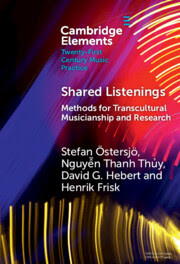
Our complete manuscript has been submitted to Cambridge University Press for the book Shared Listenings: Methods for Transcultural Music Performance and Research. The book is co-authored by Stefan Ostersjo, David Hebert, Thanh Thuy Nguyen, and Henrik Frisk, and is an outcome of the Musical Transformations project in Vietnam, which was led by Prof. Stefan Ostersjo.


In addition to his chaired professorship in Sweden, Stefan is now affiliated with the GAME research group as our Professor II for artistic research in music. Thuy is also currently a Swedish Research Council-funded Postdoctoral Researcher affiliated with the GAME research group. Henrik is a full professor of composition at the Royal Swedish Academy of Music in Stockholm.


With the aim of creating “a decolonized methodology - for both music performance and research,” in this book we “demonstrate how a combination of stimulated recall and collaborative autoethnographic strategies can be applied to artistic and scholarly work at the intersection of ethnomusicology and practice-led research.”


3/10/22

Documentary Film: Geysers and Guitars


Click above (or HERE) to access the 2022 documentary film Geysers and Guitars: A Music Course in Iceland, which was developed by Italian filmmaker Ferrucio Goia for the Nordic Network for Music Education

This video shows the kind of work we have been doing each year with our state-funded intensive Master courses for music teachers across the 18 institutions with Master programs for music teacher education in the eight Nordic and Baltic countries.

The film demonstrates how global competence can be developed through internationalization of teacher education programs, in this case with a music focus.


Speech for Conference in Lithuania

I look forward to giving a special plenary speech “Music Heritage in a Tumultuous World” as part of the scientific committee for the conference Labyrinths of Music and Science in Lithuania, at the Institute of Education, Vilnius University Siauliai Academy, on April 21. The conference will be held online.


Image source: By Diliff - Own work, CC BY-SA 3.0, https://commons.wikimedia.org/w/index.php?curid=37118754


3/9/22

Plans for Summer 2022

In summer 2022, I look forward to serving as keynote speaker for China’s national music education conference, to be held in Chengdu at the Sichuan Conservatory of MusicMy presentation will be on new developments in the field of international research.


It is also a pleasure to have been invited to serve as the international professor on the Doctoral Defense Board for two PhD students in Lithuania at Vytautas Magnus University:

-Youdi Sun. Adjusting to Cultural Differences in Teaching and Learning: The Case Study of Chinese Postgraduate Students in Lithuania.

-Yuqing Yang. Boundary Crossing: The Sociocultural Integration Experience of Chinese International Students in Lithuania.


It is exciting to see what this new generation of researchers is producing in the growing field of international education. Upon evaluating these new PhD degrees from Lithuania in June, I will have served on doctoral committees for universities in 12 countries in the fields of international education, musicology, and music education. It is certainly fascinating to experience diverse approaches to doctoral studies in different locations and academic fields, and to take part in developing new doctoral programs. I have also greatly enjoyed doing some teaching for the university-wide professional development course on Doctoral Supervision at University of Bergen across recent years, and have been developing some writings on issues in doctoral supervision.


This summer we eagerly look forward to offering the new PhD course Global Inequalities in Higher Education and the Arts at Bergen Summer Research School, 2022. It is inspiring to be co-leading this course with geography professor Erlend Eidsvik, and we have planned for some excellent guest lecturers, including keynote speaker Emily Achieng’ Akuno, as well as distinguished scholars Lesley Le Grange and Suriamurthee Maistry, a special dance presentation by Tara Pandeya, and much more. There were many strong applicants, and we are pleased to see that this course will include around 20 PhD students from several different countries, and we look forward to some lively discussions.


Chengdu image attribution: 书剑飘零

1/3/22

Resilience in European Higher Education


UPDATE (10 December 2022): Click HERE for the project announcement at our university in Norway. 


UPDATE (14 November 2022): Here is a link to the RESUPERES project website: https://resuperes.ugr.es/


Happy New Year, 2022! It is a pleasure to announce that we will soon have EU funding to be part of the RESUPERES research project to examine resilience in the higher education sector amidst the pandemic in Portugal, Italy, Serbia, Spain, and Norway. 

The RESUPERES project promises to develop new insights into how characteristic behaviors of resilience can be meaningfully instilled in university students involved in various fields, including music and sports which often require physical spaces that are difficult to approximate online. 

Project Partners: 

*UNIVERSIDAD DE GRANADA (Spain) 

*UNIVERSIDADE DO ALGARVE (Portugal) 

*UNIVERSITA DEGLI STUDI SUOR ORSOLA BENINCASA (Italy) 

*UNIVERZITET U BEOGRADU (Serbia) 

*WESTERN NORWAY UNIVERSITY OF APPLIED SCIENCES (Norway)

University of Granada is the lead institution for RESUPERES, and the Norway coordinator for this project is Prof. Coral Falco

We also await the results of other grant applications that may generate hopeful new insights for heritage sustainability in these complicated times.  

More detailed information and links will be posted here later in 2022.


via GIPHY

12/1/21

Music Activities in Early 2022


UPDATE: The proceedings from this conference, with my keynote speech, can be downloaded for free by clicking here and going to the bottom right of the next website: https://www.ifmpf.hmtm-hannover.de/de/publikationen/forschungsberichte/forschungsbericht-33/


In late January 2022, I look forward to giving a conference opening speech for the third German-Dutch Colloquium on Research in Arts Education in Hannover, Germany. The theme for this government-sponsored event is “Multiculturalism in Music and Drama Education,” and it is hosted by Prof. Andreas Lehmann-Wermser, a prolific researcher who heads the Institute for Music Education Research at the Hannover University of Music, Drama and Media. 


The host institution, which has been in operation for over 120 years, offers comprehensive studies (including in jazz and popular music), and has produced many influential musicians, some of whom originally came from East Asia. The city of Hannover itself has also long played an important role in Germany, from its roots as the home of Gottfried Leibniz to today as the headquarters of Volkswagen. Among the more notable scholars to have come from Hannover (Linden-Limmer borough) is Hannah Arendt, whose work has seen a profound impact across recent generations in philosophy and social theory.


Depending on the status of the pandemic, this event will either be held face-to-face or online only. Click HERE for more information on the colloquium. 


This colloquium is generously supported by the Rat für Kulturelle Bildung (Counsel for Cultural Education) and the Federal Ministry of Education and Research (BMBF). It is hosted by the Hochschule für Musik Theater und Medien Hannover. 

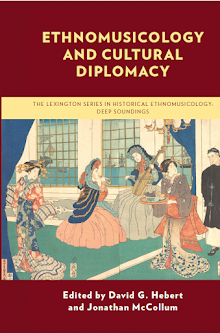
In the late winter and spring, if the Covid pandemic allows for it, I am expected to make trips to Riga, Copenhagen, Prilep, and Kampala for various music research and writing projects. Due to the Omicron variant of Covid-19, it looks increasingly doubtful whether much travel will be possible, so probably in most cases we will have to continue with online cooperation until the pandemic is less of a concern. In March we will focus on further data collection for a book on Viking musical heritage for Bloomsbury press, and by around that time we expect to see two more volumes published in the Deep Soundings series, volume II on music and cultural diplomacy, and volume III on traditional Malaysian court music.


In April, I will give a plenary address in Lithuania as a scientific committee member of the conference Music and Science Labyrinths at Vilnius University-Siauliai Academy. This partly online event celebrates the achievement of musicologist Eduardas Balčytis, who played a central role in the establishment of formal music pedagogy in Lithuania.  


There are also some new developments in East Asia to report: It was exciting to see the work of Prof. Qi Kun of China Conservatory, published in a new edition of the journal Chinese Musicology. Qi is an accomplished researcher who serves as Editor-in-Chief of the journal Chinese Music, and her recent work concludes that many recommendations from our book Theory and Method in Historical Ethnomusicology are particularly relevant to music scholarship in China. When travel becomes possible, I plan to continue developing several projects in various parts of China. 


The Grieg Academy Music Education (GAME) research group has also nearly completed our co-authored chapter on music education in Norway for a book edited by Prof. Masafumi Ogawa to be published in Japan by Minerva Shobo press. In mid-January, I have meetings scheduled to continue developing the book Transcultural Musicianship and Research: Methods for Shared Listening and Performance (forthcoming, Cambridge University Press), which is being co-authored with a team of music researchers and performers from a project in the Mekong Delta of Vietnam.