12/27/19
Music: A Powerful Tool for International Harmony and Peace
Here is a
link to an article in The Norwegian
American, a publication with a 130-year history connected to the community
of Norwegians and their descendants in the US:
I was pleasantly surprised to see this article published on Christmas Day, 2019. How did it
happen? While at a music conference in Samarkand, Uzbekistan earlier this year
I was approached by a Geneva-based author named Marit Fosse who works closely with diplomats. She interviewed me for an article that I understand will appear in a few different publications, including both this one and a magazine for
embassy-affiliated personnel. Hopefully the articles will generate broader interest in the social impact of music.
12/18/19
Deep Soundings into the Future
Across the past year we have received some excellent proposals for our new book series Deep Soundings: The Lexington Series in Historical Ethnomusicology (Rowman & Littlefield). This exciting series will soon include some unique books on musical developments in South Africa and Malaysia, as well as music-related cultural diplomacy in many locations worldwide. More details will be posted here as the individual book projects near completion and are prepared for publication.
Here is a link for further information on the book series:
https://www.bloomsbury.com/us/series/critical-studies-in-historical-ethnomusicology-deep-soundings/
UPDATE (2025):
This book series is now owned by Bloomsbury Press and is called Critical Studies in Historical Ethnomusicology: Deep Soundings.
SOME RECENT AND FORTHCOMING TITLES:
Vol. I (2021), by Ambigay
Raidoo Yudkoff, PhD:
Activism through Music during the Apartheid Era
and Beyond: When Voices Meet
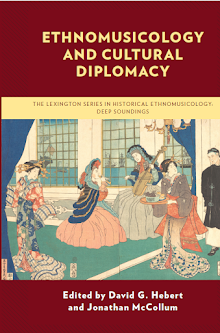
Vol. II (2022), by David G. Hebert, PhD and Jonathan McCollum, PhD (editors):
Ethnomusicology and Cultural DiplomacyVol. III (2022), by Raja Iskandar Bin Raja Halid, PhD:
The Malay Nobat: A History of Power, Acculturation and SovereigntyVol. IV (2024), by Mikolaj Rykowski, PhD:
Music Glocalization and the Composer: The Case of Franz Xaver Scharwenka Vol. V (forthcoming, 2025), by Jeffrey van den Scott, PhD:
Sounding North: Inuit in the Canadian Musical Landscape
Vol. VI (forthcoming, 2026), by Amy Frishkey, PhD:
Navigating Neo-Traditionalism in Garifuna Popular Music Vol. VII (forthcoming, 2026), by Matthew Machin-Autenrieth, PhD:
The Spanish-Moroccan Musical Brotherhood: Colonial Legacies, Interculturalism and Cultural Memory across the Strait of Gibraltor 11/20/19
Music, Law, and Society
It was a
great pleasure this week to give an invited lecture entitled “Language and Cultural Policy: Rethinking Music’s Significance,” for
the International Law Summit in Bergen on The
Language and Law. The law professors there, many of whom were from China,
showed great interest in the topic and had excellent suggestions.
Law has
been of increasing interest to me across recent years, and during the past few
summers I have taught Cultural Policy courses for international PhD students at
Bergen
Summer Research School as well as law students at the China
University of Political Science and Law, Beijing.
I am now
developing a book with contributors from several countries that addresses how government
policies can effectively support the sustainability of music traditions through
various public institutions. This will most likely become part of the Deep Soundings book series
with Rowman
& Littlefield (Lexington), but I also mentioned it in my discussion
with Routledge editors who had arranged a recent meeting with me in Bergen. Although
the book is still under development, we have likely contributions from China, Vietnam,
Sweden, Poland, Guyana, Nigeria, South Africa, Ethiopia, and other countries.
Public
institutions, such as schools, universities, concert halls, museums, and
galleries - as well as memorials and protected heritage sites - play an important
role in ensuring that the arts and cultural heritage can remain viable for
future generations. This is not only a local or national concern, but a global one, as recognized by UNESCO and other organizations. However, some kinds of laws and programs certainly function
better than others, and there is a need for more robust, critical and
comparative studies in this field.
Below is a photo from my speech at the International Law Summit:
Click HERE
for a law-related article that I developed with Finnish scholar Marja Heimonen in an earlier
phase of my career, and HERE for a later article we developed.
Some of the earliest laws in Northern Europe were written in runes on stone surfaces such as this one, which I photographed last week as part of some research on Viking Age and early Medieval times:
11/10/19
Book on Ancient Musicians
The
scholarly journal World of Music
will soon be publishing my review of a unique book entitled The Mystery of Music: An Exploration
Centered on the Lives of Thirty Ancient Musicians (by Lewis Holmes, CEK
Publishing, 2018).
Author Lewis
Holmes, an interdisciplinary scientist, participated in the Historical
Ethnomusicology section of the Society for Ethnomusicology, during the period
in which I led this group with Jonathan McCollum, and in his book develops some important extensions on
theories in this specialized field. Holmes spent many years drawing on
knowledge from an array of academic fields (archaeology, history, musicology, etc.)
to produce the material in this book, which I think is written with unusual clarity and is likely to be of interest to musicians and music teachers working in all kinds of settings, from primary school through
university.
Below are
links for more information, and I will soon include a link here to the review
when it is published in The World of
Music toward the end of 2019:
Labels:
Historical Ethnomusicology,
history,
research
10/30/19
Nordic/Baltic Music Education Master Course
The Nordic
Network for Music Education (NNME) will soon offer its 2019 joint intensive Master
course, held in Sweden this year at the Malmo Academy of Music (Lund University). Professors and students will
participate from the postgraduate music education programs in all eight Nordic
and Baltic countries: Iceland, Norway, Sweden, Denmark, Finland, Estonia,
Latvia, and Lithuania, with financial support from Nordplus. The theme for this year is Digital Competence and Music
Beyond Europe.
This year
the keynote speakers include Anna Houmann, Markus Tullberg, Alex Ruthmann, Eva
Saether, David Johnson, Adam Switala, and others. There will be a special
presentation by Chinese musicians from the Music Confucius Institute, Royal
Academy of Music, Copenhagen. There will also be several performances of
traditional music from Scandinavia and an array of Middle Eastern cultures.
Students
will also present their ongoing thesis research projects, which cover a vast
array of topics, and receive European university credits (ECTS). We are confident that by the end of the course, the
participating postgraduate students will have a better understanding of the
state of music education across Northern Europe, a more fully developed plan
for their own research, and a stronger sense of how digital competence and diverse world music cultures may be meaningfully introduced to their own students.
Displayed
here is a poster designed by Eva Saether and the other conference hosts in
Malmo.
Link to
NNME website: https://www.hvl.no/en/collaboration/networks/nordic-network-for-music-education/
10/21/19
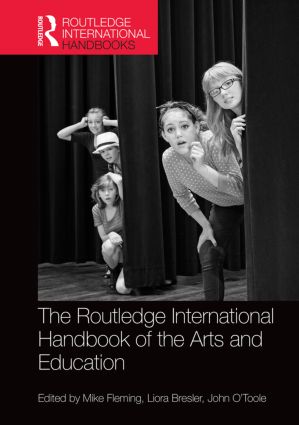
Review of Routledge International Handbook of the Arts and Education
My review
of the Routledge International Handbook of the Arts and Education is now
published in International Journal of Education & the Arts.
10/12/19
Fieldwork Research on Music in Vietnam
East Asia has long been one of my geographic areas of specialization, but recently personal interests have extended to the southern parts of China (Quanzhou: Nanyin music and the maritime Silk Road) and even into the southernmost part of this region: Vietnam.
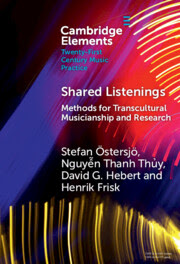
It has been a great experience to visit Saigon for the second time this year for an additional period of fieldwork research on both local Mekong Delta traditional music and intercultural experimental music (combining Vietnamese and avant garde western electronic music techniques).
Vietnam is
experiencing rapid social and economic changes across recent years and is a nation
with rich and unique cultural heritage, including a fascinating array of
musical instruments. I have also been learning much from serving as a reviewer for the new PhD dissertation “The Choreography
of Gender in Traditional Vietnamese Music” by Nguyễn, Thanh Thủy, a master performer of the dan tranh
who later studied artistic research in music at Lund University, Sweden.
The outstanding Swedish research team that I am working with in Vietnam is making
high-quality sound recordings and will be releasing a full professional album and producing various publications from this project.
Subscribe to:
Posts (Atom)


https://orcid.org/0009-0002-1446-3893