7/28/09

Sound Sensibility

On July 21, the technology company Apple “disclosed its first quarterly decline in iPods sold” as discussed in Arik Hesseldahl’s provocative article “The iPod Is Dead. Long Live the iPod,” from the latest issue of Business Week (linked below).

http://www.businessweek.com/technology/content/jul2009/tc20090726_261031.htm

New music technologies are increasingly expected to offer multifunctionality while younger generations of music consumers seek products that facilitate more active and empowering forms of creative interaction rather than mere passive reception of music. The very nature of human musical experience is changing to some extent with each new generation of music technologies.


Below are some informative links related to the history of sound recordings:

http://www.recording-history.org/

http://history.sandiego.edu/GEN/recording/notes.html

http://www.soc.duke.edu/~s142tm01/history.html


7/21/09

Eclipse


This partial eclipse was visible from Japan at around 11am today. Many people took a short break to observe it, a chance that only comes once every 40 years.

Recently, I have been enjoying listening to Toru Takemitsu’s composition for shakuhachi and biwa, aptly entitled Eclipse.


7/18/09

Festival Music in Japan


Yesterday in Kyoto was the Yamaboko Junko parade of the Gion Matsuri, which is one of Japan’s three most famous festivals. The origins of the Gion Matsuri are traceable to 869 AD, and the highlight of its parade is the nine hoko, or enormous floats, each of which is pulled by a team of around 30 to 40 men. Each hoko contains several musicians playing the distinctive gion-bayashi (祇園囃子) festival music, which features the shimmering sounds of gongs, taiko drums and flutes playing semi-dissonant motifs. Attached is a photograph I took of one of them while I attended the event with Helena Capkova and others. Interestingly, women are not permitted to participate in any aspect of the parade, and this 1,100-year old festival also has strong religious connotations, both of which are factors that have hindered the wide adaptation of such festival music traditions into schools.


7/13/09

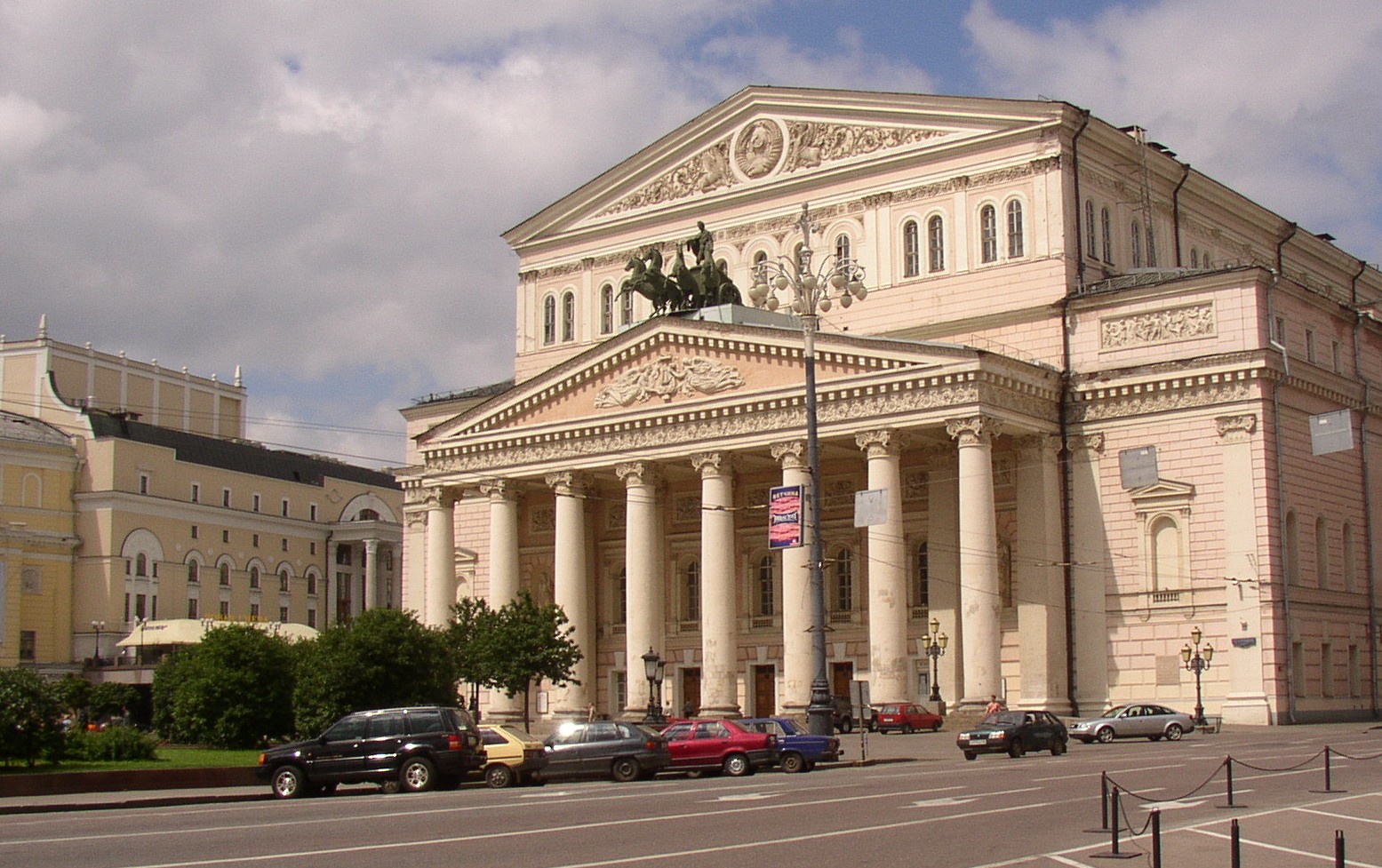
Future of the Bolshoi


According to a recent story by Dave Itzkoff in the New York Times, Alexander Vedernikov, the “chief conductor and music director of the Bolshoi Theater resigned suddenly on Monday . . . throwing the future of the institution’s $1 billion renovation project into chaos.”


About six years ago I lived in Moscow, where I taught music courses for Lomonosov Moscow State University and performed and recorded with the Pan-Asian ("Wa-On") Ensemble at Tchaikovsky State Conservatory. During that period, I would frequently visit the Bolshoi, which despite recent challenges has remained a uniquely important venue in the field of European art music, a priceless landmark. Any visitor to the Bolshoi Theatre can confirm it is a truly impressive place worth preserving for future generations.

The current situation at the Bolshoi reminds us of the importance of ensuring that the significance of cultural heritage is not hastily dismissed during times of economic crisis. Through organizations such as UNESCO, European Union commissions, and various NGOs, it is possible to effectively turn the attention of lawmakers and corporate boards toward the urgent needs of global musical heritage sites, whether calling for renewal in New Orleans, New Delhi, or New Caledonia.


Here are links to some related programs:

http://whc.unesco.org/

http://ec.europa.eu/culture/portal/activities/heritage/cultural_heritage_en.htm

http://exchanges.state.gov/afcp/


6/26/09

Research in New Zealand Performing Arts

Research in New Zealand Performing Arts has announced a new call for papers.

This is one of the only peer-reviewed scholarly journals in New Zealand that publishes music research. Although the journal examines performing arts generally, nearly half of its articles have been music-related. I serve on its editorial board.

Here is a link to a website that offers the complete announcement, as well as the previous two issues of the journal:

http://www.drama.org.nz/


NAEP American Arts Education Report Released


The National Center for Educational Statistics (U.S. Department of Education, Institute for Education Sciences) has just released its report “The Nation’s Report Card” National Assessment of Educational Progress, Arts 2008. It has been a decade since its last assessment of the state of arts education in American schools.

While this report contains some interesting findings, it seems important to keep in mind that in the past such reports have tended to generate controversy due to both their content/methodology and the ways in which they are misinterpreted for various political purposes.

Here is a link to an announcement of the report:

http://nces.ed.gov/whatsnew/commissioner/remarks2009/6_15_2009.asp


Here is a link to its results:

http://nces.ed.gov/nationsreportcard/pubs/main2008/2009488.asp


According to the executive summary of this report, its most significant finding is the following:

Racial/ethnic and gender gaps evident in both music and visual arts

Although the results for music and visual arts are reported separately and cannot be compared, some general patterns in differences between student groups were similar in the two disciplines.

  • Average responding scores in both music and visual arts were 22 to 32 points higher for White and Asian/Pacific Islander students than for Black and Hispanic students. The creating task scores in visual arts were also higher for White and Asian/Pacific Islander students than for their Black and Hispanic peers.
  • Average responding scores for female students were 10 points higher than for male students in music and 11 points higher in visual arts. Female students also outperformed male students in creating visual art.


Citation:

Keiper, S., Sandene, B.A., Persky, H.R., and Kuang, M. (2009). The Nation's Report Card: Arts 2008 Music & Visual Arts (NCES 2009–488). National Center for Education Statistics, Institute of Education Sciences, U.S. Department of Education, Washington, D.C.


6/25/09

Michael Jackson


Michael Jackson, one of the most popular music performers of all time, died yesterday. Upon hearing the name Michael Jackson, all kinds of images run through one’s mind, although it is quite difficult to separate fact from fiction. Many people long to become famous, but perhaps we should all be thankful to have never attained the kind of fame that tortured Michael’s personality and led to such a complicated and unhappy life. Michael became a kind of living icon, symbolic of so many different issues, including the role of shock and empathy in the construction of mass-mediated stardom. It is impossible to imagine what it would have been like to be him, and difficult to know whether he will be remembered more for the hints of artistry on stage or the tragic symptoms of unbalanced stardom in his personal life. It seems there is much to learn from a careful study of Michael Jackson's life, yet it may take many years to attain an accurate and balanced understanding of who he really was, and the impact he had on American society and popular culture in much of the rest of the world.


Links:

http://news.bbc.co.uk/2/hi/entertainment/8119993.stm