2/16/25

Music Law Postdoc and other Grants

It is a great pleasure to announce that Judge Karan Choudhary, PhD, has been awarded a 2-year fellowship from the EU’s MSCA postdoctoral program to join the GAME research group in Bergen, Norway. He will be traveling from India, where he has worked as a judge across recent years. Karan's project is titled “Legal Challenges posed by AI Generated Music: A Comparative study of Copyright Laws of China, India, Norway, USA and UK, to develop a suitable Global Legal Framework specifically for AI Generated Music (Music Law)”.  


Here is an announcement on the university website: https://www.hvl.no/en/news/marie-curie-eng/


Most of the 2-year postdoctoral appointment (2025-2027) will be spent working with me in Norway, but Karan will also have a residency with Prof. Robert Burrell at Oxford Law School. The outcome of this postdoc will be co-authored journal articles and a new book on the implications of AI for music law. We are very grateful to the European Commission for its generous support of this project. 


The GAME research group also had another outstanding candidate for the EU’s MSCA postdoctoral fellowship this year, and that application scored quite highly but was placed on the waiting list. We remain hopeful that project too might receive funding soon for an important study that explores the impact of climate change on music and dance heritage in southern Africa. 


GAME also continues to await the results of a Horizon Europe application on political expression in minority musics that scored very highly and was placed on a waiting list, as well as an application to the Norwegian government to establish a new AI research center in Bergen (for which I co-lead a work package in the field of Higher Education). Additionally, we are leading a new Horizon Europe application on the theme of culture virtualization.


Sami Music and Singing Maps

It is a great pleasure to announce that the Norwegian Research Council has awarded major funding for the Singing Maps project for the period 2025-2028, affiliated to the GAME research group, with David Thorarinn Johnson as its PI.


The project will support the expenses for notable Sami musician-researchers to collaborate in our team, as well as new PhD students and/or postdoctoral researchers, as we document Sami musical traditions and co-create new educational resources to ensure Sami heritage is appropriately honored in Nordic schools.


The full title of the project is “Singing Maps: developing online music communities to support Sámi adolescent cultural resilience”. We are excited about what this project is likely to accomplish in what we collectively envision as a successfully decolonized approach to Indigenizing music education.


Here is an article (in Norwegian) with more details about the project:

https://www.hvl.no/aktuelt/singing-maps-urfolksmusikk/


Displayed above is the Sapmi region, the Sami traditional homeland that intersects several northern states.


1/30/25

Global Music Organizations


It was a pleasure to participate in two events in January 2025 with major arts organizations that are connected to UNESCO, a reassuring reminder (during a global surge in far-right protectionist populism) of the promising but often elusive dream of equitable and effective global cooperation in the sphere of educational and cultural activities.


Through the International Music Council, the International Society for Music Education (ISME) maintains an affiliation with UNESCO, being the global organization concerned with supporting music teaching and learning. Also, the International Council for Traditions of Music and Dance (ICTMD) is an NGO in formal consultative relations with UNESCO that supports the study of all traditional music and dance worldwide.


I currently serve on the Executive Committee and Board of ISME, which recently met in Thailand to plan our upcoming activities. Also, at ICTMD in New Zealand, I gave a presentation along with colleague David Johnson related to the Empowering Voices project for which we have sought funding from the EU.


While international organizations are invariably complex, they play a uniquely important role by raising the visibility of professional concerns and offering specialized knowledge and support. In these complicated times, we need international arts organizations to be proactive, which requires participation and input from those who have suggestions for how they can develop a more sustainable and impactful quality and scope of activities.


Keynote for Music Research Today 2025

I look forward to giving a keynote speech for the Music Research Today 2025 conference in Sweden, which this year is on the theme of Music and Politics.


“Musikforskning idag (Music Research Today) brings music researchers in all disciplines together. This year's conference is hosted by the School of Music, Theatre and Art at Örebro University. The conference will take place on October 22rd - 24th…”


Click on the links below for more information:


https://www.oru.se/english/schools/music-theatre-and-art/research/music-research-today-2025/music-research-today-2025---call-for-papers/


https://www.oru.se/english/schools/music-theatre-and-art/research/music-research-today-2025/


Decolonization of Academia in Norway

It was a great pleasure to participate in a recent panel discussion on Decolonization of Academia with two brilliant colleagues based in Bergen, Anwesha Dutta and Wesley Maraire, moderated by Maria Lie Jordheim, vice president of the SAIH organization.

It is exciting to see growing interest and support for decolonization among university students in Norway, even while there is a very slow response, and stubborn resistance, from some professors and university management.

Here is a link to a relevant article about decolonization and SAIH: https://journals.oslomet.no/index.php/nordiccie/article/view/3903


Here are links to a few of my recent publications related to decolonization:


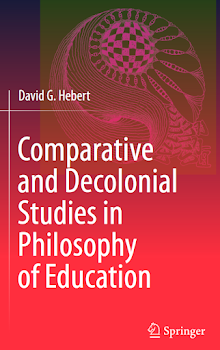
Ways to decolonize philosophy of education:

https://link.springer.com/book/10.1007/978-981-99-0139-5


Why university studies (in music) need to be decolonized:

https://journals.sagepub.com/doi/full/10.1177/02557614241281992


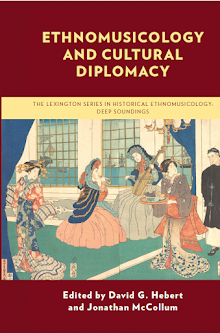
Ways of decolonizing approaches to cultural diplomacy and music research:

https://rowman.com/ISBN/9781793642929/Ethnomusicology-and-Cultural-Diplomacy


Ways of decolonizing intercultural collaborative arts projects:

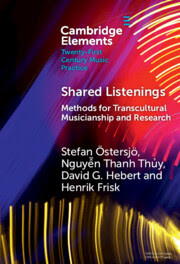
https://www.cambridge.org/core/elements/abs/shared-listenings/42CBDD3A9729681176DBB7502796D56A


12/9/24

GAME Symposium III (2024)


We are excited to soon be hosting the GAME Symposium III of the Grieg Academy Music Education (GAME) research group, here in Bergen, Norway (13-15 December, 2024).


Click HERE to access the full 2024 symposium program.


Click HERE to learn more about the GAME research group.


………………………………………………………………


Participants in 2024 GAME symposium (click on names for details):  


Erisa Walubo, Kristian T. Iversen, Knut Eysturstein, Adam Switala, Marianne Løkke Jakobsen, Matthieu Stepec, Philbert King-yue Li, Le-xuan Zhang, Steinar Sætre, David G. Hebert, Kimmie Sin Yee Ma, Krister Stoor, Elizabeth Anne Oltedal, Solomon Gwerevende, Katarzyna Julia Leikvoll, Stefan Östersjö, Miwa Chiba, David T. Johnson, Odd Torleiv Furnes, Kay Wing-Ki Li,  Koji Matsunobu, Jostein Stalheim, Sergio Garcia-Cuesta, Karan Choudhary, Mikolaj Rykowski, and Knut Jonas Sellevold.


Click HERE to learn about the first GAME symposium.


12/6/24

Inclusion in Music Education


Inclusion is a topic of enduring concern in the field of music education since for a variety of reasons different kinds of people and different kinds of music have tended to be excluded from music programs in educational institutions. Recent research aims to produce new insights that might ultimately enhance inclusion in this field.


An article co-authored with Miwa Chiba has just been published in the journal Music Education Research (Routledge) that examines policies shaping inclusion in music education through comparison between the nations of Japan and Luxembourg. Click HERE to access the article.


Also, a recent co-authored article in International Journal of Music Education (Sage) addresses the theme of inclusion in higher education music studies by applying decolonial theory for consideration of the longterm experiences of music doctoral students from different continents. Click HERE to access the article.