7/5/20

A Quarter-Million Visitors


It has now been over 13 years since I started posting various activities and announcements on this website, which across time has turned into a kind of digital portfolio. It is hard to believe, but according to statistics from the host Blogger, by mid-Autumn I am projected to have had a total of over 250,000 visitors to Sociomusicology. Those numbers are much larger than I would have ever expected, but some of the traffic might be "bots" rather than real live humans.

The very first post on Sociomusicology was about visiting Kyoto, Japan, in 2007 to complete research for my first book, while working as a young Assistant Professor at Boston University. As I would later write, just a few months afterward, it was a pleasure to have such activities as playing trumpet in Boston for Honkfest with Charlie Keil and Reebee Garofalo, and with bluesman Lou Pride in Victor Coelho’s great band. I was also excited about the work of my doctoral students, as well as the landmark Tanglewood-II symposium, but by the end of the year I left for a new job as a full professor in Finland, and eventually ended up in Norway.

Since 2007, there have been so many developments and activities that I could never have imagined. Those who have done any online writing in a blog, or related medium, will know that it can be difficult to decide what to write (and what to leave out), and inevitably issues arise across years in one’s older posts, such as broken links, formatting changes, and images that are no longer online. Meanwhile, the technology keeps evolving, especially across more than a decade. With time, I have gradually started to include more videos and photos, but never felt the need to have much interactivity built into the site. I figured that if people were curious about something they read, they could always just send me an email, and indeed, there have been many messages from strangers. I regret that sometimes I have been so busy that it has taken a while to reply.

Today most online activity is centered on proprietary social media that emphasize instant interaction and enable “big data” analytics for targeted advertising and surveillance: Facebook, Twitter, Instagram, TikTok, etc. Nevertheless, I think it still remains useful to maintain a site with one’s own content, something to link to with relative autonomy, so Sociomusicology will probably keep going for a while longer.

Displayed above are various systems that humans use to represent numbers, as well as a bit of time-lapse photography taken a few days ago from beside my home as mist was drifting across the lake.

6/17/20

Ethnomusicology and Cultural Diplomacy


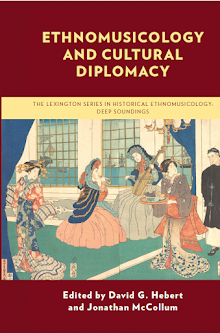
For many generations, the cross-cultural study of music has been an important way of both fostering intercultural understanding and strengthening international relations. What counts as heritage has been rapidly changing as a consequence of globalization and commodification, and today western art music and hip-hop may be as much a part of cultural diplomacy as traditional folk music and Indigenous traditions. 

The book Ethnomusicology and Cultural Diplomacy (forthcoming, April 2022, Lexington Books/Rowman & Littlefield) aims to examine this topic to an unprecedented level of detail, from the perspectives of cultural diplomacy, international law, and (ethno)musicology. This unique book promises new insights for educators, researchers and policy-makers.

Click HERE to learn about the book’s contributing authors.

Click HERE for an article related to this topic from The Norwegian American.


This book is a new volume under development that is forthcoming in the series Deep Soundings: The Lexington Series in Historical Ethnomusicology.


6/11/20

Music in the Age of Streaming


The timely conference Music in the Age of Streaming will be held as scheduled next week, but offered entirely online due to the Covid-19 pandemic. Click HERE for details regarding our presentation on Networked Performance in Intercultural Music Creation.

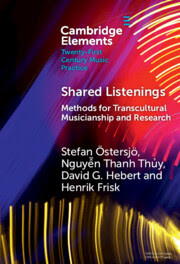
The presentation reports on an innovative project developed by artistic researchers: guitarist Stefan Östersjö, Vietnamese dan tranh master Than Thuy Nguyen, and composer Henrik Frisk, while my own role has been to provide an empirical research (ethnomusicological) perspective. The project Networked Performance in Intercultural Music Creation is producing some exciting outcomes that I think will improve understandings of online musical interaction, including streaming technologies.

The application of digital technologies in ethnomusicology and music education is a topic I have long been researching (for more than a decade). Below are some publications in this area from just the past five years, two of which are in collaboration with talented students from Norway, while others are with accomplished colleagues at universities in the US, China, and Poland:

  • Xie, J. & Hebert, D. G. (2020, forthcoming). Establishment of an Innovative Higher Education Initiative in Beijing: The Open Global Music Academy 「全球开放音乐学院——在北京建立一个创新高等音乐教育机构的计划」. In R. Allsup, (Ed.), Proceedings from New Directions for Performance and Music Teacher Education: A Symposium on University Music Education in China (Xiamen University).
  • Hebert, D. G. & Williams, S. (2020). Ethnomusicology, Music Education, and the Power and Limitations of Social Media. In Janice Waldron, Stephanie Horsley, & Kari Veblen (Eds.), Oxford Handbook of Social Media and Music Learning. New York: Oxford University Press.
  • Brudvik, S. & Hebert, D. G. (2020). What’s stopping you?: Impediments to incorporating popular music technologies in schools. Journal of Popular Music Education, 4(2). 
  • Husby, B. V. & Hebert, D. G. (2019). Integrated Learning of Music and Science: Reception of Björk’s Biophilia Project in the Nordic Countries. In D. G. Hebert & T. B. Hauge, (Eds.), Advancing Music Education in Northern Europe (pp.222-246). New York: Routledge/Taylor & Francis.   
  • Hebert, D. G. & Rykowski, M. (Eds.), (2018). Music Glocalization: Heritage and Innovation in a Digital Age. Newcastle: Cambridge Scholars Publishing. 
  • Ruthmann, A. & Hebert, D. G. (2018). Music Learning and New Media in Virtual and Online Environments. In G. McPherson & G. Welch (Eds.), Creativities, Technologies, and Media in Music Learning and Teaching, an Oxford Handbook of Music Education, volume 5 (pp.254-271). Oxford: Oxford University Press (updated edition of 2012 publication).
  • Hebert, D. G. (2016). Editorial Introduction: Technology and Arts Education Policy. Arts Education Policy Review, 117(3), 141-145 (“Technology” Special Issue). 


6/8/20

Internationalizing Higher Education


It is a pleasure to announce that in June 2021 we will be offering a new intensive PhD course through Bergen Summer Research School called Internationalizing Higher Education. The purpose of this course is to examine both theoretical and practical approaches to the improvement of international cooperation in the field of higher education, and it is designed to be of benefit to both professors and senior administrators. 

Application Deadline: 1 February 2021! 

I previously taught courses in cultural policy for BSRS: Cultural Policy: Arts Heritage and Sustainability (2019), and Cultural Heritage and Policy in a Digital Age (2018), and although this new course has a different focus we intend to include a strong arts component. I will be coordinating the 2021 course along with Robert Gray and Steinar Sætre, both based at University of Bergen. We will post links to more details when they become available.

Bergen Summer Research School courses explore interdisciplinary topics at the interface between society, science, and global challenges, and tend to attract 100 PhD candidates each year from all around the world, many of whom are sponsored by scholarships. It is a unique opportunity to obtain advanced research training while building international professional networks.

On a more personal note, I was recently asked to compile a dossier of my teaching, and was pleasantly surprised to receive enthusiastic endorsements from numerous former students and colleagues. Upon actually counting, I found that over the years I have taught for 85 institutions on each inhabited continent. It has been quite an adventure, and I am forever grateful for the opportunities. There is so much to learn from international dialogue. Hopefully we will receive lots of strong applications for the BSRS 2021 course, and can have a positive impact on colleges and universities that are seeking to open up for more international cooperation. 

Here is a video that shows what Bergen is like at this time of year ...


5/4/20

Colors of Spring


Despite the challenges of the pandemic, there are many new developments across the past week with music research and postgraduate studies here in Bergen, Norway. Shown here is a photo I took outside the window just three days ago, which demonstrates the unique colors of late springtime.    

I am pleased to announce that the Nordic Network for Music Education (NNME) has been awarded a substantial budget to continue its operations through 2021. This state-funded international network organizes intensive joint Master classes and exchange of music teachers and students across all Master-degree awarding music teacher education programs in the eight Nordic and Baltic countries. We have recently published a book from the network, and we are seeking to increase our collaboration through joint courses and (ultimately) programs.  

The Grieg Academy Music Education research group has also received an additional budget this spring based on its history of successful research outcomes, including refereed journal articles, books, encyclopedia entries, and chapters in major research handbooks. 

Finally, there has been very strong interest in our new PhD course Non-Western Educational Philosophy and Policy. I am happy to report that doctoral students applied to this course from such countries as China, Japan, the Philippines, Indonesia, Canada, Guyana, South Africa, Nigeria, Poland, the UK, Luxembourg, and Denmark, and from doctoral programs at leading education faculties, such as University College London and Education University of Hong Kong. We have great plans for this unique course which will be offered entirely online in late May.

We are hopeful that life may return to "normal" relatively soon, to the extent possible, and that until then we can all learn to be more patient. Hopefully by Autumn many activities will resume again, although much caution will still be necessary.

4/10/20

Cultural Heritage Policy Book

A few days ago I was able to complete and send the detailed plans for a new book that is being developed by an excellent group of contributing authors. They seem to be an ideal team for our topic, and I am thankful for their important contributions to an international-comparative volume that is likely to change how music is understood in the context of international relations.

It seemed worthwhile to introduce the team here, as they proceed with further development of their chapters.


About the Contributing Authors:

UPDATE (July, 2021): Five additional contributing authors have been added to this project: Koji Matsunobu, Ambigay Yudkoff, Lauren Braithwaite, Jan Magne Steinhovden and Chaden Yafi. The full manuscript of this contracted book has been submitted and is now under editorial review. 

Koji Matsunobu is Associate Head of the Department of Cultural and Creative Arts at the Education University of Hong Kong. An accomplished player of the Japanese shakuhachi flute, he holds PhD degrees from both Tokyo Gakugei University and University of Illinois, and is widely published on such topics as music education, spirituality, mindfulness, Indigenous knowledge, and creativity. 

Ambigay Yudkoff holds a PhD in Musicology from the University of South Africa. She has served as guest conductor of the Sai Movement’s youth choir of Isipingo in South Africa and the Battenkill Chorale of Vermont in the United States, each boasting notable performances for Nelson Mandela. Her monograph on Sharon Katz is volume 1 of the Deep Soundings series: Activism through Music during the Apartheid Era and Beyond: When Voices Meet

Lauren Braithwaite is a PhD student in music at Oxford University who has lived and worked in Afghanistan across recent years, where she researches music education in the ‘post-Taliban’ era. Her study focuses on Zohra, Afghanistan’s first all-female orchestra. 

Jan Magne Steinhovden is a Lecturer at NLA University College and Ph.D. Candidate with the University of Bergen, Norway. He spent much of his childhood in Ethiopia and holds a Master of world music studies from the University of Sheffield. His dissertation concerns music and identity among Ethiopian and Eritrean refugees in Norway. 

Chaden Yafi is a professionally-trained pianist and music educator with a doctorate in music from Boston University. Born in Syria, she has published on musical aesthetics and held a full-time position as a recitalist with the National Opera House in Damascus before moving to the USA. She now teaches many piano students in the Houston area. 

Marja Heimonen, DMus, Docent in Music Education, is a University Lecturer at the University of the Arts Helsinki. She also has a master-level law degree from University of Helsinki. In addition to her doctoral dissertation on music education and law, she has published chapters in books and anthologies, and articles in several different scholarly journals. She is the Managing Editor of the Finnish Journal of Music Education.

Juqian Li, PhD, is a Professor of International Law with China University of Political Science and Law, Beijing, where he has directed the Public International Law Research Institute. He is also Director of Norway’s Confucius Institute and has been a visiting professor in South Korea and Iceland. He has authored 15 books and 20 articles on international law and international economic law, including in Introduction of Space Law, WTO Dispute Settlement Mechanism, International Law, and International Law Commentary.

Marianne Løkke Jakobsen is Director of International Affairs with the Royal Danish Academy of Music, Copenhagen, where she also has served as founding Director of the Music Confucius Institute. She has led several projects that advance music collaborations between China and Europe.

Jonathan McCollum, PhD, is an Associate Professor with Washington College (USA) and founding Chair of the Historical Ethnomusicology special interest group of the Society for Ethnomusicology. He is known for his widely published contributions to the historiography of global music, and music traditions in Armenia and Japan.

Elnora Mamadjanova, PhD, is Associate Professor in the Department of Music History and Criticism with the State Conservatory of Uzbekistan, Tashkent. She has coordinated several international musicology symposia affiliated with international music festivals in Uzbekistan. Her publications include the book Traditional Music of the Uzbeks (Extremum, 2016).

Nguyễn Thanh Thủy, PhD, is a leading Master performer of the Vietnamese traditional instrument dan tranh who recently completed doctoral studies at the Malmo Academy Music, Lund University, Sweden and is now a Swedish Research Council funded postdoctoral researcher.

Stefan Östersjö, PhD, a professional guitarist and widely-published pioneer of intercultural studies in the field of Artistic Research, is now a full Professor and coordinator of doctoral studies in music at Lulea University of Technology, Sweden.

Nasim Niknafs, PhD, is an Associate Professor of Music Education at the Faculty of Music, University of Toronto. Nasim’s research concerning social justice, activism, and politics of contemporary music education is widely published. Concluding a longitudinal research on the music education of rock musicians in Iran, Nasim has recently begun research on migratory and diasporic practices in music education. Nasim holds degrees from Northwestern University, New York University, Kingston University, London, and University of Art, Tehran.

Karan Choudhary holds a PhD from the National Law University Delhi, India and Université Paris Nanterre, France. Presently, he is a Judge in Delhi, India. He was a recipient of an Erasmus Scholarship from the European Union. His research interests include culture, law, indigenous rights and policy designs, with publications in Interactions between Culture and Law in India and Europe, and Language, Law and Community.

Abraha Weldu holds a PhD in History and Cultural Studies from Mekelle University, Ethiopia. His doctoral dissertation is an intellectual biography of one of the most prominent diplomats and cultural attachés of twentieth-century Ethiopia. For more than seven years, he has taught courses in history and heritage studies at Bule Hora University. He was a participant in the Bergen Summer Research School in Norway.

Rhoda Abiolu is a Postdoctoral Fellow with the Durban University of Technology, and holds a PhD from the University of KwaZulu-Natal. Her research interests are in Media and Cultural studies with emphasis on media and cultural representations, ethnomusicology, participatory culture, and political economy. She was a participant in Bergen Summer Research School.

We have exciting plans for this book, and I am eager to see how the final version turns out as we obtain and respond to recommendations from an external reviewer. 


Click HERE to see reviews of my first six books.

3/21/20

Social Distancing and Scholarship


Ironically, the “social distancing” encouraged under pandemic conditions may actually create good conditions for some kinds of scholarship, with fewer distractions for those who are trying to complete projects. Under stressful conditions, it helps to have something meaningful to focus on while we wait for life to return to normal. 

Recently I am making a lot of progress on a book co-authored with Prof. Jiaxing Xie entitled On Music Education: East-West Dialogues (Shanghai Education Press, forthcoming), and have been developing new volumes for the Deep Soundings series in historical ethnomusicology (Rowman & Littlefield press). Several postgraduate students are making great progress on their theses, which I mentor through videoconferencing, and my institution has agreed to offer a new PhD course entirely online, for which I am now preparing material. We are also having students develop music performance projects through online collaboration tools, which is likely to be very useful experience for them in the long term. 

Over the past two months, I have completed reviews of articles and books for several refereed journals and academic presses: Music Education Research, World of Music, International Journal of Music Education, Research Studies in Music Education, Finnish Journal for Music Education, Research and Issues in Music Education, Nordic Yearbook for Music Education, Amsterdam University Press, Lund University Press, and Rowman & Littlefield. I have also approved some final edits to an article in Journal of Popular Music Education, sent a book proposal to Harvard University Press, and completed much work on a new book proposal for Rowman & Littlefield.

It seems we should always try to make the most of whatever conditions arise. Hopefully the pandemic will not turn out to be as bad as feared, but for now it is certainly threatening and great caution is warranted.

UPDATE: Online PhD Course in May 2020:
Click HERE for PhD-911: Non-Western Educational Philosophy and Policy.