10/30/19
Nordic/Baltic Music Education Master Course
The Nordic
Network for Music Education (NNME) will soon offer its 2019 joint intensive Master
course, held in Sweden this year at the Malmo Academy of Music (Lund University). Professors and students will
participate from the postgraduate music education programs in all eight Nordic
and Baltic countries: Iceland, Norway, Sweden, Denmark, Finland, Estonia,
Latvia, and Lithuania, with financial support from Nordplus. The theme for this year is Digital Competence and Music
Beyond Europe.
This year
the keynote speakers include Anna Houmann, Markus Tullberg, Alex Ruthmann, Eva
Saether, David Johnson, Adam Switala, and others. There will be a special
presentation by Chinese musicians from the Music Confucius Institute, Royal
Academy of Music, Copenhagen. There will also be several performances of
traditional music from Scandinavia and an array of Middle Eastern cultures.
Students
will also present their ongoing thesis research projects, which cover a vast
array of topics, and receive European university credits (ECTS). We are confident that by the end of the course, the
participating postgraduate students will have a better understanding of the
state of music education across Northern Europe, a more fully developed plan
for their own research, and a stronger sense of how digital competence and diverse world music cultures may be meaningfully introduced to their own students.
Displayed
here is a poster designed by Eva Saether and the other conference hosts in
Malmo.
Link to
NNME website: https://www.hvl.no/en/collaboration/networks/nordic-network-for-music-education/
10/21/19
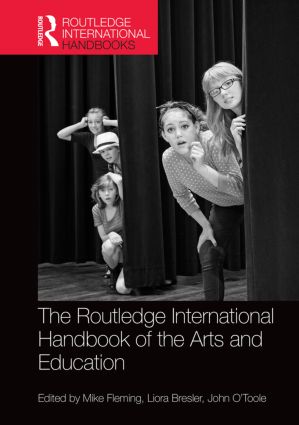
Review of Routledge International Handbook of the Arts and Education
My review
of the Routledge International Handbook of the Arts and Education is now
published in International Journal of Education & the Arts.
10/12/19
Fieldwork Research on Music in Vietnam
East Asia has long been one of my geographic areas of specialization, but recently personal interests have extended to the southern parts of China (Quanzhou: Nanyin music and the maritime Silk Road) and even into the southernmost part of this region: Vietnam.
It has been a great experience to visit Saigon for the second time this year for an additional period of fieldwork research on both local Mekong Delta traditional music and intercultural experimental music (combining Vietnamese and avant garde western electronic music techniques).
Vietnam is
experiencing rapid social and economic changes across recent years and is a nation
with rich and unique cultural heritage, including a fascinating array of
musical instruments. I have also been learning much from serving as a reviewer for the new PhD dissertation “The Choreography
of Gender in Traditional Vietnamese Music” by Nguyễn, Thanh Thủy, a master performer of the dan tranh
who later studied artistic research in music at Lund University, Sweden.
The outstanding Swedish research team that I am working with in Vietnam is making
high-quality sound recordings and will be releasing a full professional album and producing various publications from this project.
10/11/19
Reviews of Music Glocalization Book
There have already
been some positive reviews of our book from 2018, Music Glocalization: Heritage and
Innovation in a Digital Age, and it is cited in recent publications by
scholars in Cyprus, Poland, Norway, and the Czech Republic. Additionally, my co-editor Mikolaj Rykowski has been favorably reviewed for a promotion, with this book as a significant part of his portfolio.
Below are
some excerpts from the recent reviews of our book:
According to leading glocalization theorist Victor Roudometof, “The volume displays
remarkable thematic coherence, which allows the editors to use the material
presented within individual chapters in order to build broader theoretical
arguments. In its conception and execution, this volume is a noteworthy effort
to insert the problematic of glocalization into the disciplines of musicology
and ethnomusicology … The author advances the notion of being ‘glocalimbodied’ (2018:6), a neologism that combines ‘glocal’ with ‘limbo’ in order to make
sense of an unbalanced condition attributed to glocal forces as well as the
necessity of situating the body within the newfound condition of personalized
branding strategies … The editors’ synthesis of the volume’s research is highly
original and represents a good point of departure for thinking further about
the uses of glocalization in musicology” (Victor Roudometof, Ethnomusicology
Review, 2019).
According
to Professor Wai-Chung Ho (Hong Kong), “This book offers a critical study of
the undertheorized concept of glocalization, intertwining the ‘global’ and the ‘local’ forces between music and society, both past and present … the book
provides a fresh amalgam of perspectives that address music-related subjects.
It also covers diverse topics from theoretical perspectives on local and global
identities of music, art music composition in the digital age, glocalized music
beyond Europe, and glocalized music professions… This book is the first
comprehensive account of how the notion of ‘glocalization’ may be useful in
rethinking nationality in music and the use of local musical traditions that
serve as a means for global strategies. It reconstructs the emergence of music
in the global context and provides an innovative framework for studying how
glocalization transforms aesthetic hierarchies and cultural transmissions, thus
breaking new ground for musicology and the sociology of music” (Wai-Chung Ho, Cambridge
Scholars blog, 2018).
Here is a link for
reviews of my other books:
9/13/19
Honorary Professorship in Hong Kong
It was a great pleasure to officially learn today that I have been appointed Honorary Professor with the Department of Culture and Creative Arts at The Education University of Hong Kong.
This university has become one of the world's leading institutions in the field of education, and it is especially making important contributions in East Asia, where education has long been highly valued.
I eagerly look forward to further collaborations with the outstanding colleagues in Hong Kong.
This university has become one of the world's leading institutions in the field of education, and it is especially making important contributions in East Asia, where education has long been highly valued.
I eagerly look forward to further collaborations with the outstanding colleagues in Hong Kong.
8/22/19
Tabula Rasa Choir Peace Program Tour
Professional choir Tabula Rasa will perform a series of concerts at three locations in western Norway in mid-October, 2019. The program is entitled Peace (“Fred” in Norwegian), and features the theme of sacred music facing war memorials. The program is designed to stimulate reflection on the consequences of war and whether it is enough to dream of peace.
The program features music by Orlando de Lassus, Arnold Schönberg, Arvo Pärt, Frank Havrøy, Jake Runestad, and the premiere performance of a new piece by Tord Kalvenes.
This project is supported by the Norwegian Arts Council, the Norwegian Composers Association, and the Norwegian Composers Fund.
Here is the schedule and other details (in Norwegian):
14. september
Krigminnene på Fedje, minikonsert kl 15
Fedjekyrkja, konsert kl 17
15. september
Nordsjøfartmuseet i Tælavåg, minikonsert kl 15
Sund kyrkje, konsert kl 18
22. september
Herdla museum, minikonsert kl 15, 15.30 og 16.
Herdla kyrkje, konsert kl 18
Musikalsk leder: Arild Rohde
Sopran: Rikke Lina Sorell Matthiesen, Sigrun Jørdre
Alt: Elise Thorgersen Varne, Zsuzsa Zseni
Tenor: Tord Kalvenes, Arild Rohde
Bass: Charles Lindberg, David Hebert
Regi: Ingrid Askvik
Lys: Matias Askvik
Labels:
music events,
musical creativity,
my recordings,
research,
Singing
8/14/19
Non-Western Educational Philosophy
UPDATE: This PhD course was offered entirely online in late May and June 2020. It was a great success, with very positive evaluations and strong student projects that will likely lead to publications. The course will be offered again two years later, in 2022. Please plan to join us!
Here is an article about the 2020 course:
In late May 2020, we will offer a new PhD course in Bergen entitled Non-Western Educational Philosophy and Policy. This intensive interdisciplinary
course is situated within our PhD program in Bildung and Pedagogical Practices (European
educational philosophy), but it is also open to doctoral students from other universities for ECTS (European) credits.
Below is
the course description and a link for additional information.
This course enables educational theories and
practices in contemporary Europe to be more deeply understood in relation to
non-Western educational philosophies and policies. The focus of the course is
on exploring intellectual traditions and sociocultural practices that shape
school education outside of Europe, in the continents of Asia, Africa, Oceania,
and the Americas. It offers a survey of non-European philosophical writings on
education, including such major historical theorists as Confucius, Ibn Khaldun,
al-Farabi, Ibn Sina, Ibn Rushd, Ghandi, Zera Yacob, Tagore, Fanon, Nishida, Said, and Freire, as well as
intercultural observations of notable contemporary educational and social
theorists: Michael Peters, Martha Nussbaum, Nuraan Davids, Yusef Waghid, Carl Mika, Amartya Sen, Seyla Benhabib, Timothy
Reagan, Linda Tuhiwai Smith, Joel Spring, Nicholas Burbules, Carlos Alberto
Torres, Fred Dervin, Mark Halstead, and David Killick. The course will
especially emphasize discussion of East Asian schools, due to both the
distinctive philosophies and recent economic and educational achievements in
China and Japan. Students will also explore the implications of non-western
philosophical traditions for their particular school subject areas of
specialization (e.g. arts education, social studies, citizenship education,
physical education, etc.).
As discussions linked
below demonstrate, at many institutions there has been some debate surrounding
the movement to “decolonize the curriculum”, but in my view the most valid
argument for offering a course on these thinkers is that it enables us to better
understand intellectual heritage from many parts of the world, and to better
learn from each other. The course does not "replace" anything, but it certainly contributes to a more complete higher education, and stimulates us to rethink basic assumptions concerning the nature, value, and implementation of educational systems.
Subscribe to:
Posts (Atom)


https://orcid.org/0009-0002-1446-3893