4/2/12

Jazz in Bergen, April 2012


I have a few gigs as a vocalist and trumpeter in Bergen, Norway at the end of April, and will plan to post more details here soon, including precise times, directions, links, and posters.


-On Sunday, April 22 (starting at 2pm) I sing a vocal solo part for the Duke Ellington Sacred Concert, which will be performed with a full jazz band and choir at Korskirken, a medieval cathedral in the city center. Click HERE for a poster.


Here are links to two pages from the Ellington concert program:


-On Thursday evening, April 26 (9pm to midnight) I have a gig as a bandleader for which I will perform original songs and jazz standards on trumpet and voice. It will be at The Lounge, in the city center, on Kaigaten just across the pond from Grieg Hall. The evening will open with an a cappella vocal quartet [Silje Valde Onsrud (soprano), Anne Kristine Wallace Turøy (alto), Tine Grieg Viig (contralto), Egil Haugland (tenor), and David Hebert (bass)]. This will be followed by two sets of solo trumpet and voice with keyboard (Øystein Kvinge), bass (Sigurd Ulveseth), and drums (Jan Tore Ness). We will also be joined by other special guest instrumentalists. Click HERE for a poster.


-Additionally, nine of my trumpet students are giving a recital on that same week at the Grieg Academy, Bergen University College (Landås). It is on Tuesday evening, April 24th. Click
HERE to access a poster for that event.

3/20/12

OECD Director on Symbolism of Japanese School Band

For 50 years, the Paris-based organization OECD (Organization for Economic Co-operation and Development) has offered research-based recommendations to governments that now include 34 member countries. OECD is a particularly important institution in the field of international-comparative education.


About one week ago, the organization’s Director for Education began her report from Japan as follows:


Sunday, March 11, 2012

Lessons in Learning, Amid the Rubble

by Barbara Ischinger, Director for Education


A school band played for us. It was the best school band I’ve ever heard—and I’ve heard many. It was the true image of hope, team spirit and positive attitudes. For the students, it was the welcome experience of normality. A brass band playing in the midst of vast devastation; a landscape that reminded me of street scenes from my childhood in Germany after the war. But this was just one week ago, in Japan, during a visit to the area torn apart by the earthquake and tsunami a year ago today. I went there to participate in the launch of the Japan edition . . .


Click here for further details from the OECD-Japan report:

http://oecdeducationtoday.blogspot.com/search/label/Japan


I mentioned this OECD report during my recent guest lecture for the Japan Studies programme at University of Bergen.


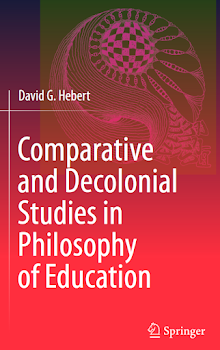
Here is a link to a description of my book on the impressive tradition of school bands in Japan:

http://www.amazon.com/Cultural-Identity-Japanese-Schools-Landscapes/dp/9400721773


3/16/12

Music and Philosophy Conference 2012


The 2012 meeting of the Royal Musical Association’s Music and Philosophy Study Group will be held at King’s College, London, on July 20-21. I plan to attend the conference (which was quite interesting last year, when I chaired the session on Asian music), and the paper I will present this year is entitled "On the Ethical Dimensions of Patriotic Music".

Click here for more information on the RMA Music and Philosophy conference:

http://www.musicandphilosophy.ac.uk/conference-2012/


3/13/12

New NAfME President Seeks to Restore Trust


According to a recent press release, Professor Glenn Nierman has been elected President of the National Association for Music Education (NAfME, formerly MENC), which for more than a century has been the most influential American organization for music education. Dr. Nierman is a full Professor at University of Nebraska who is internationally active as a scholar and practitioner in the field of music teacher education.


According to Professor Nierman’s statement, "We must focus on a vision grounded in a framework of trust within all levels of the organization. Building this trust should be NAfME's continuing primary goal for the future.”


It is quite encouraging that Professor Nierman candidly acknowledges the extent to which NAfME’s predecessor MENC had lost the trust of many music educators in the USA and elsewhere across recent years. Under Professor Nierman’s guidance we may be hopeful that credibility, relevance, and even enthusiasm will be restored, and the interests of music teachers and students effectively represented.


Click HERE for further details.


Tohoku Earthquake Poems

Below are some verses I wrote recently for Japanese friends on the anniversary of the Tohoku earthquake:


Takedake


The pristine elegance

of hollow reeds

Carved with patience

by loving hands

Within focus

he resonates

a distant world

Ichi on jobutsu


-David Hebert

For Koji, on the one-year anniversary of the Tohoku earthquake.


To Heroism


The lengthiest epic

could never contain

Multitude gratitudes

seem merely stoic

All virtues are summed

in one small refrain:

“Hiro is simply heroic!”


-David Hebert

For Hiro, on the one-year anniversary of the Tohoku earthquake.


Disorienting Distance


Beside Kamogawa was the heaven I lost

While a young dreamer bursting ambition

Whirling about years across dizzying world

Pressing each drop of joy from this persimmon

Hazarding the very deepest and gentlest of souls


Muriko means hopeless girl, but I dropped her hope

Like a broken spade

in our garden with no chrysanthemums


Disorienting distance takes its toll

leaving no final refuge

Such is the cost to cross the Kamogawa they say


Even for the boldest and noblest of companions

Even the truest and kindest of friends

Sages warn hell revolves on the other side


-David Hebert

For Mitsuko, on the one-year anniversary of the Tohoku earthquake.


3/8/12

International Comparisons in the Improvement of Education

Below is the abstract for my Keynote Speech, “International Comparisons in the Improvement of Education,” which will be presented by invitation at the Sixth International Scientific Conference: Theory for Practice in the Education of Contemporary Society, Riga Teacher Training and Education Management Academy [Riga, Latvia] (March 29-31, 2012) [http://www.rpiva.lv/index.php?mh=teorija_praksei].


Imperfections – such as inequality and inefficiency of learning – are perennial problems for education despite a diversity of foundations on which national systems are established, which range from the idealistic vision of fostering a utopian society to the utilitarian objective of producing skilled workers capable of engendering economic growth. Despite sharing many common conditions and fundamental values, educators rarely learn valuable lessons from the successes and failures of highly relevant initiatives in distant nations. This problem may be attributed to several factors, not the least of which includes the entrenchment of local traditions and ethnocentric assumptions, but surely the quality and relevance of international-comparative research – and the way its results are disseminated – are issues that must also be taken into careful consideration. What are the unique lessons to be learned from international comparisons, and what are the prospective risks for how such comparisons may be misinterpreted and misused in educational settings? How can international comparative research be made more relevant, with tangible applications that may be recognized and effectively used by school teachers? How can international comparative education meaningfully examine subjects beyond the reach of standardized testing, in such domains as the fostering of creativity, talent, and ethical sensibilities, for example? These themes will be presented through discussion of both research findings and anecdotes from the personal experience of working for universities on four continents. Specific topics will include the challenges of accounting for conceptual equivalency and representing cultural differences, sampling and generalizability, reconciling the diverging aims of economic, anthropological, sociological, and psychological research, as well as grappling with the ambivalent discourse of globalization, multiculturalism, post-colonialism, and other social movements.


Click HERE to access a conference programme.


2/9/12

Research Publications, February 2012


In recent weeks I have continued my work as an editorial reviewer for various interdisciplinary research journals in Europe, Asia, and North America, and I am collaborating with international conference organizers on a proposal to develop a symposium proceedings into a published book. Below are some of these publication projects:


Journal of Music and Meaning

JMM: The Journal of Music and Meaning is an on-line peer-reviewed journal for multidisciplinary research on music and meaning. The editorial profile of JMM accommodates an inclusive plurality of methods and disciplines and welcomes contributions from a variety of fields, such as: philosophy, mathematics, physics, musicology, medicine, acoustics, neurology, theology, literary studies, philosophy of science, music pedagogy, computer science, semiotics, sociology, linguistics, religious studies, anthropology, psychology, biology, education studies, music therapy, culture studies, etc. JMM aims to bridge the gap between various studies in meaning and signification and areas of research in music. JMM especially encourages any multidisciplinary research on meaning that is able to challenge conceptions of music, or research that explores the notion of meaning by the study of musical phenomena.

http://jmm.musicandmeaning.net/#home


Journal of Urban Culture Research

“JUCR is intended to address topics that, while focused on research and knowledge of fine and applied arts, also offer readers relevant theoretical discussions and act as a catalyst for expanding the knowledge-base in specific areas of creative expression related to Southeast Asia’s urban culture. This journal aims at bringing together researchers and cultural practitioners to identify and share innovative and creative experiences in establishing sustainable and vibrant communities.”

http://www.cujucr.com/jucr2/Home.html


Cultural Translations

The Workshop “Cultural Translations and Transculturality” was held in August 2010 in Varberg, outside Gothenburg, Sweden. In the following year, the International Symposium “Cultural Translations: Research on Japanese Literature in Northern Europe” was organized at the International Research Center for Japanese Studies (Nichibunken) in February. Along with the Varberg participants, several additional researchers participated in Kyoto around the theme of transnational and transcultural meetings. This CD offers documentation of the two academic gatherings in Varberg and Kyoto. One of the important goals of the Varberg Workshop and Kyoto Symposium was to ponder the possibility of opening up a new, dynamic research field around the central notion of “Cultural Translations” in Japanese studies. Articles on this CD consequently deal with a breadth of questions, pointing to different directions.

http://gup.ub.gu.se/gup/record/index.xsql?pubid=149668


Research and Issues in Music Education

RIME is a privately funded international on-line music education research journal that advances scholarly thought by publishing articles promoting research, dialogue, practice, and policy in music education. RIME publishes quantitative, qualitative, philosophical, historical, speculative, and bibliographic articles that are peer-reviewed and contribute to an understanding of any focus and level of music education.

http://www.stthomas.edu/rimeonline/vol9/index.htm