2/19/26

Reception of Shared Listenings


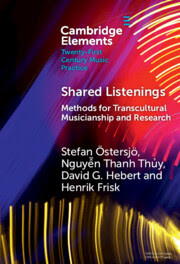
Recently some very positive reviews have been published for our co-authored book Shared Listenings: Methods for Transcultural Musicianship and Research (Cambridge University Press): 


"Shared Listenings is more than a research text; it is a guide for the "reflective practice" that every improviser should ideally undergo. The authors demonstrate that by facing the difficulty of unfamiliar contexts and sharing critical views, one reward is a deeper understanding of one's own musical behavior. This book recommends us to look at our own practices with the same scrutiny that they have employed. It asks us to consider if our learning is extractive or if it is a genuine attempt to correct unjust imbalances of power. It invites us to develop a keener sense of how to make space for others." 

Journal of Sonic Studies.

https://www.researchcatalogue.net/view/558982/4175093


“The many years of experience in tedious intercultural work that the book's authors possess (...) made it possible to present an unusually concrete text on how future musician education and artistic research in music could be developed with the help of shared listening (…) what could be called a handbook on the art of musical encounters across cultural boundaries” (translated from Swedish) 

Swedish Journal of Music Research 

https://publicera.kb.se/stm-sjm/article/view/51283/44805


2/16/26

Professional Activities in East Asia


It was a tremendous pleasure to participate as an Invited Speaker for a recent conference in Seoul, Korea hosted by the Association for Future Music Education.


Also, click HERE for a link to an update from the Global Competence Partnership project in Hong Kong.


Lately I have also been visiting Japan’s music industry capital, Hamamatsu, for development of an application to the Horizon Europe grants program. We intend to develop new research-based solutions, technological (AI) standards, and policy recommendations for specialized uses of music, as requested by a call from the EU. 


Also, here is a brief video from a jazz club in Hong Kong ... a brilliant local trumpeter named Ruel Cabrilla generously let me borrow one of his instruments to sit in on a tune in mid-February 2026 ... 


2/4/26

Music Dissertations from Denmark and the Faroes


Two talented PhD candidates have now proceeded to the final stages of their doctoral studies.


Knut Eysturstein (University of the Faroe Islands) has submitted a full draft of his dissertation, The Concept of the Faroese in Music Education: Negotiating Identity and Notions of Tradition, which will soon proceed with final edits and then be sent to the examiners. This is the first study to offer an in-depth historical and ethnographic perspective on music in the Faroe Islands. The external examiners (“opponents”) for Knut’s PhD dissertation defense, to be held in Spring 2026, have also formally accepted their appointments: music educationist Helga Rut Gudmundsdottir (University of Iceland) and ethnomusicologist Kimberly Cannady (Victoria University Wellington, New Zealand).


Recently, Marianne Løkke Jakobsen (Director of Global Affairs, Royal Danish Academy of Music) has very successfully completed her “pre-defense” at Aalborg University, Copenhagen, Denmark. Marianne has an impressive series of published articles that together demonstrate many important aspects to be considered in intercultural synchronous online teaching of musical instruments, particularly with Chinese students. She now proceeds to writing the “kappa” which links together the publications into a cohesive whole for presentation and evaluation of the entire project, offering multiple recommendations to improve music teaching and learning in conservatoires.


It has been a great pleasure to work with these fine young scholars who are generating entirely new insights for music and related fields.


2/3/26

PhD Defense on Music in Uganda


Soon, an important event to be celebrated: The PhD dissertation defense of Erisa Walubo at Makerere University, Uganda.


With studies supported by the CABUTE project, Erisa has forthcoming articles in Philosophy of Music Education Review and other journals, and has produced an impressive ethnographic study that demonstrates from a decolonial perspective how Indigenous arts traditions can be effectively integrated into education. 


It has consistently been a great pleasure to mentor Erisa, who shows enormous promise as a scholar and educator. 


1/21/26

Grieg Research School: Summer Course 2026


The Grieg Research School in Interdisciplinary Music Studies (GRS) has announced its upcoming PhD course and research symposium, open to all PhD candidates and postdoctoral researchers with an interest in music.


This will be held on 16-18 June, 2026 in the greater Bergen area, on the beautiful island of Stord, western Norway. 

GRS promises to be an exciting event, with many stimulating opportunities to share and learn about the latest theories, methods, and findings across an array of music fields.


Please share this opportunity with music researchers, and click here for more information: https://griegresearchschool.no/courses/grs-summer-school-2026/


Public domain image source: https://snl.no/Sunnhordland


1/17/26

Board Meetings and PhD Completions


On behalf of the ISME Board, the Executive Committee has just completed 10 hours of online planning meetings across the past week for future activities of the International Society for Music Education. It has been a pleasure to collaborate with this tight-knit group of such professional, thoughtful and committed international colleagues from Mexico, Australia, USA, Hong Kong, India and Norway.


We believe our many initiatives will help make ISME even more effective and responsive to its members across the world.  


It is also a pleasure to announce that across the past few weeks, two PhD students, for whom I served as an external examiner, have formally passed their doctoral defense (viva voce) and now proceed to some final revisions before receiving their PhD degrees.

-Nurezlin Mohd Azib (2025, December), Reconceptualising the Learning of Expressiveness in Music Performance: Malaysian Undergraduate Voices Beyond Western Traditions (viva voce, Royal College of Music, London, UK). 

-Huang, Yuqing (2026, January), Vocal Characteristics and Social Class in Light Soprano Roles: A Study of Character and Performance in Opera (viva voce, UCSI University, Kuala Lampur, Malaysia).


I eagerly look forward to seeing what they achieve in the future!


Life always has its ups and downs, but music certainly helps us to find the resilience to get through everything. Click HERE to access a recent blues performance. 


12/18/25

A New Philosophy of Music Education


Our latest book will finally be published in the coming months, A New Philosophy of Music Education for the Era of AI.


As artificial intelligence (AI) more deeply impacts many aspects of education and the arts, we are hopeful that this book will become a helpful resource for teachers of all kinds. 


This original monograph is the outcome of a long-term collaboration with Professor Jiaxing Xie, an ethnomusicologist and music teacher educator who worked for years in Beijing as Director of the Chinese Music Research Institute of China Conservatory, and recently published an 18-volume encyclopedia on the history of Chinese musical thought.


Here is a summary:

This book outlines a philosophy of music education that is responsive to the age of artificial intelligence. Against the background of AI's challenges to human modes of production, the authors demonstrate how music education can become a tool for self-discovery in this transformative era. Taking the approach of a dialogue between Chinese and Western perspectives, the book addresses the relationships between the social functions of music education and individual development in different historical periods, and envisions the potential role of music education in a new environment shaped by AI. Integrating insights from recent research, it establishes a forward-thinking philosophy of music education that is oriented towards self-discovery and grounded in science. Bringing together philosophical perspectives from Chinese and Western scholars, this book shows how integrating these perspectives can clarify the values that shape music education practices, and enable scholars and educators to better address contemporary issues in the teaching of music.


Prof. Pamela Burnard (Cambridge University) also wrote a beautiful Foreword for this book. Detailed information is available on the Routledge website.


12/7/25

GAME Symposium 2025


Across recent years we have been hosting the GAME symposia in Bergen each December as an annual activity of the Grieg Academy Music Education (GAME) research group.


This was another great year, with participants from more than 12 countries and territories, including USA, Canada, Norway, Sweden, Denmark, Faroe Islands, Poland, France, Greece, Japan, China, Malaysia, and Hong Kong.


This year, our PhD Candidate Kristian Tverli Iversen gets much of the credit for hosting and chairing. 


A special hightlight of the first day was a full 1-hour presentation of the nearly completed PhD dissertation of Knut Eysturstein on music heritage and education in the Faroe Islands.


Click HERE to see the academic program and HERE to see the program from our concert at this event.


Click HERE to learn about previous GAME Symposia.


11/8/25

Keynote and Lectures in China, Autumn 2025


I look forward to offering lectures through the Graduate School of Education at the Education University of Hong Kong, as part of the Global Competence Partnership project. This time my lectures will be on quite practical topics that nevertheless have broad relevance across academic fields, including how to publish in scholarly journals and effectively participate in academic conferences.


It is also a great pleasure to be offering a keynote speech for China’s 6th National Symposium on Oral History of Music and the Annual Meeting of the National Society for Oral History of Music in Nanning city, in the beautiful Guangxi Zhuang Autonomous Region of China (2025). 


Here is a link for more information on this event (in Chinese):

https://mp.weixin.qq.com/s/tcFhRtKSuwv7kJr51uOqZA


I am also an invited speaker for upcoming events in Seoul and Amsterdam. Click HERE and HERE for details.


Image source (Guangxi): 

https://commons.wikimedia.org/wiki/File:Yanshan,_Guilin,_Guangxi,_China_-_panoramio_%281%29.jpg


11/3/25

Nordic Intensive Master Course


It is exciting to now be at the Nordic Network for Music Education (NNME) intensive course, which includes participants from Master programs across all eight of the Nordic and Baltic (NB8) countries. I have been managing the NNME for several years, which receives government funding from Nordplus, and our course this year is hosted by Marja-Leena Juntunen in Finland at the beautiful Kallio-Kuninkala villa.


We eagerly look forward to seeing presentations of the Master thesis projects developed by each of the students and to sharing new ideas in the field of music education. These courses are a profoundly meaningful learning opportunity for the students, as they share with peers from across the region and develop networks that benefit them across their careers.


Click HERE to see the book produced a few years ago by this network.


Shown above is a public-domain image of Ainola, the former home of composer Jean Sibelius, which is walking distance from the course site.


10/30/25

Historical Ethnomusicology Section 2025


It is a pleasure to now have an appointment as Chair of the SEM Historical Ethnomusicology Section, a division of the Society for Ethnomusicology. I will continue to work closely with Otto Stuparitz (University of Melbourne), who is now Past Chair, preceded by Kristina Nielson. 


We already have an excellent nomination for our next Secretary/Chair-Elect and will vote on this appointment in the coming months. We will also meet as the leadership team to set goals and detailed plans for the coming years, and I look forward to seeing what we can accomplish.


Click HERE to learn about my paper presentation at SEM 2025. 


The mission of the Historical Ethnomusicology Section is to support historical studies in the field of ethnomusicology, primarily through the sponsorship and promotion of discussions, events, panels, and publications related to historical approaches to the study of music.


The Historical Ethnomusicology Section had several activities recently at the 70th Annual Meeting of the Society for Ethnomusicology, in Atlanta, 2025:  The Section organized and sponsored various historical paper sessions and offered travel awards as well as its annual Student Paper Prize. Additionally, more than 20 participants came to our “Meet and Greet” and 15 came to our Business Meeting where we offered an appreciation for preeminent fiddling researcher Chris Goertzen, discussed recent projects, and planned future activities.


The 2025 paper prize selection committee awarded the Student Paper Prize in Historical Ethnomusicology to Melissa Camp for her paper titled Robert Lachmann’s Listening Ear at the 1932 Cairo Congress and Berlin Phonogramm-Archiv” and Honorable Mention was awarded to Sora Woo for her paper “‘The Ballad of Chol Soo Lee’ as an Asian American Anthem.”


The Society for Ethnomusicology has around 1,700 members, nearly 10% of which are counted in the Historical Ethnomusicology Section (although not all actively pay dues).


Below are some numbers from the latest Historical Ethnomusicology Section Annual Report submitted shortly before the 2025 meeting:


Number of Members

Member Count: 160

Listserv subscribers: 191


Facebook Group

URL: https://www.facebook.com/groups/324391271000182/

Number on Facebook: 2000 members


Images (my photos): downtown Atlanta and Saint Louis Cathedral of New Orleans.


10/13/25

Music Education in the CABUTE Project


After three intensive seminars across the past two weeks, the Music Education strand of the CABUTE project is going very well! Our Master students have robust research proposals for their theses and our PhD student has completed his study with even more ideas for how to expand on his findings.


We eagerly look forward to seeing what these fine students will achieve in the long term to strengthen teacher education and music heritage in Uganda.


10/9/25

Deep Soundings on Bloomsbury


Paperback editions of the books in our series Deep Soundings: Critical Studies in Historical Ethnomusicology are now available through Bloomsbury press.


The books have received outstanding reviews and are now in many libraries.


10/7/25

Music and Politics Keynote


I look forward to giving a keynote speech soon for the 2025 Music Research Today (Musikforskning idag) conference of the Swedish Society for Music Research, hosted by the School of Music, Theatre and Art at Örebro University. This year’s conference theme is Music and Politics.  


Click HERE for a description of the keynote speeches. Below is the title and summary for my presentation.


Music Diplomacy Amid Populism and Protectionism


If one were to summarize the main political tendencies impacting the world today, far-right populism (with the rise of authoritarian leaders) combined with protectionism (featuring preoccupation with borders, migration and tariffs) would seem to be among the most prominent. There is also a noticeable shift from multilateralism toward transactionalism, which appears to be eroding the post-WWII world order through the ascent of BRICS and related alliances. How does music interact with these tendencies, and what hope might music provide in efforts to nudge humanity toward a more just and sustainable world in these uncertain times?  Music can play a highly effective role in cultural diplomacy that aims to bridge between ideological divides exacerbated by social media siloization. One relevant case comes from Samarkand, a great city on the historic Silk Road: The Sharq Taronalari Festival, which is one of the world's largest international folk music events, funded by UNESCO and the government of Uzbekistan. I participated in this spectacular festival on three different years, experiencing remarkable performances of traditional music from all inhabited continents. There are also entire institutions devoted to music diplomacy, a prominent example of which is the Barenboim-Said Academy, a conservatoire in Berlin founded with the purpose of inspiring cooperation between Arabs and Jews through classical music. In the field of Chinese music, a notable case was Copenhagen’s Music Confucius Institute, which I researched by interviewing expert pedagogues who had taught traditional Chinese musical instruments to European students. In the opposite direction, the Intensive World Music Concerts—developed across recent years among Chinese traditional instrument majors in the “Cross-Cultural Music Diplomacy” course at Beijing Language and Culture University—are another example, through which Chinese students learned to perform songs from Europe, Africa, Middle East, Polynesia, and the Americas. Finally, music diplomacy can also take the form of research and development initiatives. For example, the Sapmi Singing Map is a Norwegian Research Council-funded project that features close collaboration with Sami joikers to develop educational resources so their music, which had long been marginalized, can be sensitively taught to all students in Nordic schools. For each of these cases, anecdotes will be shared from direct personal experience, and each example will be considered in relation to state-of-the-art theories that provide a deepened understanding of music diplomacy. However, today perhaps the greatest threat to all these inspiring forms of heritage is AI’s unregulated colonization of human arts, so promising ways of responding to AI must also be briefly discussed. Taken as a whole, these examples show how the power of music diplomacy can foster forms of empathy and reconciliation that emphasize our shared humanity and thereby counteract the threat of deepening political divides.


Here I will note that I gave a speech covering some of the same examples in Hong Kong last month, but it looks quite unlikely even one person will be in the audience in Sweden who was also there in Hong Kong, so presumably nobody will notice or mind. I continue to refine the topic as well as how these examples are discussed. 


Image source (Orebro Castle): https://commons.wikimedia.org/wiki/File:%C3%96rebro_slott_May_2014_01.jpg

10/2/25

GAME research group

The Grieg Academy Music Education (GAME) research group has been achieving so much across recent years, exciting to see: many publications, grants, lectures, workshops and performance activities.


Recently we have meetings about once a month, and lately these are hybrid events with participants gathering in person in Bergen, Norway as well as online from North America, Asia, and Africa. Many GAME members plan to give presentations at the 2026 ISME World Conference in Montreal.


Pictured above is renowned composer Edvard Grieg, the most famous person from the city of Bergen, where the GAME research group (named for his legacy) is based.


Here is a photo from a GAME research group meeting (3 October 2025), which included many special guests. In person, we were joined by one of the GAME founders, Steinar Sætre, who brought guests from Uganda that are in the CABUTE project, Music subject leader Dr. Nicholas Ssempiija, PhD student Erisa Walubo, Vincent Muhindo, and Hellen Hasahya (new Master students who were traveling outside Uganda for the very first time), as well as Kjersti Elisabet Lea, a recent department head at University of Bergen. PhD student Knut Eysturstein was also here from University of the Faroe Islands. The event was hosted by HVL PhD student Kristian Iversen with support from our HVL postdoc Dr. Karan Choudhary, and included online guests from the CABUTE project in Uganda as well as Education University of Hong Kong (EdUHK) and other institutions.


Online we were joined by HVL Associate Professor David T. Johnson, Julia Katarzyna Leikvoll (University of Bergen), Craig Resta (Kent State University, USA), Sangmi Kang (Eastman School of Music, USA), CABUTE postdoc Milton Wabyona (Makerere University, Uganda), CABUTE postdoc James Isabirye (Kyambogo University, Uganda), ISME Routledge Book Series Assistant Editor Esther Chunxiao Zhang (EdUHK), recent PhD graduate and Cantonese opera expert Kimmie Sin-Yee Ma (EdUHK), and Yuki Morijiri (Tokyo Gakugei University). The event featured insightful presentations by two PhD students who are nearing completion: Knut Eysturstein and Erisa Walubo, a stimulating presentation by Craig Resta on approaches to historical research in music education, and some brief introductory presentations of thesis concepts by new CABUTE Master students Vincent Muhindo, and Hellen Hasahya. Michael Chi-Hin Leung (EdUHK) also gave an interesting presentation on his music education technology research.


9/30/25

Unexpected Audience of 500000


I recall back in 2007 while working as an Assistant Professor at Boston University, I visited beautiful Kyoto, Japan for some research, and at some point realized it could be worthwhile to develop an online portfolio to post various academic and artistic activities, including photos and videos. That is when I launched this blog Sociomusicology.


Now it is really hard to believe that on the final day of September 2025, the site has attracted a half-million page views. Compared to newspapers and magazines, 500000 is not a very large number, but it is encouraging to see what can come from persistence across years, even in what would seem to be a niche academic subject area: music education, ethnomusicology, comparative education. I will post here an analysis of the traffic to this site, which could be interesting for anyone else who might also consider making a blog of their academic work.


One interesting point worth noting here is that the Singapore numbers look unbelievable, but across time I have realized this is due to the number of mainland Chinese who use a VPN that merely causes them to appear to be based in Singapore. 
 

9/28/25

Malaysian Music Research


It was a pleasant surprise to be invited by two different universities this Autumn to serve as a PhD examiner for students from Malaysia who have completed quite interesting doctoral dissertations.


One dissertation is a mixed methods empirical research study at the Royal College of Music, London, that examines how musical expressiveness is learned among Malaysian college students, with particular attention to non-western understandings of expressiveness in music performance.


Another doctoral dissertation is performance-based, an artistic research study at Malaysia’s leading private university (UCSI University) that examines the characters and vocal characteristics of soprano roles in opera.


I look forward to learning from this innovative research, and to posing some useful questions, and will report in detail here when the process is completed with new music Doctors from an exciting part of the world.  


Indeed, Malaysia is a quite interesting country, with a megadiverse tropical environment, and over 34 million people in a rapidly developing economy. It is notable that Malaysia invests heavily in education and has over 20 universities. There is an array of traditional music genres Malaysia, from the Nobat court music to genres associated with dance drama traditions, as well as regional and minority folk music styles, and even lovely children’s songs


Also, the Malaysian Philharmonic Orchestra, along with a new generation of singers and other world-class performers, have become known in the global field of western classical art music.


We can surely expect Malaysia to continue becoming an even more globally-impactful place for music and education in the coming years.


9/10/25

Chinese Translation Published

It was exciting to learn yesterday that a book I developed with Jon McCollum is now being published in Chinese translation by a team of outstanding music scholars.


Click HERE for more details (in Chinese language).


9/1/25

AI vs. IP in Music: An Issue for Ethnomusicology


UPDATE: It was exciting to have a great audience turn up for this event, including several prominent US-based ethnomusicologists, such as Anthony Seeger, Bonnie Wade, Kyra Gaunt, Dave Fossum, and Marc Perlman, to name a few. 


I eagerly look forward to co-hosting the 2025 SEM Historical Ethnomusicology Section meetings with its current Chair, Otto Stuparitz, and to giving the following presentation at the 70th Annual Meeting of the Society for Ethnomusicology


AI vs. IP: Who Owns the World’s Music Today?


David G. Hebert (Western Norway University of Applied Sciences) 


Abstract: 

At the 2025 Paris AI Summit, VPOTUS Vance declared to world leaders that “excessive regulation” harms the AI industry and will not be tolerated by the USA. His position contrasts with another VP, that of the world’s largest music company (Universal), who denounced AI’s “wholesale hijacking of the intellectual property of the entire creative community.” Indeed, as Suchir Balaji showed, the “fair use” doctrine cannot reasonably apply to the “training” of AI, whether in the form of text, images, or music, since the resulting synthetic products are designed to compete commercially with human-made creations. Law has arguably not kept pace with new technologies, including music AI, which flagrantly violates the spirit of copyright. How are ethnomusicologists to respond to AI in ways consistent with our values? Currently, the US, China, and Europe are the main centers of AI innovation, and of these the EU most explicitly protects privacy and AI safety (e.g. GDPR, EU AI Act). The US is also one of the only major countries that is not a signatory to major international agreements for safe AI development. Since SEM is a US-based organization, its members must consider the impact these US policies will ultimately have on music ownership and music creation worldwide. Based on a decolonial approach to IP in the context of international law, this presentation will identify established ethnomusicological values, then outline the legal arguments (and counterarguments) for regulating AI to protect musicians, promote cultural survival, and even ensure the future of human personal identity.


.......................

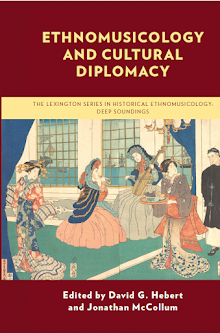
This theme is also related to the work that our new postdoctoral researcher, Karan Choudhary, will pursue over the next few years, and who I hope may join me in future SEM conferences. His earlier work appears in the book Ethnomusicology and Cultural Diplomacy as well as various law journals. 


Image source:

https://en.wikipedia.org/wiki/Atlanta#/media/File:Atlanta_Skyline_-_Piedmont_Park.png


8/31/25

Invited Lecture in Taiwan


National Taiwan Normal University (NTNU) is the most international university in Taiwan, and among the highest ranked in Asia for teacher education and educational research. With a history of more than 100 years, it was founded during the Japanese occupation, known then as Taihoku College.


The College of Music at NTNU is also the most prominent Music institution in Taiwan.


I look forward to the opportunity to give an invited lecture there in Autumn 2025, during which I will share insights gained from the Global Competence Partnership project.