
Music
educators worldwide know that our profession is meaningful and has a profound
impact, yet there remains a widespread sense that we are under-appreciated and too
little supported by society. Across recent generations, standardized testing
and STEM education have led to forms of schooling and teacher training
that increasingly marginalize arts and humanities fields in favour of math and
language, subjects commonly assumed to be more relevant for future employment. But
must it be this way? Can music education be revitalized at a global level?
Actually, the STEM vision of education was never particularly convincing (nor inspiring), and there
are signs of new conditions that offer hope for music as a field of study. Yes,
the rise of AI may come with an array of threats but also important
opportunities: As more physical work is assigned to robots, and more cognitive
tasks to AI “bots”, there should finally be more space in our lives to
focus on the activities that are most meaningful and most define us as human
beings. Music has surely been one of those activities across all recorded
history worldwide.
Recent science-based books by Stefan Koelsch (on music’s healing power) and Patrick Savage (on global musical practices) demonstrate the profound impact music has on all aspects of our lives,
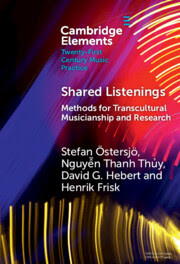
and one of my recent books especially shows its unique power to promote peace and
reconciliation.
Considering its remarkable potential to improve our lives, it seems clear that
there are untapped opportunities for music’s power to be more effectively applied
across an array of contexts in the age of AI.
I have long been interested in ways of responding to cultural diversity in music education, particularly in higher education and teacher training, and recently
had opportunities to speak at length with Michael Iyanaga (President, Society for
Ethnomusicology) and also Tan Sooi Beng (President, International Council for
Traditions of Music and Dance). Both SEM and ICTMD are organizations that
support original research on all kinds of music worldwide, as presented through
their conferences and publications. Consequently, today a remarkable array of diverse
global musical practices—and ever-growing corpus of research-based knowledge—is
available to music teachers, much of which was far less developed and less
conveniently accessed only a few decades ago. This changes what music teachers can
reasonably aim to offer their students and enhances our ability to demonstrate
why music matters.
With that
in mind, it becomes clear that the music education profession must now embrace a
mission to demonstrate how in the age of AI, music deserves more attention
in education than ever before, and surely the strengthening of global
cooperation among music teachers is our most promising opportunity for
positive transformation and sustainability across the music teaching
profession.
What can major organizations like the International Society for Music Education (ISME) do to revitalize
music education globally? We need closer collaboration with colleagues in (ethno)musicology
and educational research, as well as partners across the vast array of music
professions, in initiatives that enable music teachers to become better
informed regarding the latest musical knowledge, innovative methods for
teaching and learning, opportunities in music-related professions, and global
trends in the field of music teaching. This way, when parents and educational
policy makers openly question whether music studies can lead to anything
useful, we will have much richer and up-to-date resources for them to examine
that compellingly demonstrate music’s impact on individual and community
health, its essential role in human life (via all major rituals), its value in
promotion of peace and reconciliation, its role in an array of fulfilling
professions, and many other important applications.
We also urgently
need a new approach to AI in music education, a systematic orientation that
deliberately features the notion of balance. That is what we aim to
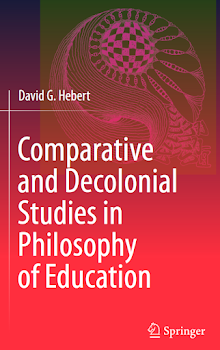
offer in a recent book on AI and philosophy of music education, which we hope will provide helpful
stimulation for music teachers. The current opportunities and threats from generative
AI are extraordinary and urgent, calling for a proactive and unified response
from our field. AI can do so much to make our programs more inclusive
for all kinds of people and all kinds of music, offering unprecedented
opportunities for musical experiences that were previously unimaginable. We
must actively seize the chance to devise and apply new innovations that promise
to deeply enhance the musical experiences of our students.
At the same
time, the survival of Indigenous and minority traditions against the
unregulated predatory threats from AI is a serious matter of cultural rights
that calls for collective action. The same goes for the rights of individual musicians
to not have their creative works automatically copied, recontextualized and
regurgitated by powerful machines that offer no compensation nor even acknowledgment
of their original human sources. We need music educators to consult for both music
technology and educational technology companies, where they can advocate for
product designs that are truly educational, that inspire creativity (rather
than stifling it by making most artistic decisions for users), and that fully
respect the rights of musical individuals and communities whose creations are used
to “train” AI. We must recognize that our professional organizations have
the collective power to influence whether an AI-based product is widely endorsed
by music teachers, power that can help positively shape the future of music and
education.
To ensure there is a promising future for human music, we need music educators (and their organizations) to more actively advocate on behalf of the rights of creative musicians, and to use the power of our numbers to helpfully guide the music industry toward ethical approaches that nurture the sustainability of human musicianship. Finally, to ensure there is a future for human personal identity, we need music educators to lead the way for educators in other subjects in which only the positive or negative aspects of AI are fully recognized. I am hopeful that ISME will continue to play an important role toward these objectives that promise to positively transform and strengthen the music teaching profession over the coming years. With this as an agenda, I am now one of the two final candidates for President of the International Society for Music Education.
Below is the Personal Statement submitted as part of my presidential candidacy:
It would be a great honor to have the opportunity to serve as president of ISME, a global organization that matters deeply to music teachers worldwide. ISME’s activities keep expanding, with enormous promise for the future. By serving on ISME’s small executive committee across recent years, I have nurtured a close working relationship with ISME presidents, CEO, and staff: all great people who have my sincere respect. Cooperation also deepened through my work as Senior Editor of the ISME Routledge book series and by having led ISME’s History Standing Committee. Additionally, I have presented for ISME’s regional organizations (APSMER, EAS, and PASMAE), and served for a few terms on the Board of ISME’s own journal IJME.
Born in the USA in the 1970s, I have had the opportunity to live and work as a music teacher in many different countries worldwide, and I continue to actively perform. Although now mostly based in Norway, I have ongoing projects in Asia and Africa, with recent professional activities in Uganda, Japan, South Korea, Taiwan, Hong Kong and mainland China, so I continue to strive for a global perspective on our field. It is inspiring to note that recent ISME presidents represent very diverse backgrounds, coming from Canada, Kenya, Hong Kong, Mexico and the USA, and 4 out of 5 are women. There have been no ISME presidents from Europe during the past decade, and I would very much hope to guide ISME toward forging even closer intercontinental cooperation, including with the Global South.
ISME exists because there are many issues in music education that call for a coordinated global approach. I consider AI to be one of the biggest threats and most under-appreciated opportunities for music and music education. We must do more to protect and sustain artistry and heritage while also promoting creativity and responsible innovation during this time of rapid cultural and political change. We must further demonstrate how music holds a special power to promote reconciliation in communities torn by violent conflict—including for Indigenous and minority peoples—and show how music enables self-discovery, personal healing and intergenerational understanding.
Particularly as ISME reaches its 75th anniversary, it is important to bring a new historical consciousness to what we do, with not only awareness of the past but also the significance of the present and trajectories for the future. ISME can play a vital role in ensuring the latest research-based knowledge and innovative methods will reinvigorate music teachers worldwide. To counteract professional burnout, ISME must consistently offer new inspiration and opportunities for deepened competence, so our members can meaningfully promote lifelong music participation! As ISME president, I would aim to raise our profile and impact as an organization committed to musical and cultural diversity and guided by concern for the teaching profession and global challenges. I would greatly appreciate your vote, and a chance to lead ISME, but I suspect the other candidate(s) would also do an excellent job. Either way, let’s cooperate to keep making ISME even better together.



 https://orcid.org/0009-0002-1446-3893











No comments:
Post a Comment