11/19/20

Asian Educational Philosophies


It is a pleasure to announce a special issue of the Nordic Journal of Comparative and International Education on the theme “Rethinking Asian Educational Philosophies” (edited by David Hebert). This issue is currently under development for publication in early 2021, and promises to be a unique resource, with updated studies of educational thought in China, Indonesia, Myanmar, the Philippines, Japan, India, and elsewhere. More details will be posted here in January.


UPDATE (30 January 2021): We have submitted this special issue to NJCIE today with the following article titles:

·       “Editorial Introduction: Global competence, decolonization, and Asian educational philosophies”

·       “Comparison of self-reflection in Humboldtian Bildung and the Kyoto School: Educational implications in light of OECD frameworks”

·       “Intergenerational learning and programming: Perspectives from the Philippines”

·       “The Self-Orientalization of Polish music education”

·       “A balanced perspective embodied in Tagore and Hu Shih’s educational philosophies”

·       “Cai Yuanpei’s vision of aesthetic education and its heritage in contemporary China”

·       “On Ki Hadjar Dewantara’s philosophy of education”

·       “Overcoming performativity in Myanmar’s education: Lessons from Theravāda Buddhism”


Also, below is the poster for Bergen Summer Research School, 2021. This is a unique opportunity for PhD students to take an interdisciplinary course for ECTS credits along with doctoral students from around the world. Due to the pandemic, it will be entirely online, and free of charge. The application deadline has been extended to 19 February 2021. 


I will be teaching the BSRS course Internationalizing Higher Education, which is designed to offer new ideas for how to enhance international cooperation among universities. Like previous years, I am also developing original music for the opening event, but this time it will probably need to be a sound recording rather than live performance. 


Here are links for more information:

https://www.uib.no/en/rs/bsrs/138795/internationalizing-higher-education

https://www.uib.no/en/rs/bsrs


10/29/20

Review of Advancing Music Education in Northern Europe

Click HERE to see the very first published review of our book Advancing Music Education in Northern Europe (Routledge, 2019), which was just published on the website of the International Society for Music Education. 


Thank you, Adam Switala, for such a careful reading and thoughtful review.


The book was developed through the Nordic Network for Music Education, which has its 2020 intensive seminar next week.

10/24/20

Doctoral Supervision Course


UPDATE: Click HERE for my video on doctoral supervision in music and click HERE for my recent publication on this topic. Since the time of this video, I have been asked to teach for a fourth year of the Doctoral Supervision course at UiB (2020, 2021, 2022, 2023) and later launched a new course on research supervision at HVL. I more recently served on new PhD supervisory/examining committees in Denmark (students at two institutions), Lithuania (two students), Uganda and Faroe Islands (from 2023), China (2024), Malaysia (2025) and UK (2025), meaning that as of 2026, I have served on doctoral committees in 17 countries. In early 2026, I was also asked to serve on a doctoral committee in Malta, but this is still being formally confirmed by the university. 
It was a great pleasure to serve as one of the four invited panelists for a course yesterday (October 23, 2020) on Doctoral Supervision at University of Bergen, UPED 691: Becoming a Supervisor: Community, Expertise, Dialogue. Mentoring doctoral students is both an unusually challenging and fulfilling responsibility, as one guides a mature learner toward developing new knowledge as a scholar. It is helpful to provide courses of this kind to young professors, since sometimes those who are appointed as doctoral mentors have expertise in their specialized field but have taken few opportunities to systematically consider various approaches to mentoring. There is now a growing corpus of research on mentoring that can serve as a useful reference for those seeking to improve upon their approaches to doctoral supervision. 

In preparation for the panel, I reviewed several recent studies on PhD education, and reflected on my own experience as a doctoral supervisor. In my current job (within a recently merged institution that is seeking full research university status) there have been few opportunities to mentor doctoral students, but I have enjoyed much doctoral supervision in several previous jobs as well as recently through various adjunct (visiting professor) positions in Europe and Asia. In all, I have served on 15 doctoral committees, with universities in 10 countries in Europe, North America, Africa, and Asia. This includes dissertation studies using a variety of research methodologies, from ethnographies, historical studies, surveys and experiments, to philosophical and mixed methods studies. Education and music are fields in which there is much interdisciplinary research, with interesting opportunities to study diverse topics using an array of methodologies and theoretical approaches, which is quite stimulating. 

Our panel included some excellent researchers who shared experiences from an array of fields, from natural sciences to higher education, arts and therapy. Around 40 professors--recent hires from all across the university--participated in the course, and I think the four panelists shared helpful anecdotes and recommendations through our discussion and question/answer session. One of the panelists, Sally Barnes from the University of Bristol, especially reminded us of the importance of really knowing ourselves as part of the mentorship process. There are many indications that doctoral programs face increasing pressures that threaten to lower standards, and I think it is in everyone’s interest to ensure that quality and high academic standards are maintained through transparent application of well-conceived policies and procedures. At the same time, it is important that both PhD students and their mentors are given appropriate support using strategies informed by the latest research findings.

10/9/20

Eurasian Music Science Journal


Just today I learned that I have been appointed to the Editorial Board of the Eurasian Music Science Journal. This will soon be announced on the journal’s website. EMSJ is a fully refereed journal that publishes two issues per year in Russian and English languages. 

Based in Uzbekistan, the Eurasian Music Science Journal is rapidly becoming recognized as an important resource for studies of traditional music in Central Asia. While I already serve on several other Editorial Boards, this one has a rather different profile, and I am excited to see what we can develop with future publications. 

Here is a link to the journal:

https://eamsj.uz/index.php/eamsjournal/index

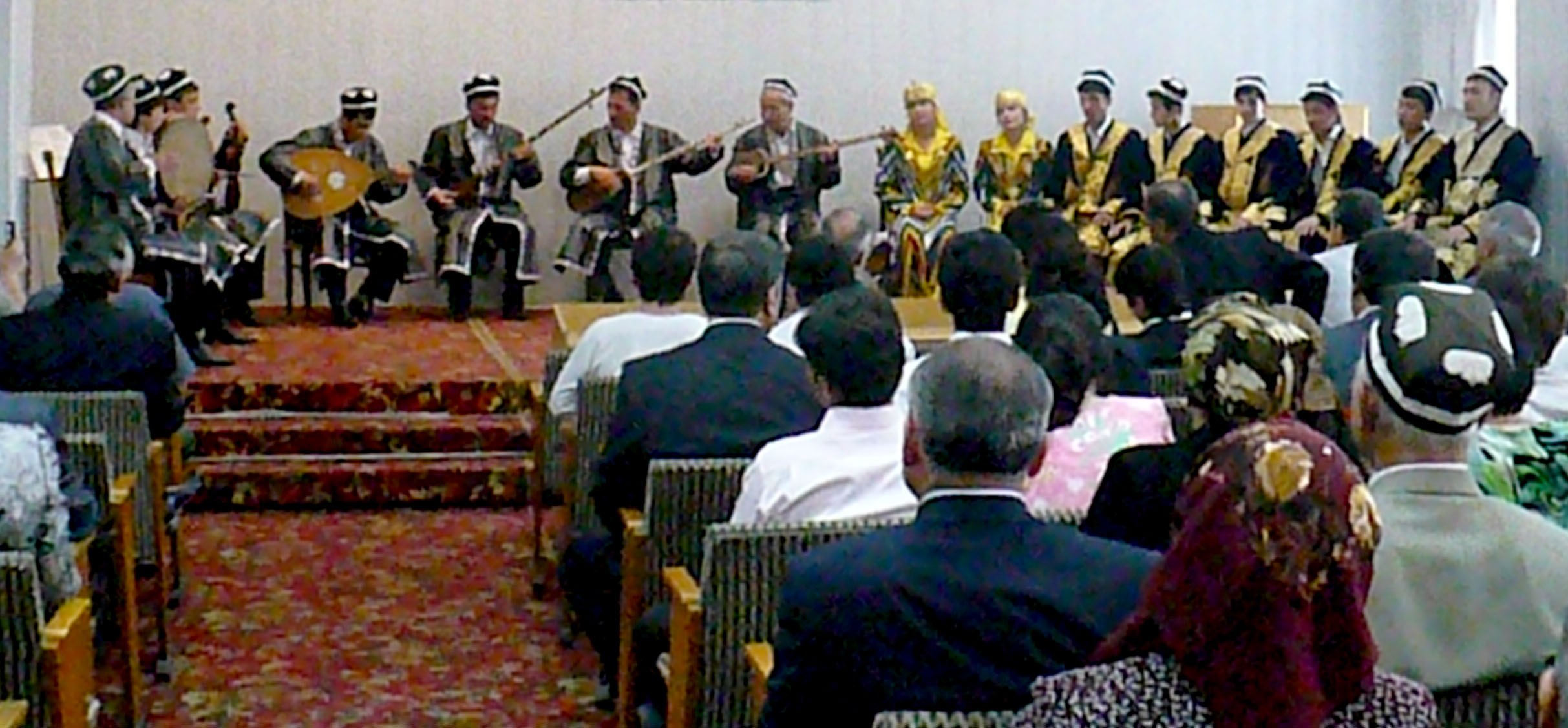
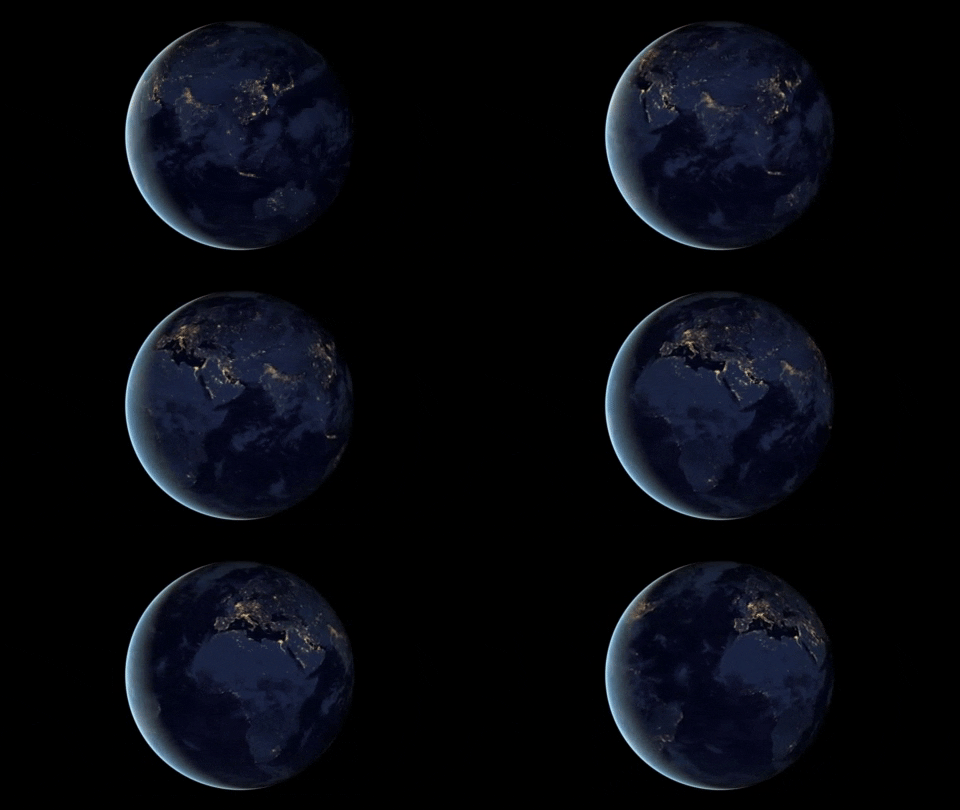
Shown above is a public domain image of a performance of Shashmaqam, the profound musical heritage of Uzbekistan and Tajikistan. Below is a visual representation of the Eurasian landmass.   


10/2/20

Norwegian Folk Music Pedagogy


Next week our teacher education students in Bergen will enjoy an intensive schedule of lessons in Norwegian folk music provided by Ole Bull Academy. 

The skilled Norwegian folk musicians, dancers and scholars who will teach for this course include Arne Anderdal, Lajla Buer Storli, Hans Christian Dahlgaard, Jo Asgeir Lie, Astri Sudmann, John Ole Morken, Lars Fivelstad Småberg, and Stein Villa. 

We look forward to learning many unique songs and dances associated with local heritage. Hopefully when our students themselves become teachers, they will effectively share these rich traditions with many students. 


9/29/20

Online Conference in Uzbekistan

It was enjoyable to give a presentation for the online conference today that was hosted by the State Conservatory of Uzbekistan, Tashkent. Musicologists joined from several countries, including Uzbekistan, Russia, Kazakhstan, South Korea, India, Norway, the UK, USA, Poland, UAE, and Kuwait. There were also brief presentations by the institution's Rectors and representatives from UNESCO.

Proceedings from this event will soon be published in Russian and English. Two of my frequent co-authors also had presentations, Jonathan McCollum and Mikolaj Rykowski (now Vice Rector at the academy in Poland), and it was very interesting to hear about recent developments in Central Asia. Click HERE to access a draft program (of which some details were later modified).  


 Международный научный семинар-конференция

«Шарк тароналари-2019»: взгляды ученых год спустя

(Перспективы развития традиционной музыки народов Востока)


9/20/20

ISME History Standing Committee


It was a pleasure to learn today that I have been appointed to the History Standing Committee of the International Society for Music Education (ISME). I look forward to collaborating in support of the important work of this organization.


I include here an image of the shofar, which for a few thousand years of Jewish tradition has been an important celebratory instrument to be played on this day, September 20 (Rosh Hashanah). A similar instrument has also been used in Norwegian folk music since Viking times.  


Below are some websites related to ISME’s History Standing Committee:


https://www.isme.org/our-work/committees/history-standing-committee-hsc


http://music-ed.net/ihme/homepage.htm