4/27/12

Ethical Uses of Patriotic Music


At the upcoming meeting of the Royal Musical Association’s Music and Philosophy Study Group (King’s College, London, July 20-21, 2012) I will present a paper entitled "On the Ethical Dimensions of Patriotic Music". Below is a summary of the paper presentation. 

Click here for more information on the RMA Music and Philosophy conference:


Individual Paper Presentation, Second Annual Conference of the Royal Musical Association Music and Philosophy Study Group; King’s College, London (July 19-21, 2012).


On the Ethical Dimensions of Patriotic Music

In this paper presentation, I offer critical discussion of ethical issues associated with how patriotic music is used as ideological indoctrination to ensure the sustainability of geographically-defined allegiances in contemporary industrialized societies. While it is widely regarded as naïve and disrespectful for young people to question the legitimacy and enduring importance of both aural and visual patriotic symbols, it cannot be denied that patriotic music is frequently used to inculcate ideologies largely based on selective remembrances that verge on the mythological, and it thereby plays a prominent role in forms of propaganda that enable militarism to flourish even in the 21st century. Although musical sounds may lack the power to directly manipulate behaviors, it is clear that patriotic music is often effectively harnessed by those who seek to inspire in others the willingness to fight in unnecessary wars. This raises an important question that has yet received scant attention in music philosophy: At what point do the uses of patriotic music become ethically suspect? To what extent should patriotic music be welcomed in the public sector, and how far should musicians and music educators bow toward pressures to increasingly create, perform, and teach patriotic music during wartime and other periods of national unrest? While honoring arguments that advocate the need to respectfully memorialize victims of war and preserve cultural heritage, my critique produces a reasoned normative position regarding limited public uses of patriotic music.


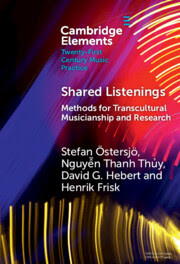
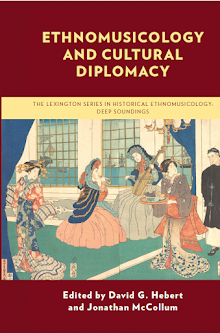
Click HERE for a related book announcement.

4/14/12

4/2/12

Jazz in Bergen, April 2012


I have a few gigs as a vocalist and trumpeter in Bergen, Norway at the end of April, and will plan to post more details here soon, including precise times, directions, links, and posters.


-On Sunday, April 22 (starting at 2pm) I sing a vocal solo part for the Duke Ellington Sacred Concert, which will be performed with a full jazz band and choir at Korskirken, a medieval cathedral in the city center. Click HERE for a poster.


Here are links to two pages from the Ellington concert program:


-On Thursday evening, April 26 (9pm to midnight) I have a gig as a bandleader for which I will perform original songs and jazz standards on trumpet and voice. It will be at The Lounge, in the city center, on Kaigaten just across the pond from Grieg Hall. The evening will open with an a cappella vocal quartet [Silje Valde Onsrud (soprano), Anne Kristine Wallace Turøy (alto), Tine Grieg Viig (contralto), Egil Haugland (tenor), and David Hebert (bass)]. This will be followed by two sets of solo trumpet and voice with keyboard (Øystein Kvinge), bass (Sigurd Ulveseth), and drums (Jan Tore Ness). We will also be joined by other special guest instrumentalists. Click HERE for a poster.


-Additionally, nine of my trumpet students are giving a recital on that same week at the Grieg Academy, Bergen University College (Landås). It is on Tuesday evening, April 24th. Click
HERE to access a poster for that event.

3/20/12

OECD Director on Symbolism of Japanese School Band

For 50 years, the Paris-based organization OECD (Organization for Economic Co-operation and Development) has offered research-based recommendations to governments that now include 34 member countries. OECD is a particularly important institution in the field of international-comparative education.


About one week ago, the organization’s Director for Education began her report from Japan as follows:


Sunday, March 11, 2012

Lessons in Learning, Amid the Rubble

by Barbara Ischinger, Director for Education


A school band played for us. It was the best school band I’ve ever heard—and I’ve heard many. It was the true image of hope, team spirit and positive attitudes. For the students, it was the welcome experience of normality. A brass band playing in the midst of vast devastation; a landscape that reminded me of street scenes from my childhood in Germany after the war. But this was just one week ago, in Japan, during a visit to the area torn apart by the earthquake and tsunami a year ago today. I went there to participate in the launch of the Japan edition . . .


Click here for further details from the OECD-Japan report:

http://oecdeducationtoday.blogspot.com/search/label/Japan


I mentioned this OECD report during my recent guest lecture for the Japan Studies programme at University of Bergen.


Here is a link to a description of my book on the impressive tradition of school bands in Japan:

http://www.amazon.com/Cultural-Identity-Japanese-Schools-Landscapes/dp/9400721773


3/16/12

Music and Philosophy Conference 2012


The 2012 meeting of the Royal Musical Association’s Music and Philosophy Study Group will be held at King’s College, London, on July 20-21. I plan to attend the conference (which was quite interesting last year, when I chaired the session on Asian music), and the paper I will present this year is entitled "On the Ethical Dimensions of Patriotic Music".

Click here for more information on the RMA Music and Philosophy conference:

http://www.musicandphilosophy.ac.uk/conference-2012/


3/13/12

New NAfME President Seeks to Restore Trust


According to a recent press release, Professor Glenn Nierman has been elected President of the National Association for Music Education (NAfME, formerly MENC), which for more than a century has been the most influential American organization for music education. Dr. Nierman is a full Professor at University of Nebraska who is internationally active as a scholar and practitioner in the field of music teacher education.


According to Professor Nierman’s statement, "We must focus on a vision grounded in a framework of trust within all levels of the organization. Building this trust should be NAfME's continuing primary goal for the future.”


It is quite encouraging that Professor Nierman candidly acknowledges the extent to which NAfME’s predecessor MENC had lost the trust of many music educators in the USA and elsewhere across recent years. Under Professor Nierman’s guidance we may be hopeful that credibility, relevance, and even enthusiasm will be restored, and the interests of music teachers and students effectively represented.


Click HERE for further details.


Tohoku Earthquake Poems

Below are some verses I wrote recently for Japanese friends on the anniversary of the Tohoku earthquake:


Takedake


The pristine elegance

of hollow reeds

Carved with patience

by loving hands

Within focus

he resonates

a distant world

Ichi on jobutsu


-David Hebert

For Koji, on the one-year anniversary of the Tohoku earthquake.


To Heroism


The lengthiest epic

could never contain

Multitude gratitudes

seem merely stoic

All virtues are summed

in one small refrain:

“Hiro is simply heroic!”


-David Hebert

For Hiro, on the one-year anniversary of the Tohoku earthquake.


Disorienting Distance


Beside Kamogawa was the heaven I lost

While a young dreamer bursting ambition

Whirling about years across dizzying world

Pressing each drop of joy from this persimmon

Hazarding the very deepest and gentlest of souls


Muriko means hopeless girl, but I dropped her hope

Like a broken spade

in our garden with no chrysanthemums


Disorienting distance takes its toll

leaving no final refuge

Such is the cost to cross the Kamogawa they say


Even for the boldest and noblest of companions

Even the truest and kindest of friends

Sages warn hell revolves on the other side


-David Hebert

For Mitsuko, on the one-year anniversary of the Tohoku earthquake.