In 2009, I will be giving lectures and workshops on music at universities and conservatories in 10 nations. These will be for music institutions in Norway, Denmark, Sweden, Finland, Estonia, Great Britain, Northern Ireland, the United States, Japan, Mexico, and France.
Click HERE for a tentative schedule.
Click HERE to view my current homepage at Sibelius Academy.
11/24/08

11/10/08
Nordic Research in Music Technology
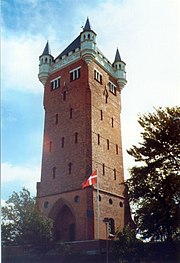
In 2009, the Nordic Network for the Integration of Music Informatics, Performance and Aesthetics will hold a week-long masters-level course in
http://www.sdu.dk/~/media/Files/Om_SDU/Institutter/Ifpr/Cynthia/MIPA.ashx
I am giving a lecture and interactive workshop there on new music technologies in
Recently, I am also designing a proposal for a multi-national research project on the use of new music technologies in targeted urban centers of Europe, Asia, and
11/1/08
Kampin Laulu and Panula

Last night I sang for a recording session with the Kampin Laulu Chamber Choir at Jorma Panula’s house. We recorded Panula’s recent choral works for small men’s chorus. Panula is one of
Related websites:
http://en.wikipedia.org/wiki/Jorma_Panula
At its next concert, Kampin Laulu will perform some very attractive and interesting new choral pieces by Finnish composer Tapani Lansio: http://www.fimic.fi/fimic/fimic.nsf/mainframe?readform&lansio+tapani
More information on Finnish music may be obtained from the Finnish Music Information Centre:
http://www.fimic.fi/fimic/fimic.nsf/naviframe?readform&f=mic1f3.htm&m=5.1&ct=0
10/10/08
Globalisation and Identity in Music Education
In mid-November 2008, the
Click HERE for the programme of this event.
Professor Lucy Green (
Click HERE for a programme of the related event for school music teachers, Classroom Rock Band as a Learning Environment.
This conference is offered with the generous support of Nordplus through the Pan-Nordic coalition of advanced music institutions Musikkpedagogisk Nettverk: Nordic Network for Music Education.
http://www.hib.no/studier/internasjonalisering/program/Musikkpedagogisknettverk.htm
Click HERE for a link to the 2009 Nordic Network conference now being planned in Sweden.
Finland’s former President Wins Nobel Peace Prize
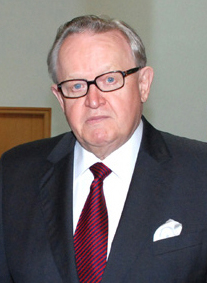
Today the 2008 Nobel Peace Prize was awarded to a former President of Finland Martti Ahtisaari.
Click here for further information:
http://www.iht.com/articles/2008/10/10/healthscience/11nobel-fw.php
In addition to his work as a leading peace negotiator, Ahtisaari is the major patron of international music projects through the MIAGI (Music Is A Great Investment) program.
Click here for further information:
10/6/08
International Presentations in October
In a few weeks I will present a lecture in Sweden entitled “Musical Creativity and Identity among Three Māori Women Songwriters” for the seminar on Song and Music in Minority Regions, as part of the Liet Lavlut festival [http://www.liet.nl/home.php?l=7]. According to Birger Winsa, “Liet Lavlut is the biggest cultural festival for minority languages in
Here is a PDF file of the program for the seminar: http://www.liet.nl/admin/upload/pdf/musikseminarium-pitea-080903_34.pdf.
The seminar is arranged by the Centre for Swedish Folk Music and Jazz Research and other partners, including the Music School of Piteå, SWEBLUL and
At the end of October, I will also give two presentations in the United States for the Society for Ethnomusicology 53nd Annual Conference at Wesleyan University, in Middletown, Connecticut (October 25-28, 2008) [http://www.indiana.edu/~semhome/2008/index.shtml].
The first is a general session paper presentation entitled “Intercultural Music Transmission in the History of New Zealand Brass Bands.”
The second presentation is a brief lecture for the Historical Ethnomusicology Special Interest Group session entitled “Reconciling Emic/Etic Paradox in Glocal Music Historiography.” This presentation will highlight the implications of some findings I discussed earlier at the De-Canonizing Music History conference.
9/28/08
Bringing Integrity to Music Education Leadership
Music education has increasingly faced challenges associated with corporatization and commercialization, both within our educational institutions and professional organizations. As one reflects on various high-profile controversies that have impacted our field in recent years, it seems increasingly clear that more must be done to ensure integrity is maintained in leadership within the field of music education.
Such problems can be minimized if music teachers and students will embrace their responsibility to be vigilant critical thinkers and insist on attaining space for open democratic forums in which difficult questions may be raised to those in positions of leadership. Certain key questions come to mind that require careful consideration whenever we are faced with a new music education initiative:
1) Does this initiative provide maximum benefit to students in terms of quality musical experiences?
2) If money is involved, exactly how will the money be used and how can this be verified?
3) Are there additional conflicting agendas associated with this initiative, besides musical benefit to students, that might be cause for concern? (e.g. opportunities for executives to attain the favor of politicians or CEOs of major corporations, to profit from stock options, to promote themselves, or to sell additional products, etc.)
In recent years, professional organizations and educational institutions have increasingly focused their attention on marketing and profits, while important decisions are made behind closed doors without opportunities for open discussion. Leadership with integrity is difficult, and it is usually impossible for a leader to please all members of an organization. But while democratic processes may be imperfect and inefficient, they are essential in order to ensure that egalitarian empowerment is maximized while corruption is minimized.
I have been quite impressed so far with the forms of democracy I am experiencing in
Subscribe to:
Posts (Atom)

 https://orcid.org/0009-0002-1446-3893