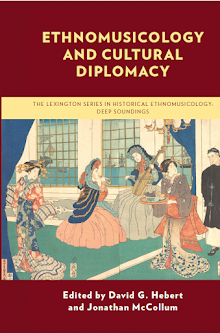
Some important new discoveries were made during this past week regarding John William Fenton (b.1828), who formed what appears to have been Japan's very first band comprised of western musical instruments. Fenton arrived in Yokohama in 1868, just at the start of the Meiji era, where he founded bands and orchestras and even composed the first version of Kimigayo, Japan's national anthem. Over the next 140 years, Japan would enthusiastically embrace western music, eventually becoming a globally significant producer and consumer of European and American genres, ranging from classical to jazz, rock, and more. Until this week, however, the final chapter of Fenton's life had remained completely unknown to music scholars both within and outside of Japan. It was thought that after living in Japan, Fenton had settled somewhere in the rural midwestern United States, where he disappeared.
Suddenly, after more than a century of mystery, there are some new details. On June 16, I was contacted at my Boston University office by a thoughtful genealogical researcher in California who had on that very day obtained records of Fenton’s final years in . . . of all possible places . . . beautiful Santa Cruz, California. It was very kind of her to provide this information, and I was able to help communicate these details to Toshio Akiyama so he could announce them at the Japan Bandmaster’s Association meeting in Kyoto this past Saturday. These findings will be one other new detail included in my book on wind band music in Japan that is scheduled for publication later this year.
To what extent do musical experiences open windows to intercultural understanding?
For the past few decades the effects of multiculturalism have been seen in the field of music education within North America, Europe and elsewhere. While many contributions in this area have been effective and inspiring for a new generation of music students, others have reinforced stereotypes and given “multiculturalism” a poor image. Although the ideals of multiculturalism may now seem to be rather widely shared, there is actually little agreement regarding finite connotations of the term and the motivations of those who would advocate it as a component of educational philosophy. “Multiculturalism” is no longer the popular concept in educational discourse that it had been in the 1980s and 90s, and in many nations there is less interest in recognizing the cultures of minority peoples than in attaining a unified and patriotic national identity. Why is this so? Is multiculturalism no longer relevant? How have the meanings of "multiculturalism" changed in the domains of music and education? More research and scholarship are sorely needed in this field.
* I authored the chapter on “Jazz and Rock” and co-authored the chapter on “World Beat” for the third edition of Multicultural Perspectives in Music Education (Rowman-Littlefield/MENC).
The MayDay Group Colloquium XX will be held at Boston University, June 5-8, 2008. Action for Change in Music Education is the motto of the MayDay Group. The theme for this meeting is "Connecting school music to the community, society, and life: Curriculum, policies, and practices." Several interesting speakers are scheduled to give presentations at this colloquium. I am assisting Dr Patrick Jones in his convening of this event.
[Updated 03/31/09 for improved international video access:]
Why are so many academics and classical musicians prejudiced against popular music?
Ask, and you may discover that many cannot identify a single popular music performer from recent years that they would consider to have artistic merit.
Does wholesale dismissal of contemporary popular music as trivial and worthless represent an informed or a naïve position? Many academics in the field of music (and performers in classical and jazz styles) have never tried songwriting nor performing in popular music genres on appropriate instruments, so their opinions are actually based on assumptions rather than experience or research.
Those who understand popular music genres realize that it takes genuine artistry to establish such tight and intense grooves as can be found in some recently popular songs, such as Radiohead’s “Jigsaw,” Lenny Kravitz’s “Rock and Roll is Dead,” Stevie Wonder’s “Superstition,” or Incubus’ “Dig.”
[NOTE: This website is best viewed with the Mozilla Firefox browser - downloadable for free - rather than Internet Explorer or Netscape.]
Radiohead: Jigsaw
Lenny Kravitz: Rock and Roll is Dead
Stevie Wonder: Superstition
Incubus: Dig
It also takes creative artistry to produce the compelling melodies, insightful lyrics, and unique song forms encountered in much of the music of Keane, Coldplay, Sting, Sarah McLachlan, Norah Jones, and others.
Sting – a rock musician – singing a great jazz standard
Sarah McLachlan: Possession
Norah Jones: Don't Know Why
Suzanne Vega: Caramel
Finally, Nordic musician Bjork seems to be among the most creative and daring artists in popular music today.
Bjork: Human Behaviour (live on BBC)
More Bjork:
Bjork on musical snobbery:
While much of popular music is mass produced with maximum profits as the aim, some performers successfully manage to combine both artistry and popularity, even today.
Here is a link for resources in popular music studies:
I have recently completed the chapter on “Jazz and Rock Music” for the third edition of Multicultural Perspectives in Music Education (Rowman Littlefield/MENC).
In July I will be presenting a research paper for the 2008 conference of IGEB: International Society for the Promotion and Research of Wind Music in Luxembourg.
The conference theme is “Wind Music: Regional Traditions – Global Perspectives”, and my paper is entitled Conducting Japanese Wind Music: Analytical and Phenomenological Insights.
It looks like this will be a very interesting conference. Here is a link to its website:
On a related note, I am currently consulting with Katsuhiro Nakanowatari on a translation of the second of my three articles for the Japanese Band Directors Association Journal. This journal is the primary research publication of the Japan Band Directors Association, and has a circulation of over 4,000 copies [www.jba-honbu.or.jp/]. I have also been invited to give a special lecture for the upcoming annual meeting of this organization, in Tokyo, June 21-22, 2008. [UPDATE: This lecture in Japan has now been postponed until next year]
My historical study discusses interactions between Maori brass bands and Japanese musicians in 1920s, and will be published in two issues of the journal in 2008 and 2009. A previous article I wrote for this journal (in 2007) was entitled “Kokusaiteki Shitendemiru Nihonno Suisogaku,” (Japanese Wind Bands in International Perspective). Mr. Nakanowatari and his colleagues have done a wonderful job with this journal, which is making some important new contributions to knowledge in the field of wind music.
Appearance versus reality is an important theme in human life and discourse that is traceable to the ancients, including Plato’s “Allegory of the Cave” and even the stories of Noah, Job, and Elijah from among the ancient Hebrews. This theme is also relevant to so many of our assumptions regarding both music and education.
So often what we assume about our music students and teachers - or even about music itself - turns out to be wrong. It takes creativity, empathy, a familiarity with the dark side of human nature (deceit, delusion, etc.), a sense of humor, and a determination to be systematic and thorough, in order to stand some chance at finding the elusive “truths” in our field. This is perhaps the best justification for research.
Here are some hilarious video clips that illustrate this theme (don't worry - this was broadcast on American television and is not terribly risque):
[NOTE: This website is best viewed with the Mozilla Firefox browser - downloadable for free - rather than Internet Explorer or Netscape.]
Today the world lost a great songwriter, Mahinarangi Tocker.
A New Zealand Maori of Ngati Raukawa, Ngati Tuwharetoa, and Tainui-Ngati Maniapoto (as well as Hebrew and Celtic) ancestry, Mahinarangi was a unique and prolific yet under-appreciated, artist.
Please see my earlier post on Maori women songwriters:
For nearly 20 years (since 2007), this website has offered musings on contemporary society and its music by David G. Hebert, PhD. He is a sociomusicologist specializing in global music education who has held academic positions with universities on five continents. Dr. Hebert is now a tenured full Professor with Western Norway University of Applied Sciences, Bergen. There he leads the Grieg Academy Music Education (GAME) research group and manages the multinational government-funded Nordic Network for Music Education, which organizes annual intensive Master courses and exchange of teachers and students across eight countries. He is also an Affiliated Professor with both University of the Faroe Islands and Kyambogo University (Uganda), and an Honorary Professor in China with the Education University of Hong Kong.
Professor Hebert's research applies an international-comparative perspective to issues of pluralism, identity, and cultural relevance in music education, as well as processes by which new music traditions emerge and change - both sonically and socially - as they are adopted into institutions. Born in the 1970s, he is among the most widely-published and globally-active music scholars of his generation (h-index:23), with professional activities in an average of 8 countries per year across the past decade (2008-2020).
Keynote Speaker - Across recent years, Professor Hebert has had keynote speeches in Poland, Germany, Uzbekistan, China, Sweden, Norway, Estonia, Lithuania, Tanzania, and Thailand, and chaired two sessions at ISA-Japan.







 https://orcid.org/0009-0002-1446-3893