12/12/07

From Boston to Helsinki


I am excited to have accepted a new job as Professor of Music at the Sibelius Academy in Finland. The new post begins in August of 2008, so I will be teaching for one more semester at Boston University and then moving to Europe. I will continue to supervise some doctoral dissertations for Boston University as an online Master Lecturer. The new job at Sibelius Academy will emphasize research and thesis supervision, and has come about partly as a result of restructuring within the institution to bring the music education, jazz studies, folk music (ethnomusicology), and arts management/music technology programs into closer collaboration within a single faculty unit. I am eager to work with the faculty in jazz studies, music technology, and ethnomusicology as well as music education, and see enormous potential for many interesting new projects within this unique and forward-thinking institution.

“The internationally renowned Sibelius Academy, located in Finland’s capital city Helsinki, was founded in 1882 and bears the distinguished name of the great Finnish master composer Jean Sibelius. The Sibelius Academy ranks today as one of the largest and most prestigious music universities in Europe. In addition to providing the highest education in the field of music, the Academy engages prominently in performance and in creative artistic activity and research” (from: http://fsa.siba.fi/en/sibelius_academy/).


Here are links to some open-access online articles that discuss music education in Finland:

http://act.maydaygroup.org/articles/Bladh_Heimonen6_1.pdf

http://act.maydaygroup.org/articles/Vakeva_Westerlund6_4.pdf

http://www.leeds.ac.uk/educol/documents/00001696.htm

http://www.uta.fi/FAST/FIN/EDU/sh-early.html


For those interested in music in higher education and folk music in Finland, Juniper Hill's recent dissertation provides some useful insights: http://juniperlynnhill.net/

The Folk Music Department of Sibelius Academy recently won a major award:
http://www.womex.com/realwomex/award_pr.html


For those interested in Finnish bands, I recommend examining publications by Kari Laitinen available online through WASBE (linked under National Wind Band History / Finland) and the Finnish Music Information Centre (linked under Contemporary Music / Publications / Other publications in English), and certainly the work of Paul Niemisto at St. Olaf's College.

Links for Japanese:
http://www.finstitute.gr.jp/
http://www.sib-jp.org/


12/3/07

Finlandia and Sibelius


The music education, ethnomusicology/folk music, and jazz studies departments of the Sibelius Academy recently hosted a unique symposium entitled De-Canonizing Music History (Nov. 29-Dec. 1, 2007). The conference was organized by Lauri Väkevä, a music educationist who specializes in popular music pedagogy and Deweyan approaches to music education philosophy. Keynote speakers represented the fields of music education, musicology, and jazz studies, respectively:

  • Professor Roberta Lamb (Queen's University, Kingston, Ontario, Canada)
  • Professor Derek Scott (University of Leeds, UK)
  • Professor Lewis Porter (Rutgers, The State University of New Jersey, USA)


I presented a paper on hybrid genres in music education histories, and participated on the fascinating Panel Discussion with some outstanding scholars:

  • Dr. Pekka Gronow (chair), YLE (Finnish Broadcasting Company)
  • Prof. David Hebert, Boston University, USA
  • Prof. Matti Huttunen, Sibelius Academy
  • Prof. Vesa Kurkela, Sibelius Academy
  • Prof. Lewis Porter, Rutgers University, New Jersey, USA
  • Prof. Derek Scott, University of Leeds, UK

The symposium was a very impressive experience. Not only does the Sibelius Academy enjoy a strong reputation as one of the world’s leading music schools for classical performance studies, but it is also making unique contributions in such areas as folk music preservation and revitalization, European jazz studies, popular music pedagogy, music technology, and music education philosophy. It is the only music university in Finland, a nation that is internationally renowned for its outstanding educational system. Some of the Sibelius Academy’s innovative programs are described in Juniper Hill’s recent PhD dissertation (supervised by Anthony Seeger and Timothy Rice at UCLA and available online). The Sibelius Academy is directed by visionary leaders, and is positioning itself to play a key role in establishing the future direction of music education in Europe and beyond.


Here are some links to images of Finnish beauty:

http://www.visitfinland.com/w5/index.nsf/%28pages%29/index

http://www.marimekkostory.com/

http://www.soon.org.uk/country/finland.htm


11/18/07

Ancient Japanese Wind Music


These are photographs taken in Nara at Tōdai-ji (東大寺) (meaning “Eastern Great Temple”).


The images show panels of the enormous bronze octagonal lantern (from the 8th century) that is prominently located outside the grand entrance to the world’s largest wooden temple, the hall of the Todai-ji Daibutsu. Each panel depicts a musician playing a different wind instrument, including the sho, shakuhachi, and what appears to be a shinobue.


Here the lantern can be seen from a distance in front of the Daibutsu hall, and I am looking out of place in the foreground.
Tomorrow I am very pleased to have the opportunity to interview Japanese wind music composer Tetsunosuke Kushida, who has produced many outstanding works (mostly for European wind ensemble) that are based in the aesthetics of Japanese traditional wind music.
Kushida is from Kyoto - near Nara - and many of his works are programmatic, featuring themes such as Japanese traditional festivals and ancient bugaku dance, and even combining Japanese and European wind instruments in new and interesting ways. Like Alfred Reed, he is especially skilled at writing music for beginners that makes a strong musical statement without requiring very high levels of instrumental technique. I find that this art of producing hybrid music for school ensembles seems to be underappreciated among elite artistic communities, but it may in time attain greater recognition. Kushida has also produced works for professional ensembles, including Figuration for Shakuhachi and Band.


Kushida is one of the only influential Japanese band composers I had not yet had a chance to interview. Japanese composers are discussed in my forthcoming book, Wind Bands and Cultural Identity in Japanese Schools (Dordrecht and New York: Springer). Other notable Japanese wind music composers include Hiroshi Hoshina, Yasuhide Itoh, Isao Matsushita, Masamichi Amano, and Toshio Mashima. As part of this research, I also interviewed the Japan Bandmasters Association founder Toshio Akiyama, and discussed Japanese bands with leading Japanese musicologists as well as the managers of the Tokyo Kosei Wind Orchestra and Osaka Municipal Symphonic Band, All-Japan Band Association competition, Japan Salvation Army Bands, and the Central Band of the Japan Self-Defense Forces.
The case of wind bands in Japan is especially interesting in terms of the themes of music transculturation and hybridity, as well as the institutionalization of new musical traditions. The unusually effective pedagogical approaches of Japanese bands are also of great interest to music educators outside of Japan.

Here is a link to my webpage at Boston University:
http://www.bu.edu/cfa/music/faculty/hebert/


10/31/07

Call for Papers: Research in New Zealand Performing Arts

Research in New Zealand Performing Arts is now issuing a call for papers.


RNZPA is one of the only peer-reviewed scholarly journals in New Zealand that publishes music research. Although the journal examines performing arts generally, nearly half of its articles have been music-related. I serve on its editorial board.


For more information regarding the RNZPA call for papers please examine this website:

http://www.drama.org.nz/uocdnz.htm


Here is a link to the previous issue of Research in New Zealand Performing Arts:

http://www.nzadie.org.nz/ejournal.asp?ID=2


10/28/07

Tanglewood II: A New Declaration on Music Learning


“Tanglewood II – Charting the Future: A Symposium on Music Learning for the Twenty-First Century” is an ambitious project that was launched in June of 2006, with the first of eight pre-symposium events offered at various American universities nationwide. It concluded on June 25th-29th of 2007, with the wrapping up of an online forum involving more than 5,000 participants followed by a week-long “think tank” residency hosted by Boston University in the Berkshires. Considering the magnitude of this project – in terms of the numbers of related events and participants (both physically present and in the virtual sphere of internet forums) – Tanglewood II appears to be the largest project to have systematically examined current challenges and future prospects for music learning in the United States and abroad.

The wider historical and institutional context of this event is that it is a forty-year anniversary of the original Tanglewood Symposium that was hosted by Boston University in 1967. Tanglewood I was a rather unique and unprecedented event in that it consisted of an intimate “think tank” discussion format that included music education specialists along with professional musicians and influential scholars from other disciplines. Notable participants included psychologist Abraham Maslow, ethnomusicologist David McAllester, and even the iconic American big bandleader and jazz arranger Stan Kenton. There were only 34 members of the 1967 symposium, along with a handful of observers, and it only lasted for 5 1/2 days. Within 3 days of its conclusion, a declaration was produced as a position statement that outlined key issues and new directions in the field of music. In retrospect, the Tanglewood I declaration could certainly be described as having an ethnomusicological agenda. Essentially, its primary emphasis was on opening up the field of music teaching at all levels to include music of non-Western cultures, popular music, and jazz, as well as the development of a broad range of musical activities in educational contexts beyond the traditional performance offerings of school bands, orchestras and choirs.


The world has changed dramatically over the forty years since that declaration was issued, yet it continues to be regarded as an especially important document in the history of music education (both in the USA and abroad), resulting from what is seen as perhaps the most significant event in the field during the latter half of the 20th century, the Tanglewood Symposium. Forty years later, Tanglewood II was modeled on the original Tanglewood Symposium. Its objectives, according to the symposium website were “to project a future that will act as a guide for music learning, both within and outside of formal programs . . . Since the original Tanglewood, much has been learned about how the human community processes music, what values it attaches to music experience, and, most importantly, how people learn music. This is the subject of Tanglewood II, a duplication of Tanglewood I in spirit, but decidedly and substantially of the 21st century.”


The Tanglewood II Declaration is scheduled to be published on the project website in the next few weeks (by the end of November 2007), and a DVD and other materials are currently in preparation. Hopefully these Tanglewood II outcomes will inspire further dialogue regarding the current state and future direction of music education.


For more information, please see the Tanglewood II website:

http://www.bu.edu/tanglewoodtwo/


10/13/07

New Doctoral Candidates

Three outstanding music education Doctoral students have passed their examinations at Boston University, reaching the "ABD stage" of Doctoral Candidacy with approval of their dissertation proposals:
(1) Carol Reed-Jones
,
(2) Nancy Rosenberg
and
(3) Michael Simmons.


Each of these students has proposed a uniquely important and interesting study and I am excited to be supervising their dissertations.


About the Three New Doctoral Candidates:


Carol Reed-Jones is a music teacher and author who is writing an innovative dissertation that combines philosophical inquiry with recent findings from ethnomusicology to develop an organic model for the integration of music participation into educational settings. Her study will be of great interest to innovative private school systems, charter schools, summer camps, youth groups, indigenous schools, and other educational programs. She obtained a great new job this year, teaching several music courses for Whatcom Community College in the beautiful town of Bellingham, Washington.


Popular music specialist Nancy Rosenberg, an active composer and voice instructor at Emerson College and Brown University, is developing an effective new approach for the learning of music theory concepts and musicianship skills through popular music.
Nancy recently attended Bjork's concert in NYC and is writing about her unique music as well. Nancy Rosenberg's dissertation promises to help improve the teaching of musicianship and music theory at the secondary and collegiate levels, and is likely to develop into a popular textbook. This year Nancy has been quite active in her theatre composition, and has a new position as musical director for the theatre education program at Trinity Repertory Theatre in Providence.


Finally, Philadelphia-based professional guitarist and accomplished music teacher Michael Simmons is doing a ground-breaking experimental study that I will keep "under wraps" for now so he can complete his analysis before any other empirical researchers catch on to his great idea. For now, let me simply state that his findings promise to greatly improve our understanding of an important aspect of musical learning that is often perplexing for teachers.

It is a thrill to be mentoring such outstanding students, and I am quite confident of their future success and excited to see their continuing development.

Over the next year we will see some great achievements from these three Doctoral Candidates.


  • Here is a link to another student project I have been developing on campus:

http://bostonhybridmusics.blogspot.com/

10/12/07

Messiaen Conference in Boston


This weekend (October 12-13, 2007) is a fascinating international conference of the Boston University Messiaen Project entitled “Messiaen the Theologian.” Musicologist and organ virtuoso, Professor Andrew Shenton is the conference organizer.


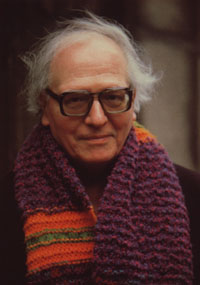
French composer Olivier Messiaen (1908-1992) was inspired by Asian musical traditions, and his work has been quite influential among leading Asian and European composers.

Today I attended an insightful presentation by Wai-Ling Cheong (from Chinese University of Hong Kong) on Messiaen’s use of Japanese gagaku music and the inspiration that the Torii of Miyajima (pictured below) offered to his work:


Olivier Messiaen was among the most innovative composers of the twentieth century, and his creative output represents an important example of how European art music has increasingly incorporated elements from musical traditions of other parts of the world. This is a topic of great interest to those grappling with the issues of hybridity and transculturation in musical creativity and education.

I encourage any musicians and scholars interested in such topics to attend the remainder of this conference.