https://isaconf.confex.com/isaconf/wc2014/webprogram/Session4114.html
7/14/14
Sociology of Music in Japan
It is exciting
to now be participating in the XVIII World Congress of Sociology in Yokohama,
Japan, following some teaching for Yokohama National University. Yokohama is a fascinating city that served as a center of westernization
from the mid-nineteenth century onward, and it continues to be a globally significant hub of innovation (see above photo of the city skyline, which I took yesterday). This conference, with the theme of “Facing an Unequal
World” has more than 6,000 participants from all throughout the world, and more
than 60 of the paper presentations address some aspect of music from a
sociological perspective. I am serving as Chair and Discussant for a session
entitled “Sociological Approaches to Western Music in Japan”. The session
features two quite interesting papers by Japanese scholars: Musicology in Post-War Japan: German Influence and
Social Context, by
Naomi MIYAMOTO, and “Japanese” Approaches to the Music of Frédéric Chopin, by Yasuko SHIBATA.
UPDATE:
Due to a program change, I also served as Chair of a session on Sociology of
Art in Japan:
https://isaconf.confex.com/isaconf/wc2014/webprogram/Session4114.html
In Yokohama, I have also been
meeting with various academic presses that seem very interested in
possibilities for several future books that I am either already writing or intend to produce. I am especially eager to secure a
contract for the book I am currently editing, Translation, Education, and Innovation: Proceedings of the 25th
Anniversary Conference of the Nordic Association for Japanese and Korean
Studies. https://isaconf.confex.com/isaconf/wc2014/webprogram/Session4114.html
Who will publish
it, and what about the other books I am developing?: Brill, Springer, Palgrave-Macmillan,
Routledge? We will see . . .
Links for more
information:
Labels:
japan,
music education policy,
my publications
6/22/14
Theories and Methods for Music Research
In November
2014, the Grieg Research School for Interdisciplinary Music Studies will offer
a seminar on theory and methodologies entitled "The Study of Musical Experiences: Data Collection, Interpretation and Analysis." This program at University of Bergen
will be of interest to music researchers of all kinds. Click HERE
for the website, and click HERE
to download a brochure for this event. I am leading the observational data analysis methods section on Friday morning (28th.), and music therapy researcher Brynjulf Stige will demonstrate qualitative data interpretation on that afternoon.
5/18/14
Sociology of Global Music
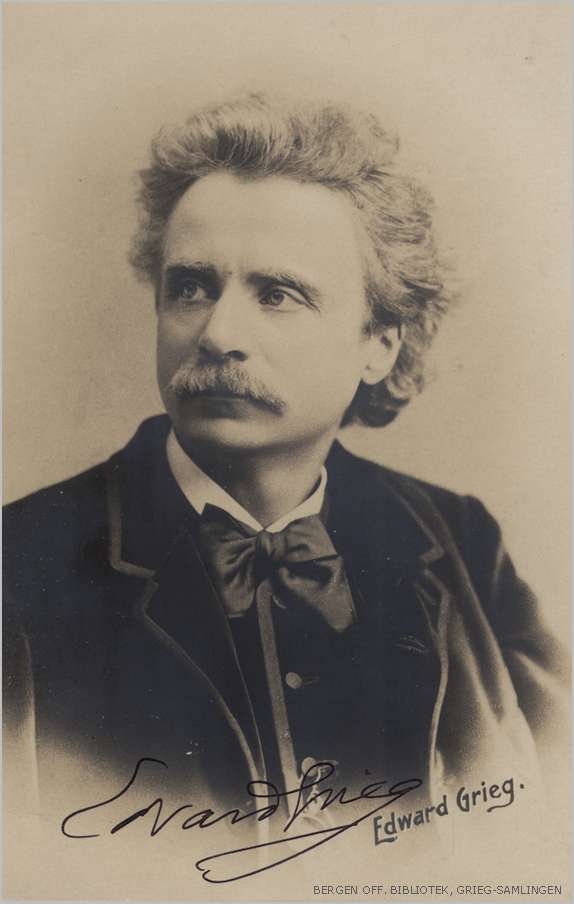
This summer I will spend some time in Europe, North America, South America, and East Asia. Our music department in Norway is currently moving into its new campus, complete with a concert hall, rehearsal rooms, and recording studios, and I am hopeful that within the next few years we will launch new international-collaborative graduate programs with partner institutions. I am also working on developing a series of public recitals and guest lectures to propose for our new concert hall, as well as preparing a solo recital of my own, and eagerly look forward to upcoming performances as a singer with the Edvard Grieg Choir and Bergen Domkor.
At China Conservatory in Beijing, I will
do some lectures and help with planning an international conference for leaders of
music institutions (IMILF "World Summit on International Exchange"). Later, in Yokohama, Japan, I will chair a
session on “Sociological Approaches to Western Music in Japan” for the
International Sociological Association’s XVIII World Congress of Sociology: “Facing an Unequal World: Challenges for
Global Sociology”.
I look forward
to visiting family in the USA, and to giving a speech for the International
Society for Music Education (ISME) conference in
Brazil.
Recently I am busy
with coordinating the editing and revisions to a new book: Translation, Education,
and Innovation: Proceedings of the 25th Anniversary Conference of the
Nordic Association for Japanese and Korean Studies (Ed., David G. Hebert,
in preparation, 2014). I am also developing various large grant applications
and another book entitled Understanding Music in
Schools and Communities: A Global Perspective. That book will offer an international view of the changing landscape of music education in an
age of corporatization, globalism, and mass surveillance.
Labels:
japan,
music events,
my publications,
Norway,
research
4/26/14
New Musicology Book to Press
I am pleased to announce that on Monday (April 28, 2014) the complete manuscript for a new book will finally be sent to the publisher:
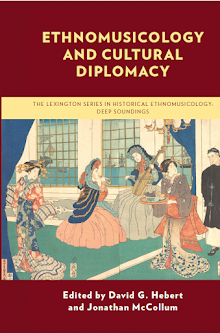
Theory and Method in Historical Ethnomusicology, edited by Jonathan
McCollum and David Hebert (Lexington/Rowman&Littlefield, in press, 2014).
Click HERE
for a link to a preview of this book, as published in the journal Ethnomusicology
Review.
Click HERE for a book announcement and sales information on the Amazon website.
This book offers a detailed description of new developments in global music historiography, including techniques applicable to historical research across an array of music specializations: ethnomusicology, historical musicology, jazz studies, popular music studies, early music performance practice, and music education history. It presents a unique perspective, informed by recent technological developments as well as interdisciplinary application of new theories from such fields as philosophy of history and historical sociology.
Contents
Foreword: The Past is No Longer a Foreign
Country ix
Keith
Howard
Acknowledgments xvii
Chapter 1
Foundations of Historical Ethnomusicology 1
Jonathan
McCollum and David G. Hebert
Chapter 2
Methodologies for Historical Ethnomusicology
in the Twenty-First Century 35
David G.
Hebert and Jonathan McCollum
Chapter 3
Philosophy of History and Theory in Historical
Ethnomusicology 83
David
G. Hebert and Jonathan McCollum
Chapter 4
Hearing Echoes, Sensing History: The Challenges
of Musical Diaspora 147
Judah
Cohen
Chapter 5
Ancient Music, Modern Myth: Persian Music
and the Pursuit of Methodology in Historical
Ethnomusicology 173
Ann
Lucas
Chapter 6
Analysis of Notation in Music Historiography:
Armenian Neumatic Khaz from the Ninth through
Early Twentieth Centuries 195
Jonathan
McCollum
Chapter 7
Southern American Fiddling through the
Mid-Nineteenth Century: Three Snapshots with
Modern Connections 255
Chris
Goertzen
Chapter 8
A Tale of Two Sensibilities: Hindustani Music
and
its Histories 277
Daniel
M. Neuman
Chapter 9
The
Legacy of Music Archives in Historical
Ethnomusicology:
A Model for Engaged Ethnomusicology 283
Diane
Thram
Chapter 10
Contested Contextualization: The Historical
Construction of East Asian Music 311
Keith
Howard
Chapter 11
Advancing Historical Ethnomusicology 335
Jonathan
McCollum and David G. Hebert
Index 358
About the Contributors
....................................................................................
77,000 Page Views
For seven years I have posted a few statements per month onto
this blog, typically just some recent observations or an update of my
activities as a music professor. It is hard to believe that as of this week
there have been a total of over 77,000 page views. Below are images that describe the audience,
which turns out to be quite international, and it is also interesting to compare
the charts for “all time” vs. “this month”. There are many visitors from
Eastern Europe this month, probably related to my recent keynote speech in
Poland and visit to Latvia, but recently there are fewer visitors from Oceania,
perhaps because it has been such a long time since I was living in New Zealand.
Labels:
Historical Ethnomusicology,
history,
my publications,
research
4/5/14
Music and Globalization
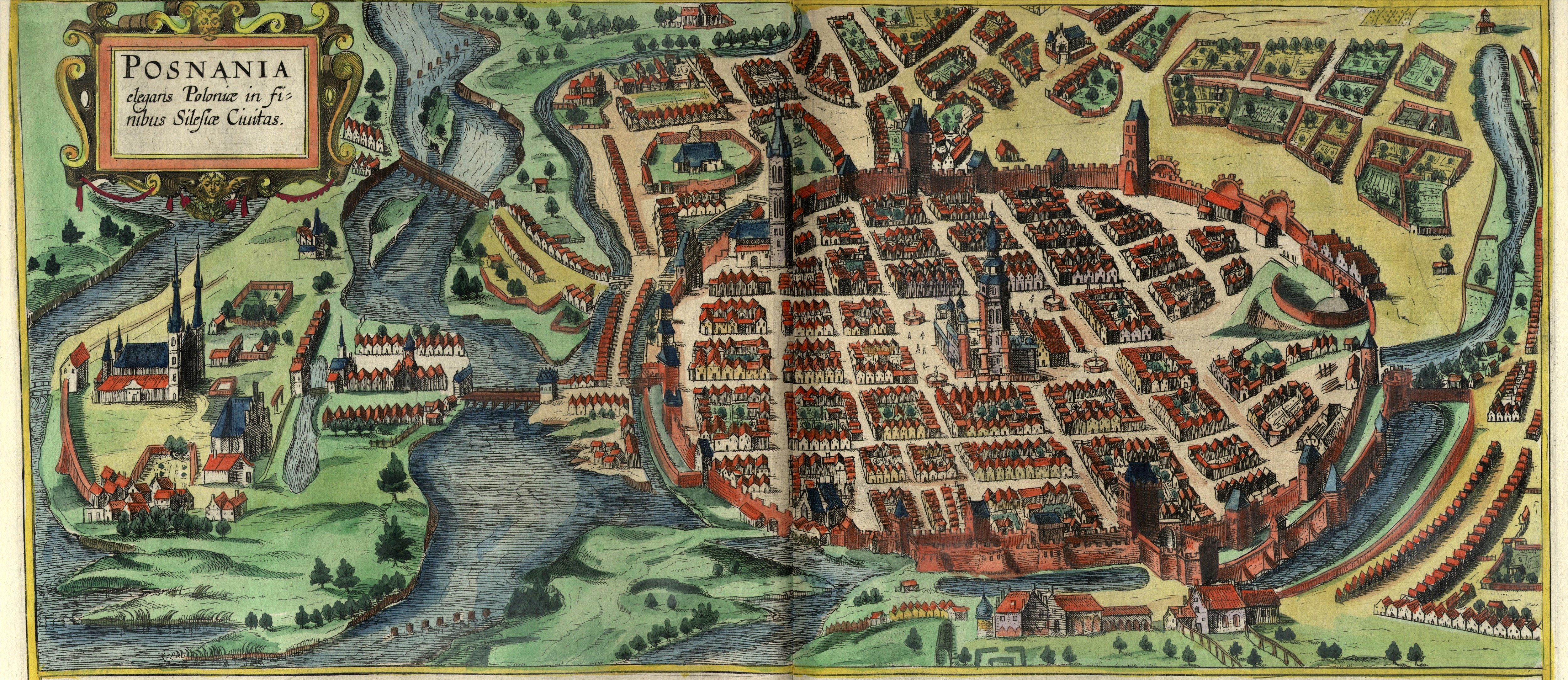
Soon the 11th international conference Musica Practica, Musica Theoretica will be held at the Academy of Music in Poznan, Poland, on the theme of “Music from the Perspective of Globalization”. I look forward to giving a keynote speech for this conference, which I have entitled “Globalization and Research Methods in Musicology” (displayed: public domain image, map of Poznan from 1617).
This travel to
Poland and Latvia (sponsored by Erasmus and Nordplus programs) follows the conclusion of another fascinating project: Across
the past week I have performed as a member of an opera chorus with the Edvard
Grieg Choir in the Bergen National Opera production of Nicolai Rimsky-Korsakov’s
opera, The Golden Cockerel. This was
presented with the Bergen Philharmonic Orchestra in Grieg Hall, featuring
outstanding artistic directors and soloists. It was a great pleasure to work
with such accomplished professionals across an array of fields: directors,
choreographers, stage designers, costume makers, conductors, dancers, singers,
etc. News media and critics have awarded this opera production the highest
possible ratings, noting the “world class soloists with dazzling stage design
and direction”. Displayed here are publicity photos by Magnus Skrede, released
on the Bergen National Opera website. In these scenes from the opera, I am the Boyar
in the red hat and robe, gesturing toward the dancers and gazing at our dying
Tsar (played by Andrew Shore). The diverse participants in this opera demonstrate the role of globalization in music today, with soloists, directors, managers and orchestral musicians from all throughout the world.
More
information:
Subscribe to:
Posts (Atom)


https://orcid.org/0009-0002-1446-3893