9/20/12

Seminar on Musical Appropriation


The Grieg Research School (Bergen, Norway) will host a seminar entitled "Musical Appropriation: Transformations, Fusions, Ownership, Ethics " from December 4th to 7th, 2012: 


The registration deadline is November 5th, and the website will soon be open for registration:
 
https://www.uib.no/rs/grieg/artikler/2011/05/guidelines-for-abstracts

 
Keynote Speakers:

Professor Even Ruud - Music Therapy  (University of Oslo)
Dr Victoria Armstrong - Music Education (St Mary's University College, London)
Professor Tomi Makela - Musicology (Martin-Luther-Universität Halle-Wittenberg)
Professor Dave Hesmondalgh - Media and Music Industries (University of Leeds, UK).


9/18/12

Ethnomusicological Perspectives on Music Teaching and Learning

I am pleased to announce a session entitled Teaching and Learning at the joint conference of the Society for Ethnomusicology, American Musicological Society, and Society for Music Theory:

Sunday, November 4, 2012, 8:30-10:30 am, S-Oakley [Sheraton New Orleans Hotel]

Teaching and Learning
David Hebert (Grieg Academy, Bergen University College), Chair


Presenters:
Susan Hurley-Glowa (University of Texas, Brownsville), ‘‘Brownsville Banda Sinaloense: Brass Bands, Border Towns and Bimusicality’’

Bryan Powell (Giving Open Access Learning -- GOAL-NY) and Radio Cremata (Aspira of Florida), ‘‘Democratizing Music with Free Technology’’

Vahideh Eisaei (Independent Scholar), ‘‘Cross-Media Communications: An Investigation in the Art of Teaching and Learning Persian Classical Music, Radif, via Skype and Recorded Tutorials’’

Jeffrey Cupchik (University of Rochester), ‘‘Exploring Ritual Transmission in an Interdisciplinary Context: Musical and Spiritual Apprenticeship in Tibetan Chöd Ritual Music Studies”


Seminar on Artistic Research

A seminar on artistic research (practice-based research in the arts) will be offered at room C033 of the Faculty of Education in Landas, Bergen University College, Norway (Sept. 25, 2012).

The seminar will feature Norwegian visual artist Synneva Heradstveit and Latvian jazz vocalist Inga Berzina. The program is sponsored by the Faculty’s Center for Arts, Culture, and Communication, and organized by Professors David Hebert and Aslaug Nyrnes of Bergen University College. Contact either organizer if you would like to participate.

Program:

 
08:30-09:30- Synneva Heradstveit: Exhibition and text (this part will be in Norwegian)
09:30-09:45- Coffee break
09:45-10:10- David Hebert - Approaches to artistic research
10:10-10:30- Dr Inga Berzina - Latvian leading jazz vocalist on artistic development
10:30-11:00- Discussion

Related links:


http://www.hib.no/senter/sekkk/english.asp

http://www.hib.no/aktuelt/nyheter/2012/08/kunstutstilling-heradstveit.asp

http://www.myspace.com/ingaberzina

http://www.jazzmusic.lv/2009/07/12/inga-berzina-lai-dziedatu-ir-jadzied/

9/7/12

Theory and Method in Historical Ethnomusicology


UPDATE (April 28, 2014): This book is now complete and “in press”.


Click HERE for a link to a preview of this book, as published in the journal Ethnomusicology Review.

.......................................

Co-edited with Dr. Jonathan McCollum.

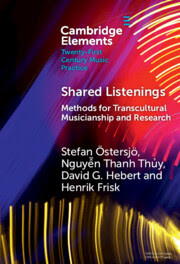
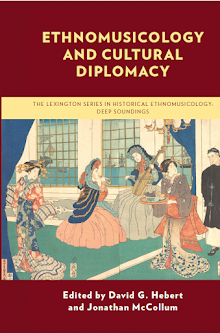
Theory and Method in Historical Ethnomusicology (by Jonathan McCollum and David Hebert, forthcoming, 2014, Rowman & Littlefield/Lexington Books). 

This book will offer a detailed description of new developments in global music historiography, including techniques applicable to historical research across an array of music specializations: ethnomusicology, historical musicology, jazz studies, popular music studies, early music performance practice, and music education history. 
The book will present a unique perspective, informed by recent technological developments as well as interdisciplinary application of new theories from such fields as philosophy of history and historical sociology.

Theory and Method in Historical Ethnomusicology seems especially relevant now in light of the fact that the various subfields of musicology recently appear to be exploring possibilities for attaining stronger mutual communication through a more unified approach, and in this regard it is telling that the Society for Ethnomusicology, American Musicological Society, and Society for Music Theory offered a large joint conference in New Orleans in November of 2012, during which we planned additional details of this forthcoming book. Development of the book is coordinated through the Society for Ethnomusicology (SEM)'s Historical Ethnomusicology special interest group, for which I have recently served as Chair. The SIG is now chaired by Ann Lucas, and Jonathan McCollum is Chair-Elect. 

Contributors to the book include specialists in the historical music(s) of ancient Iran, India, Armenia, Japan, and Korea, as well as Jewish musical practices and even fiddle traditions in the deep south of the USA.
  
Contributing Authors:


UPDATE 1 (March 30, 2013): Some chapters are fully completed while others are still being edited and revised. In particular, we are very pleased with the introductory chapter, while Jon McCollum has also written a unique and interesting chapter on the history of Armenian neumes, and Chris Goertzen's chapter on southern fiddling is quite insightful. Our co-authored chapter on methodology is also well under way, and I am still making some adjustments and additions to material for my chapter on recent theoretical developments. Some contributors have asked for more time, but we are confident this book will be ready by the end of 2013, while it is possible actual printing may be delayed until early 2014. Proposals for other books will soon be moving forward.


UPDATE 2 (August 25, 2013): We are very pleased that Keith Howard (Professor, SOAS, University of London) has agreed to write the Foreword to this book. It looks possible that we may also include a new contribution from South Africa.


UPDATE 3 (April 26, 2014): We are now doing the final edits, and will send the complete manuscript to the publisher on Monday, April 28, 2014. In addition to the material mentioned above, the book includes both a chapter and a foreword by Keith Howard as well as a chapter by Diane Thram.


8/22/12

Originality in Music

After a lengthy review process, I have recently learned that another of my articles on the institutionalization of popular music is soon to be published. It will be in Music Education Research International (vol.5), a fully-refereed scholarly journal edited by Professor Victor Fung and published in an online, open-access format, and I understand the volume with my article will shortly be available. I have also added a link to the right side of this website for a separate page with a full list of publications. Below is the title and abstract for my upcoming article in MERI:


Originality and Institutionalization: Factors Engendering Resistance to Popular Music Pedagogy in the USA

David G. Hebert


Abstract

The roots of much of the world’s popular music may be traced to blues and rock – styles that originated in the Southern Mississippi Valley in the early 20th century – yet, when considered from a global perspective, performance of these genres has been especially slow to gain wide acceptance in schools of their homeland: the USA. This paper begins with identification of some inevitable challenges associated with institutionalization of novel artistic movements, and then contrasts these with factors perceived to have engendered resistance to the growth of popular music pedagogy (PMP). That PMP is increasingly accepted while genres such as blues and rock come of age (and stake a claim to cultural heritage) is no coincidence. This discussion illustrates the perennial educational challenges posed by originality and cultural diversity in music, as well as the need for research to more fully understand opportunities and risks associated with the array of PMP approaches currently advanced.


Below are links to some of my other writings and projects that address related topics:

· Hebert, D. G. (2010). Jazz and Rock Music. In W. M. Anderson & P. S. Campbell (Eds.), Multicultural Perspectives in Music Education, Vol. 1 (third edition). Lanham, MD: Rowman-Littlefield Publishers.

· Campbell, P. S. & Hebert, D. G. (2010). World Beat. In W. M. Anderson & P. S. Campbell (Eds.), Multicultural Perspectives in Music Education, Vol. 2 (third edition). Lanham, MD: Rowman-Littlefield Publishers.

· Hebert, D. G. (2009). Musicianship, Musical Identity and Meaning as Embodied Practice. In T. Regelski & J. T. Gates (Eds.), Music Education for a Changing Society: Guiding Visions for Practice (pp. 39-55). Dordrecht and New York: Springer Press.

· Hebert, D. G. (2009). Rethinking the Historiography of Hybrid Genres in Music Education. In V. Kurkela & L. Vakeva (Eds.), De-Canonizing Music History (pp. 163-184). Newcastle: Cambridge Scholars Press.

· Campbell, P. S., Hebert, D. G. & Will, R. J. (Eds.) (2001). Around the Sound: Popular Music in Performance, Education, and Scholarship - symposium proceedings. Seattle: University of Washington & Experience Music Project.

· Hebert, D. G. & Campbell, P. S., (2000). "Rock Music in American Schools: Positions and Practices Since the 1960s," International Journal of Music Education , Vol. 36, No. 1 (pp. 14-22).

7/12/12

Research on Music Policies and Practices in Europe


Below are abstracts for some of my upcoming collaborative publications:


Hebert, D. G. & Heimonen, M. (2013, January; Draft in review for special issue on “Cosmopolitanism and Policy”). “Public Policy and Music Education in Norway and Finland,” Arts Education Policy Review, Vol. 114, No. 1.


Public Policy and Music Education in Norway and Finland

David G. Hebert and Marja Heimonen


Abstract

Our previous research has examined the legal bases for music education in Northern Europe as well as the role of music among ethnic minorities and in the construction of national identity.  Extending on previous work, this article applies the Toulmin argument model of rhetorical analysis—which features identification and dissection of the components of prominent enthymemes—to scrutinize concepts within both educational policy documents and relevant music education literature from Norway and Finland across the past decade. Our analysis will produce a detailed account of how understandings of “music education” are formulated through the rhetoric of public policy, enabling rigorous examination of relationships between the prospective limitations of these formulations and the actual concerns of music teachers evident in professional periodicals since the start of the 21st century.  


…………………………………………………………..


Hebert, D. G., Kallio, A. A., & Odendaal, A. (2012, in press). “Not so Silent Night: Tradition, Transformation and Cultural Understandings of Christmas Music Events in Helsinki Finland,” Ethnomusicology Forum, Vol. 21.


Not so Silent Night: Tradition, Transformation and Cultural Understandings of Christmas music events in Helsinki Finland

David Hebert, Alexis Anja Kallio and Albi Odendaal

Abstract
The aim of this study was to investigate the characteristics of Finnish joulumusiikki (Christmas music) concerts and sing-alongs as well as participants’ motivations for attending these immensely popular events. Contemporary joulumusiikki events were studied through ethnographic observations and interviews conducted at five prominent Christmas music venues in the capital city, Helsinki. Findings highlight how these events may be understood as rituals that both maintain traditions and mediate the transformations of contemporary Finnish society. Joulumusiikki events were determined to provide opportunities for particularly Finnish celebrations of distinctively Finnish ideals. Thus, both as expressions and constructions of ‘Finnishness’, joulumusiikki events are seen as an important social tradition that continues to evolve and transform. With very little previously published research on such topics, this study offers preliminary but important insights into the role of Christmas music events in Finnish society which are highly significant due to their powerfully affective connection to cultural heritage and the fact that more than a fifth of Finns (around 1 million) participate in them annually.


6/9/12

Baltic Music Education: Lithuania


The 2012 planning meeting of the Nordic Network for Music Education (NIME) was recently held in Vilnius, Lithuania (June 6-8, 2012). This was hosted by Jolanta Lasauskiene of the Lithuanian University of Educational Sciences and convened by NIME network coordinator Torunn Bakken Hauge. 

The network has exciting plans for the strengthening of music education across the Nordic and Baltic regions via coordination of innovative conferences and international exchange of teachers and students. At the meeting it was reconfirmed that a future conference will be in Latvia, and that, along with several other NIME members, I will have funding to do some teaching for postgraduate students in Sweden and Latvia during the coming academic year (2011-2012). It was a great pleasure to see the old town of Vilnius for the first time, as well as the Trakai island castle, and to learn about Lithuania’s unique traditions. 


General Information on Lithuania:

Videos on Lithuania and Vilnius:

Videos of Lithuanian Sutartines (folk songs):

[displayed image credit: http://en.wikipedia.org/wiki/File:Trakai-Troki.jpg]