5/25/10

Master of Global Music Program Set to Begin


On Friday, the last of the auditions for the new Nordic Master of Global Music program were completed. The following audition dates were offered for applicants who passed the first phase of the GLOMAS admissions process:


It was encouraging to see several outstanding students apply to the GLOMAS program, with an especially large number at the Sibelius Academy. Auditioning students came from a wide variety of musical and cultural backgrounds, including a flamenco guitarist with experience playing the Arabic oud, a Kurdish-Swedish saz player, a Danish singer and dancer who has lived in Ghana, a Danish avant garde trumpeter with experience in Indian music, a Tanzanian drummer and dancer, a Finnish harpist-songwriter, a Swedish-Finn who plays Brazilian percussion, a Slovenian violinist, and a Finnish kantele player, to mention but a few. The admissions decisions will all be formally announced within the next few weeks.


Part of my job at the Sibelius Academy in recent years has been to coordinate the development of this new program, including its curriculum and admissions/auditions process. As of this week, the preparatory work will finally all be complete and the new program will be fully ready to be launched in August. It was exciting to serve on the adjudication panel at each of these three institutions during the past few weeks, and to see first-hand the broad range of talented musicians interested in this new international-collaborative joint Master program.


More details regarding this new program are described in the following open-access publication:

Hebert, D. G. (2010). Educating professional musicians for a multicultural society: Emerging issues and new developments. In proceedings of Orally Transmitted Music and Intercultural Education, symposium offered by EU Culture Initiative Music, Orality, Roots, Europe (MORE) at Cité de la Musique, Paris, France (December 3-4, 2009) [http://www.music-orality-roots.eu/sites/default/files/MORE-Symposium1-HebertD-EducatingProfessional.pdf].


Below is more information regarding this program, as explained on the Master of Global Music (GLOMAS) program website:


The Master of Global Music (GLOMAS) is a joint study programme offered in collaboration between higher education music academies in three nations: Royal Academy of Music (Aarhus, Denmark), Lund University, Malmö Academy of Music (Malmo, Sweden), and Sibelius Academy (Helsinki, Finland). The programme leads to a Master degree according to each institution’s regulations and national legislation. GLOMAS is a highly innovative, interdisciplinary programme that is responsive to new needs arising from globalization in the field of music. The programme emphasizes development of “bimusical” performance skills (typically within at least two traditions from different parts of the world), as well as studies of topics relevant to the career of a professional musician, including such areas as musical leadership and instructional skills, project management, and applied research.


Graduates from this Master degree programme will demonstrate:

(1) a high level of comprehensive musicianship that transcends cultural boundaries,

(2) knowledge of both traditional and contemporary hybrid music genres, in and outside of Europe,

(3) an ability to effectively lead music ensembles, communicate and teach music across a diversity of formal and informal settings, and

(4) an ability to successfully develop, document and manage intercultural music projects.


The GLOMAS programme seeks to play a transformative role at the level of both individual students and Nordic society, by broadening musicianship and enhancing both intercultural understanding and lifelong music learning, inside and outside of schools. This new postgraduate program seeks to foster innovative forms of intercultural musicianship, and is inspired partly as a response to music globalization, as well as the rapidly changing student demographics in urban schools within the Nordic region.


Click here for further information: http://glomas.net


4/24/10

Southern Roots of World Music


A common observation made by travelers to various parts of the world is that American music seems to be encountered virtually everywhere – not just the most recent popular songs, but classic recordings of early blues, jazz, and rock and roll, as well as the vast array of newer genres with roots that are traceable to these original traditions.

It is striking how much of the music enjoyed in so many parts of the world today has been influenced by sounds that may be traced to the southern Mississippi region, the original birthplace of blues and jazz.


Music may be rightfully regarded as the most significant American cultural export, since even Hollywood movie production is increasingly rivaled by regional industries, such as India’s Bollywood genre and Hong Kong’s action/martial arts films, as well as enormous multi-national productions (like Avatar and Lord of the Rings, which were partly made in New Zealand), and we must not forget that many Hollywood movies also feature American roots music as well as themes derived from American music.


Blues, jazz, and early rock and roll pioneered the use of highly danceable, groove-based song forms structured with chordal harmony as a backdrop for sophisticated improvisation by both vocalists and virtuoso instrumentalists. While some would still insist that aspects of European art music are more highly developed, it cannot be denied that each of these American genres - particularly jazz - clearly served as some inspiration to the majority of major European art music composers (as well as popular music performers in much of the world) during the twentieth century, and the value of this music is increasingly recognized worldwide by musicologists in the twenty-first century. Further research is needed on how the richness of this unique musical legacy – and its global impact – is effectively taught at all levels of formal and informal education.


Below are links to some of my writings and projects that address related topics:


· Hebert, D. G. (2010). Jazz and Rock Music. In W. M. Anderson & P. S. Campbell (Eds.), Multicultural Perspectives in Music Education, Vol. 1 (third edition). Lanham, MD: Rowman-Littlefield Publishers.


· Campbell, P. S. & Hebert, D. G. (2010). World Beat. In W. M. Anderson & P. S. Campbell (Eds.), Multicultural Perspectives in Music Education, Vol. 2 (third edition). Lanham, MD: Rowman-Littlefield Publishers.


· Hebert, D. G. (2009). Musicianship, Musical Identity and Meaning as Embodied Practice. In T. Regelski & J. T. Gates (Eds.), Music Education for a Changing Society: Guiding Visions for Practice (pp. 39-55). Dordrecht and New York: Springer Press.


· Campbell, P. S., Hebert, D. G. & Will, R. J. (Eds.) (2001). Around the Sound: Popular Music in Performance, Education, and Scholarship - symposium proceedings. Seattle: University of Washington & Experience Music Project.


· Hebert, D. G. & Campbell, P. S., (2000). "Rock Music in American Schools: Positions and Practices Since the 1960s," International Journal of Music Education , Vol. 36, No. 1 (pp. 14-22).


4/23/10

20th Anniversary Choir Concert


Helsinki chamber choir Kampin Laulu, which specializes in music by contemporary composers, will be offering its 20th anniversary concert tomorrow evening.


Terve Maria is the title of the concert, at the Vanha Kirkko (Old Church, central Helsinki), 24 April, 2010, starting at 7pm. Tickets are 20 euros. The program features major choral works such as Einojuhani Rautavaraa’s Magnificat and Benjamin Britten’s Hymn to Saint Cecilia, as well as the premiere of a new composition by Kampin Laulu’s conductor Eric-Olof Söderström. There will also be some shorter pieces by Part and Brahms.


I am singing the lowest bass parts with this choir, which has released numerous CDs in recent years. Here is a link for further information about Kampin Laulu:

http://www.kampinlaulu.fi/


4/7/10

International Society for Philosophy of Music Education

An interesting music symposium is coming soon to Helsinki, and its program has now been publicly announced. The International Society for Philosophy of Music Education will hold its 8th symposium at Sibelius Academy on June 9 to 13. Here is a link for further information: ISPME.

The International Society for Philosophy of Music Education is a professional scholarly organization that is "devoted to the specific interests of philosophy of music education in elementary through secondary schools, colleges and universities, in private studios, places of worship, and all the other places and ways in which music is taught and learned."

I reviewed paper submissions for this symposium, served as ISPME's webmaster, and will be a Respondent for one of the paper presentations at this event in June.


4/3/10

De-Musicalization of Society


The late Dom Hélder Pessoa Câmara (1909-1999), Archbishop of Recife, Brazil, once famously remarked that “When I give food to the poor, they call me a saint. When I ask why the poor have no food, they call me a communist.”


The urgency and irony of this situation in the case of hunger is striking, yet school music teachers also frequently find themselves in a similar situation with regard to music, which they freely share with students who are musically deprived, often lacking even the most basic knowledge of songs and rudimentary techniques for creating meaningful sounds. Such teachers politely avoid any explicit acknowledgment that these kinds of problems are mostly due to insufficient parental involvement - spanning generations - that gradually leads to the extinction of amateur music making as a socially integral practice.


Contemporary music teachers earnestly struggle to overcome the de-musicalization of a society that rewards commercialization and the gratification of individual greed (a value usually passed on from busy parents to children reared on television ads), and promotes an increasingly efficient miseducation guided by standardized test scores and the kind of trivia that enable people like Glenn Beck and Paris Hilton to become identified as important voices of their generation. Music naturally seems out of place within any education that offers so little room for promotion of altruism, critical thinking or creative achievement, and is therefore targeted by school systems as an unnecessary expenditure in a thoroughly commercialized society.


What can be done?


Fortunately, this phenomenon of de-musicalization is not an incurable global pandemic, although it may sometimes appear to be so. In fact, it is preventable, but requires systemic intervention at all levels of formal and informal education, from prenatal and early childhood programs through even activities offered at retirement facilities. It requires that the field of music education, and its ultimate mission, be viewed more broadly: lifelong, lifewide, inclusive of an array of genres, practices and locations that extend far beyond the strictures of traditional schools.


Still, those who participate in such educationally deviant activities may find themselves labeled “musical” and viewed with suspicion as an “eccentric artist”, perhaps even listed as a “person of interest” for inciting the public production of communal sounds. Indeed, we must recognize that such communal musicalizers are already among us, lurking beside park benches, in community centers, playgrounds, summer camps, in churches and synagogues, maybe even directly teaching young children and their mothers, thereby resisting the spread of de-musicalization. Perhaps, in time, even a priest or poet may be inspired to write “A spectre is haunting Europe - the spectre of de-musicalization.” But also in time, the youth may again find their voice and know the power of songs that transcend generations.


3/30/10

Folk Music in Latvia


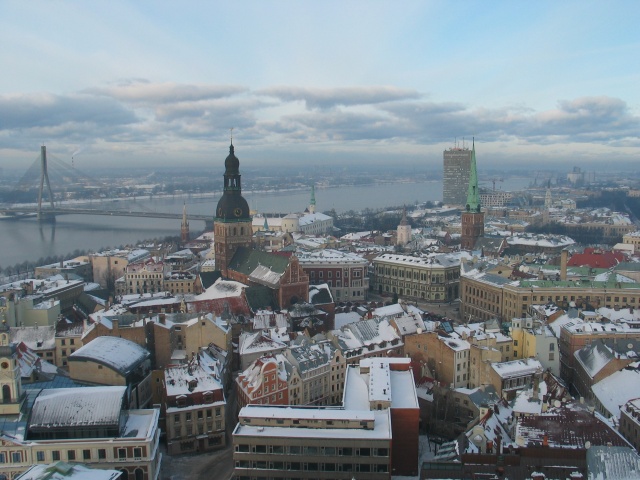
For the past few days I have been enjoying the Nordtrad Borderlands conference of folk music in Riga, Latvia. On Monday I gave a presentation with Keld Hosbond for this conference on the new Nordic international-collaborative Master of Global Music (GLOMAS) program. I have been quite impressed here by the work done by Anda Beitane and her colleagues at the Jāzeps Vītols Latvian Academy of Music to document and support the sustenance of Latvian traditional songs.


The following is an announcement of this conference from the Jāzeps Vītols Latvian Academy website (http://www.jvlma.lv/english/news/19354.html):


NORDTRAD conference in Riga

Borderlands conference of teachers and students of the Nordtrad network of traditional music study programmes of Baltic and Nordic countries will take place from March 26 to 31 at Jāzeps Vītols Latvian Academy of Music. The conference will feature three public performances, multitude of lectures, masterclasses and seminars for teachers, other musical performances as well as events for information and experience exchange.

Nordtrad network of traditional music study programmes unites 16 higher education institutions of Denmark, Norway, Sweden, Finland, Estonia and since 2008 also includes the Ethnomusicology Class of Jāzeps Vītols Latvian Academy of Music. Traditional music teachers and students of these countries each spring meet at a conference that in a short period of time through masterclasses, lectures, concerts, teachers’ seminars, ensemble musicianship and other activities provides an excellent opportunity to analyze the profiles of all institutions, strengths, novelties and current issues of the field. This year the conference will take place in Riga - during the previous conferences Latvian traditional music has generated substantial interest within the networking institutions. For Latvia it is a unique opportunity to get acquainted with the music education system of the Nordic countries and to demonstrate its own music in all its diversity.

Listeners are welcome to the three concerts of the conference!

* March 27th, 7PM at JVLMA Great Hall - concert of cross-institutional master’s level study programme Nordic Master students and Nordtrad students.
* March 28th, 7PM at JVLMA Great Hall – continuation of Nordtrad students’ concert.
* March 29th, 7PM at Spīķeri Concert Hall - concert of Nordtrad teachers.

Entrance to these events is free, donations are accepted.

The conference will also feature lectures by ethnomusicologists Mārtiņš Boiko (Latvia), Daiva Vyčinienė (Lithuania) and Timo Leisiö (Finland), as well as masterclasses in Haiti music (Sten Källman, Sweden), Latvian, Lithuanian, Estonian and Finnish traditional singing (Zane Šmite, Daiva Vyčinienė, Janika Oras, Celia Roose, Sirkka Kosonen), kokle performance (Valdis Muktupāvels), Latvian and Lithuanian traditional instrumental music performance (Gunārs Igaunis, Evaldas Vyčinas) as well as Finnish diatonic accordion performance (Antti Paalanen). In frames of the conference students from the participating institutions will form ensembles and study the borderlands repertoire of all involved countries. Teachers will lead seminars, sharing their experiences on issues of traditional singing and ensemble tuition as well as ethnomusicology education of the participating countries. New master’s level study programmes Nordic Master and Gloma will be presented.

Borderlands conference is supported by the State Culture Capital Fund.


Relevant Links:

http://www.music.lv/scripts/music/actual/aktualinfo.asp?i=19354&l=2


http://www.nordtrad.net/

http://www.jvlma.lv/english/news/19354.html

http://glomas.net


3/10/10

New Musical Knowledge


The coming month brings many interesting conferences and events that are likely to contribute substantial new knowledge to the field of music. It is exciting to have the opportunity to take part in such innovative projects, but it is going to be a very busy time.


First, it is great to see that my doctoral students continue to make great progress toward completion of their degrees:

  • On April 16, Deanna Frith Weber will defend her doctoral dissertation at Boston University, Albany’s Freedom Singers: Their History and Legacy for Music Education. This is a very interesting study of the history and continuing influence of the American Civil Rights movement’s “Freedom Singers”, who were recently invited to give a performance at the White House for President Obama. I am serving as the second reader for Deanna’s dissertation, with Richard Bunbury as the Supervisor.
  • Other students for whom I am serving as a dissertation reader are also making outstanding progress. On Friday, Albi Odendaal (Sibelius Academy) gave a fine presentation of some very early work on his dissertation, The Effect of Perceptual Learning Style Preference on Memorisation in Music, which has benefitted greatly from the guidance of Professor Harald Jorgensen (Norwegian Academy of Music).
  • Also, both Joseph M. Pignato and Michael Simmons (at Boston University) are nearing completion of their research writing, and appear to be headed toward a dissertation defense in late spring of this year.
  • Sami Alanne (Sibelius Academy), whose study is entitled Music Psychotherapy with Refugee Survivors of Torture: Interpretations of Three Clinical Case Studies, also looks likely to finish this year, and we are quite fortunate to have recently obtained some valuable insights from Professor Kai Karma regarding the methodology of Sami’s study.

Soon my course on Music and Social Theory will start at Sibelius Academy, and I have been preparing the lectures for that and anticipate some very interesting discussions with students.


We are also soon reviewing applications and scheduling auditions for the new Master of Global Music (GLOMAS) degree, which will be offered in partnership between higher education institutions in three European nations. I will be traveling briefly to Sweden and Denmark in April for the GLOMAS auditions.


There are also some upcoming research presentations:

  • I have been invited to participate as a Discussant (by videoconference) in the symposium Music as a Live Process: Mind, Culture and Esthetics Experience, at the Center for Social Science Research, State University of New York (SUNY), Oneonta [http://www.oneonta.edu/academics/ssr/] (March 16, 2010). Click HERE to download a poster for this event.
  • Also, I am excited to be chairing a session "Change and Stability, Music Culture in Southern Ostrobothnia" and presenting a paper entitled "Whither Hypermusicology?: Ethical and Epistemological Issues in Historical Ethnomusicology" for Musicology in the Third Millennium, an international symposium in Seinajoki, Finland (March 18, 2010).
  • Soon afterward, I will be giving a guest lecture on "Musical Embodiment and Gesture in Cross-Cultural Perspective" for the intensive Master course "Music, Meaning, and Gesture", offered to students from several different European institutions by the Nordic Network for the Integration of Music Informatics, Performance, and Aesthetics (NNIMIPA) at the University of Southern Denmark, Odense, Denmark (March 22-25, 2010).
  • Also, it was a great pleasure to hear that my three group and individual proposals to the International Society for Music Education conference (in Beijing, China) were accepted. I very much look forward to meeting with Chinese colleagues there, as well as delegates from many other nations. Soon, I will be meeting with colleagues to plan our symposia for this event. Here is what I plan to be doing at that conference:


1) Chair, Symposium: International Perspectives on the Teaching of Keyboard Improvisation, 29th World Conference of the International Society for Music Education (ISME), Beijing, China (August 1-6, 2010) [with representatives from Finland, Germany, USA].


2) Chair and paper presentation, Symposium: Harmonizing Hemispheres – Positioning African Music in the Curriculum, 29th World Conference of the International Society for Music Education (ISME), Beijing, China (August 1-6, 2010) [with representatives from South Africa, Finland, USA].


3) Paper presentation, “On the Musical Instrument Industry and Music Education in Japan”, 29th World Conference of the International Society for Music Education (ISME), Beijing, China (August 1-6, 2010).


In April and May, I must once again focus on finishing my books, and it will be very interesting to see what life brings in the Autumn.