7/18/08

Future of Jazz Education?


In April 2008, the International Association for Jazz Education declared bankruptcy and was suddenly disbanded after having served the jazz education community for nearly 40 years. Meanwhile, MENC: The National Association for Music Education announced that it may no longer be having national conferences in the United States.

Related links:
http://www.nytimes.com/2008/04/26/arts/music/26jazz.html
http://www.apassion4jazz.net/iaje.html
http://sociomusicology.blogspot.com/2008/04/music-conferences.html

As a Seattle native and former school music teacher, such developments were particularly surprising. Many do not realize this, but Seattle is increasingly regarded nowadays as an important center for innovations in jazz education and popular music pedagogy. In each of the recent Essentially Ellington festivals, Seattle high school bands have attained the highest honors. Garfield High School has produced many important jazz and rock musicians, including Quincy Jones, Jimi Hendrix, Ernestine Anderson, as well as rock drummer Dan Peters (from Screaming Trees, Nirvana and Mudhoney). Nearby, Roosevelt High School has also produced many notable musicians, including Mike McCready (rock guitarist with Pearl Jam), Duff McKagan (rock bassist with Guns N’ Roses and Iggy Pop) and various others. Another important contributor to the local jazz scene has been Washington Middle School, which for many years has had one of the finest middle school level jazz programs in the world.

http://www.iht.com/articles/ap/2008/05/19/arts/NA-A-E-MUS-US-Essentially-Ellington.php

http://www.rooseveltjazz.org

http://seattlepi.nwsource.com/local/360871_needle28.html


Community organizations, such as Earshot Jazz and Experience Music Project, have also contributed to local school music programs through various partnerships.

In the middle school music program that I taught in Seattle several years back, the students benefited greatly from a residency of Jovino Santos Neto, funded by Earshot Jazz. I was also able to attain grant funding from the Simpson Center for the Humanities to bring local artists from many different traditions into the school music program: an Irish fiddler, blues songwriter, Thai and Ghanaian musicians, and various others.

Hopefully the International Association for Jazz Education will be replaced by another organization soon, and I have a feeling that the solution might come from Seattle. Meanwhile jazz education and popular music pedagogy are fully in a groove with many exciting new developments in Europe and Australasia.

7/9/08

European Culture and Japan


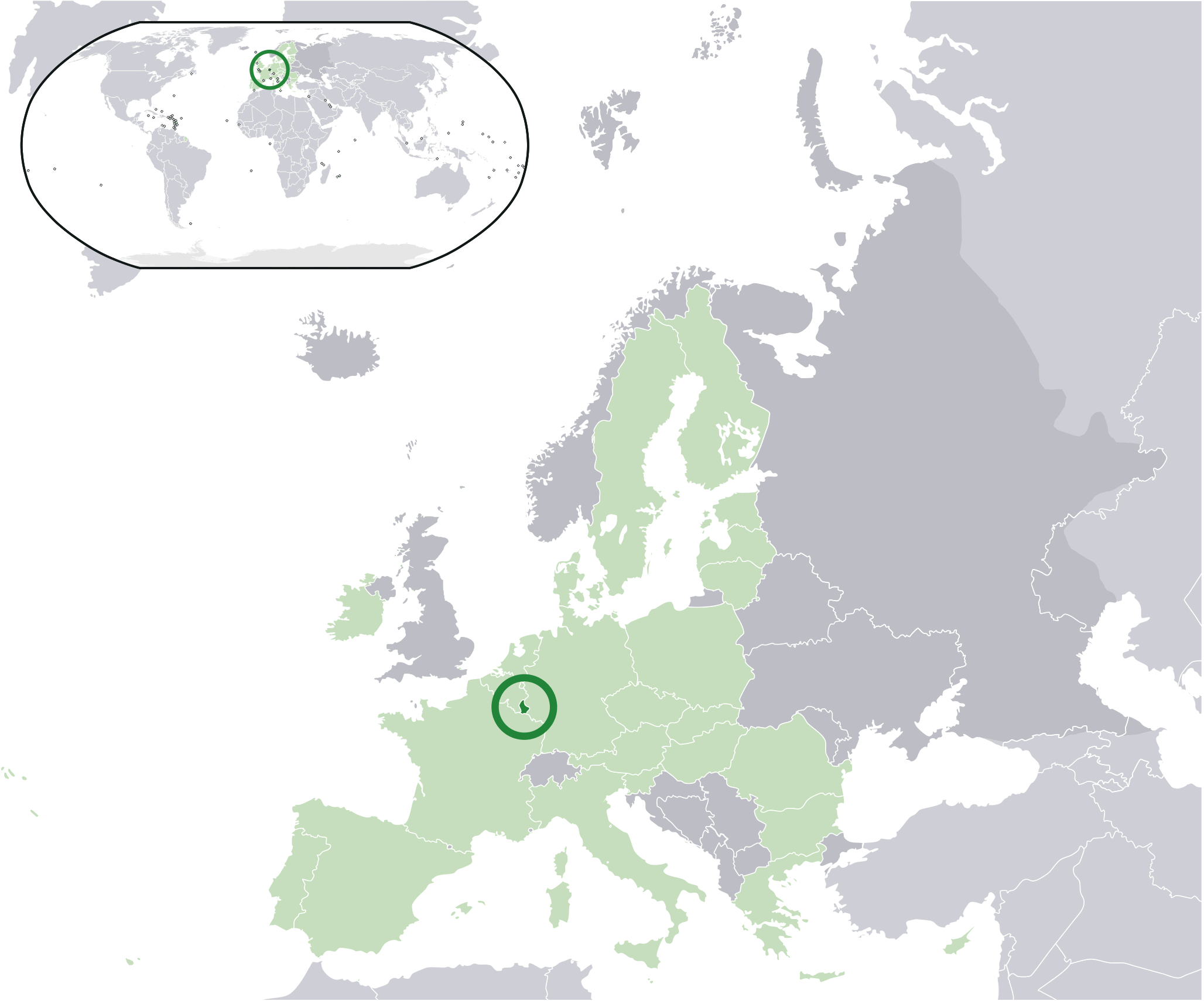
Here is a photograph I took last night in Paris of the statues at Trocadero, with the Eiffel Tower in the background. There were also many Japanese tourists taking photos at this same location. I am on my way to present research on Japanese wind bands at the IGEB conference in Luxembourg. Using a phenomenological approach, I will discuss various perspectives on conducting the works of Japanese wind composers, as well as the Saito Method of conducting. Below is the abstract of my paper:


Conducting Japanese Wind Music: Analytical and Phenomenological Insights

Increasingly, myriad statistics lend support to the claim that Japan has become an important center for Western art music in recent years, an ironic assertion considering its obvious geographic and cultural distance from Europe. The field of wind music is particularly illustrative regarding this point, since Japan is among the world’s largest markets for wind band sheet music and sound recordings, and is home to the largest wind instrument manufacturer, the largest band competition, and even professional wind bands that resemble major symphony orchestras in terms of subscription ticket sales, world premiere performances and recorded releases. Many notable wind compositions for professional-level and amateur ensembles have been produced by Japanese composers, most of which have yet to attain attention outside Japan. Using analytical and phenomenological perspectives, this study describes the experience of conducting two Japanese works for amateur wind bands: Tetsunosuke Kushida’s Asuka and Hiroshi Hoshina’s Fu-Mon. The author has interviewed both composers in Japan, and recently conducted these pieces in 2008 with the All-State Honor Band at the annual festival of Connecticut Independent Schools. This study grapples with the notion of wind conductor as “agent” in the cultural mediation of hybrid genres, and includes discussion of implications for how wind music from other non-western nations might be approached in a manner that arguably ensures “authenticity” and cultural sensitivity.

6/23/08

The First Band in Japan?


Some important new discoveries were made during this past week regarding John William Fenton (b.1828), who formed what appears to have been Japan's very first band comprised of western musical instruments. Fenton arrived in Yokohama in 1868, just at the start of the Meiji era, where he founded bands and orchestras and even composed the first version of Kimigayo, Japan's national anthem. Over the next 140 years, Japan would enthusiastically embrace western music, eventually becoming a globally significant producer and consumer of European and American genres, ranging from classical to jazz, rock, and more. Until this week, however, the final chapter of Fenton's life had remained completely unknown to music scholars both within and outside of Japan. It was thought that after living in Japan, Fenton had settled somewhere in the rural midwestern United States, where he disappeared.

Suddenly, after more than a century of mystery, there are some new details. On June 16, I was contacted at my Boston University office by a thoughtful genealogical researcher in California who had on that very day obtained records of Fenton’s final years in . . . of all possible places . . . beautiful Santa Cruz, California. It was very kind of her to provide this information, and I was able to help communicate these details to Toshio Akiyama so he could announce them at the Japan Bandmaster’s Association meeting in Kyoto this past Saturday. These findings will be one other new detail included in my book on wind band music in Japan that is scheduled for publication later this year.

6/15/08

Multiculturalism in Music and Education


[click on image for details]


To what extent do musical experiences open windows to intercultural understanding?

For the past few decades the effects of multiculturalism have been seen in the field of music education within North America, Europe and elsewhere. While many contributions in this area have been effective and inspiring for a new generation of music students, others have reinforced stereotypes and given “multiculturalism” a poor image. Although the ideals of multiculturalism may now seem to be rather widely shared, there is actually little agreement regarding finite connotations of the term and the motivations of those who would advocate it as a component of educational philosophy. “Multiculturalism” is no longer the popular concept in educational discourse that it had been in the 1980s and 90s, and in many nations there is less interest in recognizing the cultures of minority peoples than in attaining a unified and patriotic national identity. Why is this so? Is multiculturalism no longer relevant? How have the meanings of "multiculturalism" changed in the domains of music and education? More research and scholarship are sorely needed in this field.


Recommended Links to Related Websites:

Center for Multicultural Education (University of Washington)
http://depts.washington.edu/centerme/home.htm

Globalization and Education (University of Illinois)
http://globalizationandeducation.ed.uiuc.edu/Teaching/index.html

Cultural Diversity in Music Education (CDIME)
http://www.cdime-network.com/

International Society for Music Education
http://isme.org/


Current Activities in this Area:

* I authored the chapter on “Jazz and Rock” and co-authored the chapter on “World Beat” for the third edition of Multicultural Perspectives in Music Education (Rowman-Littlefield/MENC).


[2012-UPDATE: See

Finnish Journal of Music Education, Vol.13, No.1

Also, here is a webpage with individual links to several of my publications on this topic:

http://hib.academia.edu/DavidHebert/Papers

5/1/08

Colloquium on Music Education Curriculum Reform


The MayDay Group Colloquium XX will be held at Boston University, June 5-8, 2008. Action for Change in Music Education is the motto of the MayDay Group. The theme for this meeting is "Connecting school music to the community, society, and life: Curriculum, policies, and practices." Several interesting speakers are scheduled to give presentations at this colloquium. I am assisting Dr Patrick Jones in his convening of this event.

Please examine the links below for details:


Colloquium Schedule

http://www.maydaygroup.org/php/events/MDGXXSchedule.pdf

Colloquium Brochure

http://www.maydaygroup.org/php/events/MDGXXBrochure.pdf

Action Ideals of the MayDay Group

http://www.maydaygroup.org/php/actionidealsexplained.php

4/29/08

Prejudice Against Popular Music

[Updated 03/31/09 for improved international video access:]


Why are so many academics and classical musicians prejudiced against popular music?

Ask, and you may discover that many cannot identify a single popular music performer from recent years that they would consider to have artistic merit.

Does wholesale dismissal of contemporary popular music as trivial and worthless represent an informed or a naïve position? Many academics in the field of music (and performers in classical and jazz styles) have never tried songwriting nor performing in popular music genres on appropriate instruments, so their opinions are actually based on assumptions rather than experience or research.

Those who understand popular music genres realize that it takes genuine artistry to establish such tight and intense grooves as can be found in some recently popular songs, such as Radiohead’s “Jigsaw,” Lenny Kravitz’s “Rock and Roll is Dead,” Stevie Wonder’s “Superstition,” or Incubus’ “Dig.”

[NOTE: This website is best viewed with the Mozilla Firefox browser - downloadable for free - rather than Internet Explorer or Netscape.]


Radiohead: Jigsaw


Lenny Kravitz: Rock and Roll is Dead


Stevie Wonder: Superstition


Incubus: Dig


It also takes creative artistry to produce the compelling melodies, insightful lyrics, and unique song forms encountered in much of the music of Keane, Coldplay, Sting, Sarah McLachlan, Norah Jones, and others.


Keane: This is the Last Time


Here is a website for more of Keane:

http://www.myspace.com/keane


Coldplay: See You Soon


Coldplay: Trouble


Coldplay: Shiver


Sting – a rock musician – singing a great jazz standard


Sarah McLachlan: Possession


Norah Jones: Don't Know Why


Suzanne Vega: Caramel


Finally, Nordic musician Bjork seems to be among the most creative and daring artists in popular music today.


Bjork: Human Behaviour (live on BBC)


More Bjork:


Bjork on musical snobbery:


While much of popular music is mass produced with maximum profits as the aim, some performers successfully manage to combine both artistry and popularity, even today.


Here is a link for resources in popular music studies:

http://www.iaspm.net/journals.htm

Here is a link to a young organization that specializes in scholarly analysis of popular music: http://www.unc.edu/music/pop-analysis/conferences.html

I have recently completed the chapter on “Jazz and Rock Music” for the third edition of Multicultural Perspectives in Music Education (Rowman Littlefield/MENC).

4/25/08

Conducting Japanese Wind Music


In July I will be presenting a research paper for the 2008 conference of IGEB: International Society for the Promotion and Research of Wind Music in Luxembourg.

The conference theme is “Wind Music: Regional Traditions – Global Perspectives”, and my paper is entitled Conducting Japanese Wind Music: Analytical and Phenomenological Insights.

It looks like this will be a very interesting conference. Here is a link to its website:

http://www.igeb.romatet.com/


On a related note, I am currently consulting with Katsuhiro Nakanowatari on a translation of the second of my three articles for the Japanese Band Directors Association Journal. This journal is the primary research publication of the Japan Band Directors Association, and has a circulation of over 4,000 copies [www.jba-honbu.or.jp/]. I have also been invited to give a special lecture for the upcoming annual meeting of this organization, in Tokyo, June 21-22, 2008. [UPDATE: This lecture in Japan has now been postponed until next year]


My historical study discusses interactions between Maori brass bands and Japanese musicians in 1920s, and will be published in two issues of the journal in 2008 and 2009. A previous article I wrote for this journal (in 2007) was entitled “Kokusaiteki Shitendemiru Nihonno Suisogaku,” (Japanese Wind Bands in International Perspective). Mr. Nakanowatari and his colleagues have done a wonderful job with this journal, which is making some important new contributions to knowledge in the field of wind music.