5/21/26

An Agenda to Revitalize Music Education


Music educators worldwide know that our profession is meaningful and has a profound impact, yet there remains a widespread sense that we are under-appreciated and too little supported by society. Across recent generations, standardized testing and STEM education have led to forms of schooling and teacher training that increasingly marginalize arts and humanities fields in favour of math and language, subjects commonly assumed to be more relevant for future employment. But must it be this way? Can music education be revitalized at a global level?


Actually, the STEM vision of education was never particularly convincing (nor inspiring), and there are signs of new conditions that offer hope for music as a field of study. Yes, the rise of AI may come with an array of threats but also important opportunities: As more physical work is assigned to robots, and more cognitive tasks to AI “bots”, there should finally be more space in our lives to focus on the activities that are most meaningful and most define us as human beings. Music has surely been one of those activities across all recorded history worldwide.


Recent science-based books by Stefan Koelsch (on music’s healing power) and Patrick Savage (on global musical practices) demonstrate the profound impact music has on all aspects of our lives, and one of my recent books especially shows its unique power to promote peace and reconciliation. Considering its remarkable potential to improve our lives, it seems clear that there are untapped opportunities for music’s power to be more effectively applied across an array of contexts in the age of AI.


I have long been interested in ways of responding to cultural diversity in music education, particularly in higher education and teacher training, and recently had opportunities to speak at length with Michael Iyanaga (President, Society for Ethnomusicology) and also Tan Sooi Beng (President, International Council for Traditions of Music and Dance). Both SEM and ICTMD are organizations that support original research on all kinds of music worldwide, as presented through their conferences and publications. Consequently, today a remarkable array of diverse global musical practices—and ever-growing corpus of research-based knowledge—is available to music teachers, much of which was far less developed and less conveniently accessed only a few decades ago. This changes what music teachers can reasonably aim to offer their students and enhances our ability to demonstrate why music matters.


With that in mind, it becomes clear that the music education profession must now embrace a mission to demonstrate how in the age of AI, music deserves more attention in education than ever before, and surely the strengthening of global cooperation among music teachers is our most promising opportunity for positive transformation and sustainability across the music teaching profession.


What can major organizations like the International Society for Music Education (ISME) do to revitalize music education globally? We need closer collaboration with colleagues in (ethno)musicology and educational research, as well as partners across the vast array of music professions, in initiatives that enable music teachers to become better informed regarding the latest musical knowledge, innovative methods for teaching and learning, opportunities in music-related professions, and global trends in the field of music teaching. This way, when parents and educational policy makers openly question whether music studies can lead to anything useful, we will have much richer and up-to-date resources for them to examine that compellingly demonstrate music’s impact on individual and community health, its essential role in human life (via all major rituals), its value in promotion of peace and reconciliation, its role in an array of fulfilling professions, and many other important applications.


We also urgently need a new approach to AI in music education, a systematic orientation that deliberately features the notion of balance. That is what we aim to offer in a recent book on AI and philosophy of music education, which we hope will provide helpful stimulation for music teachers. The current opportunities and threats from generative AI are extraordinary and urgent, calling for a proactive and unified response from our field. AI can do so much to make our programs more inclusive for all kinds of people and all kinds of music, offering unprecedented opportunities for musical experiences that were previously unimaginable. We must actively seize the chance to devise and apply new innovations that promise to deeply enhance the musical experiences of our students.


At the same time, the survival of Indigenous and minority traditions against the unregulated predatory threats from AI is a serious matter of cultural rights that calls for collective action. The same goes for the rights of individual musicians to not have their creative works automatically copied, recontextualized and regurgitated by powerful machines that offer no compensation nor even acknowledgment of their original human sources. We need music educators to consult for both music technology and educational technology companies, where they can advocate for product designs that are truly educational, that inspire creativity (rather than stifling it by making most artistic decisions for users), and that fully respect the rights of musical individuals and communities whose creations are used to “train” AI. We must recognize that our professional organizations have the collective power to influence whether an AI-based product is widely endorsed by music teachers, power that can help positively shape the future of music and education.


To ensure there is a promising future for human music, we need music educators (and their organizations) to more actively advocate on behalf of the rights of creative musicians, and to use the power of our numbers to helpfully guide the music industry toward ethical approaches that nurture the sustainability of human musicianship. Finally, to ensure there is a future for human personal identity, we need music educators to lead the way for educators in other subjects in which only the positive or negative aspects of AI are fully recognized. I am hopeful that ISME will continue to play an important role toward these objectives that promise to positively transform and strengthen the music teaching profession over the coming years. With this as an agenda, I am now one of the two final candidates for President of the International Society for Music Education


Below is the Personal Statement submitted as part of my presidential candidacy: 


It would be a great honor to have the opportunity to serve as president of ISME, a global organization that matters deeply to music teachers worldwide. ISME’s activities keep expanding, with enormous promise for the future. By serving on ISME’s small executive committee across recent years, I have nurtured a close working relationship with ISME presidents, CEO, and staff: all great people who have my sincere respect. Cooperation also deepened through my work as Senior Editor of the ISME Routledge book series and by having led ISME’s History Standing Committee. Additionally, I have presented for ISME’s regional organizations (APSMER, EAS, and PASMAE), and served for a few terms on the Board of ISME’s own journal IJME.  


Born in the USA in the 1970s, I have had the opportunity to live and work as a music teacher in many different countries worldwide, and I continue to actively perform. Although now mostly based in Norway, I have ongoing projects in Asia and Africa, with recent professional activities in Uganda, Japan, South Korea, Taiwan, Hong Kong and mainland China, so I continue to strive for a global perspective on our field. It is inspiring to note that recent ISME presidents represent very diverse backgrounds, coming from Canada, Kenya, Hong Kong, Mexico and the USA, and 4 out of 5 are women. There have been no ISME presidents from Europe during the past decade, and I would very much hope to guide ISME toward forging even closer intercontinental cooperation, including with the Global South. 


ISME exists because there are many issues in music education that call for a coordinated global approach. I consider AI to be one of the biggest threats and most under-appreciated opportunities for music and music education. We must do more to protect and sustain artistry and heritage while also promoting creativity and responsible innovation during this time of rapid cultural and political change. We must further demonstrate how music holds a special power to promote reconciliation in communities torn by violent conflict—including for Indigenous and minority peoples—and show how music enables self-discovery, personal healing and intergenerational understanding. 


Particularly as ISME reaches its 75th anniversary, it is important to bring a new historical consciousness to what we do, with not only awareness of the past but also the significance of the present and trajectories for the future. ISME can play a vital role in ensuring the latest research-based knowledge and innovative methods will reinvigorate music teachers worldwide. To counteract professional burnout, ISME must consistently offer new inspiration and opportunities for deepened competence, so our members can meaningfully promote lifelong music participation! As ISME president, I would aim to raise our profile and impact as an organization committed to musical and cultural diversity and guided by concern for the teaching profession and global challenges. I would greatly appreciate your vote, and a chance to lead ISME, but I suspect the other candidate(s) would also do an excellent job. Either way, let’s cooperate to keep making ISME even better together. 


5/3/26

Japanese Studies in Bergen 2026


It has been a pleasure to serve on the planning committee for an interdisciplinary Japanese studies conference in Bergen sponsored by the Scandinavia Japan Sasakawa Foundation. The conference will be in mid-November 2026, and includes sessions on an array of topics connected to Japan.


The conference will be hosted at University of Bergen, and the leaders and other members of the planning committee are Benedicte Mosby Irgens, Nathan Hopson, and Shimotori Misuzu (all with the UiB Japan Studies program), as well as Kristin Rygg from the Norwegian School of Economics.


The program will include a music research panel (in which I will join with Matthieu Stepec and Yuki Morijiri) as well as some performances of Japanese and Norwegian music, including pianist Marina Matsuoka.

More information and links will be posted here when made available.


I previously participated in the symposium that first established Master studies in Japanese at University of Bergen a few years ago, as well as the recent events in Bergen commemorating 120 years of diplomatic relations between Japan and Norway.

A Japanese studies conference that we also hosted in Bergen some years ago resulted in THIS BOOK, which I coordinated as editor. With long-term research interests in Japan, I last visited in February of this year to meet officials with the City of Hamamatsu and various music industry experts for development of a large grant application that now includes researchers from the Hamamatsu Museum of Musical Instruments and the Min-On Concert Association. The GAME research group, which I manage in Bergen, is also now hosting a postdoctoral researcher from Japan funded by the Japanese government (JSPS program). 


Here are links to a few recent Japan-related publications:

·       Chiba, M., & Hebert, D. G. (2025). Understandings of inclusivity in music education: a comparative policy study of Luxembourg and Japan. Music Education Research, 27(1), 37-53. https://doi.org/10.1080/14613808.2024.2434839

·       Hebert, D. G., & Matsunobu, K. (2024). Learning musical instruments in Japanese schools. In H. Johnson (Ed.), Handbook of Japanese music in the modern era (237–253). Brill. https://brill.com/edcollchap/book/9789004687172/BP000027.xml


Image source: https://pxhere.com/no/photo/1640826


4/28/26

Keynote on Music Diplomacy in China

I look forward to giving a keynote speech soon for the International Symposium on Global Dialogue, Inheritance and Innovation of Anhui Traditional Music (Chuzhou University, China). My speech is titled “Approaches to Traditional Music in Cultural Diplomacy”.


Chuzhou, in Anhui province, has a population of around 7 million, and famous people from this city include Zhu Yuanzhang (1328-1398), who was the founding emperor of the Ming dynasty.


Pictured here is Mt. Huangshan, a renowned landmark from Anhui province.


Image source: https://commons.wikimedia.org/wiki/File:Huangshan_pic_4.jpg


4/18/26

GAME research group update


The Grieg Academy Music Education (GAME) research group has been quite active across recent years. Click HERE to learn about our activities.


Below is the poster for one of our upcoming events that features Dr. Yuki Morijiri, JSPS-funded postdoctoral researcher from Japan.


4/11/26

Arctic Music Studies


It is exciting to soon be participating in the one music-related presentation at the enormous UArctic Congress to be held in Torshavn, Faroe Islands in May 2026: Local Cultural Heritage in the Age of AI: Challenges and Opportunities in Music Education.


The Arctic has long been a culturally fascinating place but it has also increasingly become a region of deep geopolitical interest. Across recent years, I have been part of multiple music-related projects in this dynamic region.


Currently, I lead a work package for the Norwegian Research Council-funded Sapmi Singing Maps project in collaboration with Sami musicians (David T. Johnson, PI). I have also held a position across recent yars as Affiliated Professor with University of the Faroe Islands, where my PhD student Knut Eysturstein will soon defend his dissertation on music heritage and education in the Faroe Islands. Previously, I also performed as part of the Sympathetic Resonance Trio in the Kirkenes area (along the border between Norway and Russia) on a cultural diplomacy tour funded by the Norwegian Barents Secretariat. Recently, I am also developing a large EU grant application that aims to include both Sapmi and Greenland as research sites.  


The UArctic Congress promises to attract many hundreds of participants from across a broad range of academic fields. I look forward to visiting Torshavn again, and it will be exciting to see what the participants can learn from each other there.


Here is a link for more about our presentation:

https://virtual.oxfordabstracts.com/event/75716/program?date=%222026-5-27%22&g_submission=156&g_session=216126


Image sources:

https://commons.wikimedia.org/wiki/File:Circumpolar_coastal_human_population_distribution_ca._2009.png


https://commons.wikimedia.org/wiki/File:Map_of_the_Arctic_region_showing_the_Northeast_Passage,_the_Northern_Sea_Route_and_Northwest_Passage,_and_bathymetry.png


4/3/26

Publications in 2026


Some new publications will be coming out in the next few months, including a monograph (book), journal articles, and book chapters. I will add links here when they are made available. Other upcoming publications are more likely to appear in 2027 ... 


BOOK:


Xie, J. & Hebert, D. G. (2026). A New Philosophy of Music Education for the Era of AI. Routledge. 


BOOK CHAPTERS:


Hebert, D. G. (2026, in press). International Law and Efforts to Ensure Just Forms of AI in Music and Education. In F. Abrahams, S. Kang, and C. Randles (Eds.), The Oxford Handbook of Artificial Intelligence in Music Education. New York: Oxford University Press.


Hebert, D. G., Matsunobu, K., Jakobsen, M. L., & Liu, L. (2026, in press). Issues in Accommodating the Needs and Interests of Chinese Students in Higher Music Education Worldwide. In R. Crawford & J. Southcott (Eds.), The Oxford Handbook of Neoliberalism and Music Education. New York: Oxford University Press.


JOURNAL ARTICLES:


Chen, Y. & Hebert, D. G. (2026, in press). Exploring the reception of AI-enhanced music education: A multimethod study of higher education vocal music students. Bulletin of the Council for Research in Music Education, 249. https://scholarlypublishingcollective.org/uip/bcrme


Walubo, E. & Hebert, D. G. (2026). Epistemic decolonization of musical arts education: Analysis and recommendations from Uganda. Philosophy of Music Education Review, 34(1), 42-63. https://muse.jhu.edu/pub/3/article/988395/summary 


3/22/26

PhD defense on Singing in Malaysia


I look forward to serving as an external examiner in April 2026 for a PhD defense at the Institute of Music, UCSI University, in Kuala Lumpur, Malaysia.


This will be for Huang Yichen’s PhD in Music Performance, with a dissertation titled Schubert’s Two Wanderings: An Interpretive Approach from a Singer’s Perspective.


Huang’s dissertation systematically examines two of Franz Schubert’s famous art song cycles, Die schöne Müllerin (D. 795) and Winterreise (D. 911), using a practice-led and performer-centred approach.


It is exciting to see what is being achieved in music in Malaysia, particularly in the area of performance-based artistic research. This will be my second PhD defense at USCI University across recent months, and my third defense (as external examiner) for Malaysian doctoral candidates across the past year, so I feel fortunate to be getting a direct sense of Malaysia’s growing importance in the music field.


While western classical art music has its roots in European heritage, there can be no doubt that across recent years many Asian countries have fully embraced this tradition with a deep appreciation that will surely be sustained long into the future.  


Image source: https://commons.wikimedia.org/wiki/File:Kl-skyline-at-night-2022.jpg


3/9/26

Amsterdam: Global Philosophy of Education


I eagerly look forward to visiting Amsterdam soon as an Invited Speaker for what promises to be a unique and exciting event:


The Global Philosophy of Education Field Launching Conference (at VU Amsterdam).


This explanation is from its Call for Papers:


“This conference aims to establish the field of Global Philosophy of Education, understood as a research space and practice where central issues in philosophy of education are defined, discussed and researched jointly by philosophers working from different cultural and philosophical traditions and perspectives. This entails not the establishment of a global philosophy in the sense of a universal or hegemonic philosophical theory, but the development of a global practice of philosophy of education.”


Here is the abstract for the speech I have developed for this event:


Learning Beyond Borders: Seeking Synthesis in Global Philosophy of Education


Prof. David G. Hebert

Western Norway University of Applied Sciences


Abstract

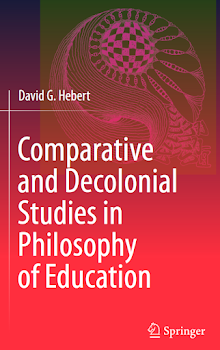
It is common in Northern Europe for educational foundations to mostly rely on the ideas of German and Nordic thinkers from more than a century ago (e.g. Humboldt, Grundtvig, etc). Recently, countries that boldly deviate to some extent from this tradition, such as Finland, tend to attract attention for their educational innovations. Still, it seems reasonable to ask whether teacher education remains the most ethnocentric field in all of academia. In two recent books, I collaborated with colleagues from diverse cultural backgrounds to rethink philosophy of education from a comparative and decolonial perspective. One book is an anthology that aims to demonstrate the usefulness of efforts to challenge Eurocentrism and cultivate a global philosophy of education (Hebert, 2023). The other is a monograph co-authored with a Chinese scholar that aims for a synthesis between Asian philosophies, contemporary western philosophies, and systems science, to develop a novel philosophy of music education that is responsive to the new challenges from AI (Xie & Hebert, 2026). Here I will share some reflections on the processes and main ideas from these projects as well as prospects for future work. Along the way, I will demonstrate how the field of global philosophy of education has been quietly developing for some time, as seen in the work of luminary African scholars like Yusef Waghid, Indigenous (Maori) scholars like Linda Tuhiwai Smith and Carl Mika, and laudable internationalists such as Martha Nussbaum, Michael Peters and Liz Jackson. I will also outline the benefits to be gained if European universities would do more to promote cosmopolitan scholarship that stimulates pedagogical reflections beyond outdated visions of Bildung, particularly in this uniquely challenging age of AI. 


Link for more details: https://www.global-philosophy-of-education.com/


3/4/26

Horizon Europe Application 2026


It is exciting to now be developing a new Horizon Europe (EU) grant application. Our most recent application from about a year ago received very high scores, placing in the top 10% of applications, but did not quite get funded for 3 million euros (see image). That application was placed on the “Reserve List” for more than a year, formally approved if more EU funding were to become available. Unfortunately, there was no additional funding in 2025. 


We now know how to write very strong applications, and I am convinced that our 2026 application will be better than ever, with consortium partners in several countries who are ideally positioned, having the expertise to develop new methodological and technological solutions, as requested by the EU. That especially matters during this period in which conflicts seem to be escalating worldwide. Music matters more now than ever before, and we need more robust research projects to determine how best to make use of its special power. 


Below are some recent books related to our proposed project for the 2026 call.


3/3/26

Keynote for 70th Anniversary Conference in Korea


It is exciting to be invited as a keynote speaker for the 70th anniversary conference of the Korean Music Education Society (Seoul, August, 2026).


The theme for the 2026 conference is “70 Years of Music Education: Expansion and Future Perspectives in the Age of AI”.


South Korea has a population of more than 50 million and enjoys an unusually vibrant and active music education research community. 


This 70th anniversary will be a very special event, well worth attending.


English Coursebook on Chinese Music


It is a pleasure to announce a new textbook for learning Chinese music, developed by Dr. Zijin Yao at Beijing Language and Culture University, English Coursebook on Chinese Music. This book offers a detailed description of Chinese music genres in cultural context, with explanations for essential terminology in both Chinese and English languages.


  • Yao, Zijin, Ren Jie, Wang Xiaoran, Sun Run, and Hebert, David. English Coursebook on Chinese Music (Chongqing University Press, 2026).


This book will be uniquely helpful for any foreigners interested in understanding Chinese music traditions as well as for any Chinese musicians who would like to know how best to explain this music to others (by improving their specialized English language skills relevant to the music profession). It thereby serves as a cultural bridge, in both directions, for the benefit of musicians and music lovers. 


It was a pleasure to support Dr. Yao and her team in their development of this unique book. The authors are affiliated with the innovative Music-Culture-Communication program at Beijing Language and Culture University. 


Links for purchasing will be provided here in the near future.


2/19/26

Reception of Shared Listenings


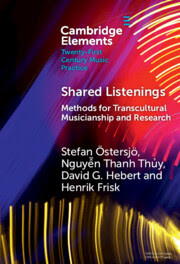
Recently some very positive reviews have been published for our co-authored book Shared Listenings: Methods for Transcultural Musicianship and Research (Cambridge University Press): 


"Shared Listenings is more than a research text; it is a guide for the "reflective practice" that every improviser should ideally undergo. The authors demonstrate that by facing the difficulty of unfamiliar contexts and sharing critical views, one reward is a deeper understanding of one's own musical behavior. This book recommends us to look at our own practices with the same scrutiny that they have employed. It asks us to consider if our learning is extractive or if it is a genuine attempt to correct unjust imbalances of power. It invites us to develop a keener sense of how to make space for others." 

Journal of Sonic Studies.

https://www.researchcatalogue.net/view/558982/4175093


“The many years of experience in tedious intercultural work that the book's authors possess (...) made it possible to present an unusually concrete text on how future musician education and artistic research in music could be developed with the help of shared listening (…) what could be called a handbook on the art of musical encounters across cultural boundaries” (translated from Swedish) 

Swedish Journal of Music Research 

https://publicera.kb.se/stm-sjm/article/view/51283/44805


2/16/26

Professional Activities in East Asia


It was a tremendous pleasure to participate as an Invited Speaker for a recent conference in Seoul, Korea hosted by the Association for Future Music Education.


Also, click HERE for a link to an update from the Global Competence Partnership project in Hong Kong.


Lately I have also been visiting Japan’s music industry capital, Hamamatsu, for development of an application to the Horizon Europe grants program. We intend to develop new research-based solutions, technological (AI) standards, and policy recommendations for specialized uses of music, as requested by a call from the EU. 


Also, here is a brief video from a jazz club in Hong Kong ... a brilliant local trumpeter named Ruel Cabrilla generously let me borrow one of his instruments to sit in on a tune in mid-February 2026 ... 


2/4/26

Music Dissertations from Denmark and the Faroes


Two talented PhD candidates have now proceeded to the final stages of their doctoral studies.


Knut Eysturstein (University of the Faroe Islands) has submitted a full draft of his dissertation, The Concept of the Faroese in Music Education: Negotiating Identity and Notions of Tradition, which will soon proceed with final edits and then be sent to the examiners. This is the first study to offer an in-depth historical and ethnographic perspective on music in the Faroe Islands. The external examiners (“opponents”) for Knut’s PhD dissertation defense, to be held in Spring 2026, have also formally accepted their appointments: music educationist Helga Rut Gudmundsdottir (University of Iceland) and ethnomusicologist Kimberly Cannady (Victoria University Wellington, New Zealand).


Recently, Marianne Løkke Jakobsen (Director of Global Affairs, Royal Danish Academy of Music) has very successfully completed her “pre-defense” at Aalborg University, Copenhagen, Denmark. Marianne has an impressive series of published articles that together demonstrate many important aspects to be considered in intercultural synchronous online teaching of musical instruments, particularly with Chinese students. She now proceeds to writing the “kappa” which links together the publications into a cohesive whole for presentation and evaluation of the entire project, offering multiple recommendations to improve music teaching and learning in conservatoires.


It has been a great pleasure to work with these fine young scholars who are generating entirely new insights for music and related fields.


2/3/26

PhD Defense on Music in Uganda


Soon, an important event to be celebrated: The PhD dissertation defense of Erisa Walubo at Makerere University, Uganda.


With studies supported by the CABUTE project, Erisa has forthcoming articles in Philosophy of Music Education Review and other journals, and has produced an impressive ethnographic study that demonstrates from a decolonial perspective how Indigenous arts traditions can be effectively integrated into education. 


It has consistently been a great pleasure to mentor Erisa, who shows enormous promise as a scholar and educator. 


1/21/26

Grieg Research School: Summer Course 2026


The Grieg Research School in Interdisciplinary Music Studies (GRS) has announced its upcoming PhD course and research symposium, open to all PhD candidates and postdoctoral researchers with an interest in music.


This will be held on 16-18 June, 2026 in the greater Bergen area, on the beautiful island of Stord, western Norway. 

GRS promises to be an exciting event, with many stimulating opportunities to share and learn about the latest theories, methods, and findings across an array of music fields.


Please share this opportunity with music researchers, and click here for more information: https://griegresearchschool.no/courses/grs-summer-school-2026/


Public domain image source: https://snl.no/Sunnhordland


1/17/26

Board Meetings and PhD Completions


On behalf of the ISME Board, the Executive Committee has just completed 10 hours of online planning meetings across the past week for future activities of the International Society for Music Education. It has been a pleasure to collaborate with this tight-knit group of such professional, thoughtful and committed international colleagues from Mexico, Australia, USA, Hong Kong, India and Norway.


We believe our many initiatives will help make ISME even more effective and responsive to its members across the world.  


It is also a pleasure to announce that across the past few weeks, two PhD students, for whom I served as an external examiner, have formally passed their doctoral defense (viva voce) and now proceed to some final revisions before receiving their PhD degrees.

-Nurezlin Mohd Azib (2025, December), Reconceptualising the Learning of Expressiveness in Music Performance: Malaysian Undergraduate Voices Beyond Western Traditions (viva voce, Royal College of Music, London, UK). 

-Huang, Yuqing (2026, January), Vocal Characteristics and Social Class in Light Soprano Roles: A Study of Character and Performance in Opera (viva voce, UCSI University, Kuala Lampur, Malaysia).


I eagerly look forward to seeing what they achieve in the future!


Life always has its ups and downs, but music certainly helps us to find the resilience to get through everything. Click HERE to access a recent blues performance.